
'Naravane has the right to write memoir, but needs clearance': Ex-General reveals why he blocked 1962 war report
Memoirs must be written, released, and read. But prior to release, they must have the concurrence of the government, says former Army Lt. Gen. Raj Shukla
- Feb 12, 2026,
- Updated Feb 12, 2026 4:34 PM IST
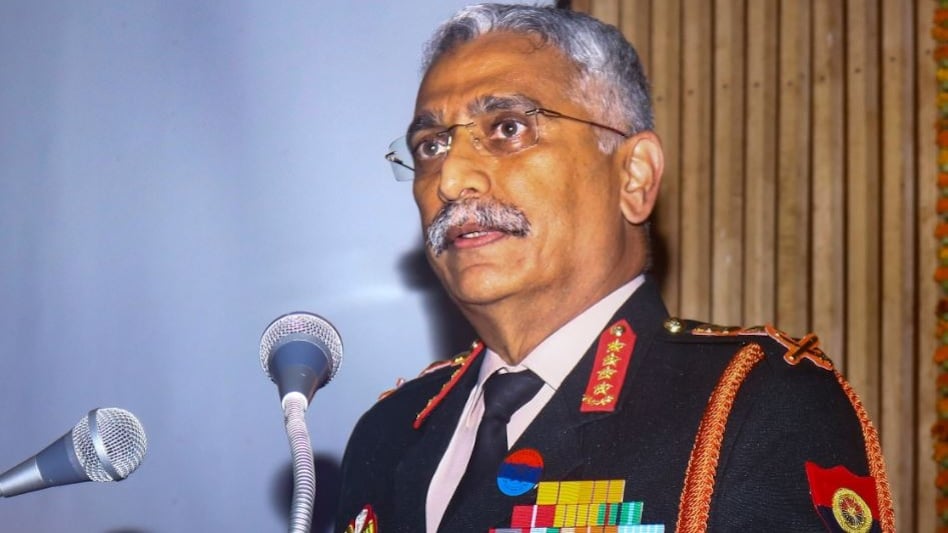
Former Army Chief General MM Naravane's memoir, Four Stars of Destiny, is awaiting clearance from the Army. The hold-up has triggered questions on military memoirs and the broader civil-military relationship.
Offering his view, former Army Lt. Gen. Raj Shukla said memoirs should be written as they are "a tool of professional military education," but added that they must secure clearance from the government before release.
"As India steps into the big league, we need to step up our game in national security and specifically this business of higher defense organisation and what we call the civil military relationship, where I think there are issues of deep insights, deep nuances, and many of these nuances come from memoirs," the former general said during a debate at NDTV.
"So, books like War in the High Himalayas 1962, there is a book by Major General VK Singh about 12 remarkable military leaders (Indian Army: Biographies of Twelve Soldiers). They must be read," Shukla said.
He also recalled attending the release of a book by former Army Chief General NC Vij. "A few months back, I was at the release of a book by General NC Vij, which was titled 'Alone in the Ring', which means the chief of the army staff is alone. He has to make decisions, which will be of great consequence to national security," he said while referring to the Naravane controversy.
Shukla, however, said such books must receive government clearance. He cited the example of General HR McMaster, who served as Donald Trump's National Security Adviser.
"General HR McMaster, who was national security adviser to Trump, has written a book called 'At War With Ourselves'. He recounts how to release that book, he had to get clearances from White House, the National Security Council, and the Pentagon. So memoirs must be written, released, and read. They are a tool of professional military education. These books form prescribed reading for JCs, senior command, defense services, and staff colleges. That's how military leadership grows. But prior to release, they must have the concurrence of the government. Now that, for some reason, did not happen, and that remains the mystery," the former commander said.
Shukla cited his own experience from the Military Operations Directorate during discussions on the possible release of the Henderson Brooks report on the 1962 India-China war. "I was in the MO (Military Operations) directorate. I was a brigadier when the Henderson Brooks report was to be released, and Mr Kuldeep Nair was pressing for its release through (Wajahat) Habibullah, who was the chairman of the information commission."
"He (Habibullah) came to the MO directorate, and he was putting pressure on us. We said, sir, the army has already been defamed enough for 1962, because we were at fault. The Henderson Brooks report carries passages of corps commanders crying in ops rooms, chiefs being helpless. We said there are larger issues of statecraft here - foreign policy and boundary disputes. Habibullah sat with that in a corner and after one and a half hours said we cannot release it," the former general recounted.
"And it is very different from when we quote the United States. The United States fights distant wars (like in) Vietnam. There are no immediate boundary disputes. In our case, it's very different. General Naravane has the right to write his memoirs; they must be written, released, and everybody gains. But they have to have clearance from the government because there are broader issues involved," he added.
Shukla made the remarks during a debate on Naravane's unpublished memoir. The book, which has yet to secure clearance from the Army, has triggered a political storm due to a passage in which Naravane recounts that he was not given a clear instruction from Prime Minister Narendra Modi when Chinese tanks were advancing toward Indian positions at Rechin La on the Kailash Heights during the India-China standoff in August 2020.
According to Naravane's account, he sought urgent guidance from Defence Minister Rajnath Singh, who spoke to the Prime Minister. Singh then conveyed the Prime Minister's instruction: "Jo uchit samjho, woh karo (do whatever you deem appropriate)."
Former Army Chief General MM Naravane's memoir, Four Stars of Destiny, is awaiting clearance from the Army. The hold-up has triggered questions on military memoirs and the broader civil-military relationship.
Offering his view, former Army Lt. Gen. Raj Shukla said memoirs should be written as they are "a tool of professional military education," but added that they must secure clearance from the government before release.
"As India steps into the big league, we need to step up our game in national security and specifically this business of higher defense organisation and what we call the civil military relationship, where I think there are issues of deep insights, deep nuances, and many of these nuances come from memoirs," the former general said during a debate at NDTV.
"So, books like War in the High Himalayas 1962, there is a book by Major General VK Singh about 12 remarkable military leaders (Indian Army: Biographies of Twelve Soldiers). They must be read," Shukla said.
He also recalled attending the release of a book by former Army Chief General NC Vij. "A few months back, I was at the release of a book by General NC Vij, which was titled 'Alone in the Ring', which means the chief of the army staff is alone. He has to make decisions, which will be of great consequence to national security," he said while referring to the Naravane controversy.
Shukla, however, said such books must receive government clearance. He cited the example of General HR McMaster, who served as Donald Trump's National Security Adviser.
"General HR McMaster, who was national security adviser to Trump, has written a book called 'At War With Ourselves'. He recounts how to release that book, he had to get clearances from White House, the National Security Council, and the Pentagon. So memoirs must be written, released, and read. They are a tool of professional military education. These books form prescribed reading for JCs, senior command, defense services, and staff colleges. That's how military leadership grows. But prior to release, they must have the concurrence of the government. Now that, for some reason, did not happen, and that remains the mystery," the former commander said.
Shukla cited his own experience from the Military Operations Directorate during discussions on the possible release of the Henderson Brooks report on the 1962 India-China war. "I was in the MO (Military Operations) directorate. I was a brigadier when the Henderson Brooks report was to be released, and Mr Kuldeep Nair was pressing for its release through (Wajahat) Habibullah, who was the chairman of the information commission."
"He (Habibullah) came to the MO directorate, and he was putting pressure on us. We said, sir, the army has already been defamed enough for 1962, because we were at fault. The Henderson Brooks report carries passages of corps commanders crying in ops rooms, chiefs being helpless. We said there are larger issues of statecraft here - foreign policy and boundary disputes. Habibullah sat with that in a corner and after one and a half hours said we cannot release it," the former general recounted.
"And it is very different from when we quote the United States. The United States fights distant wars (like in) Vietnam. There are no immediate boundary disputes. In our case, it's very different. General Naravane has the right to write his memoirs; they must be written, released, and everybody gains. But they have to have clearance from the government because there are broader issues involved," he added.
Shukla made the remarks during a debate on Naravane's unpublished memoir. The book, which has yet to secure clearance from the Army, has triggered a political storm due to a passage in which Naravane recounts that he was not given a clear instruction from Prime Minister Narendra Modi when Chinese tanks were advancing toward Indian positions at Rechin La on the Kailash Heights during the India-China standoff in August 2020.
According to Naravane's account, he sought urgent guidance from Defence Minister Rajnath Singh, who spoke to the Prime Minister. Singh then conveyed the Prime Minister's instruction: "Jo uchit samjho, woh karo (do whatever you deem appropriate)."