
'Only war if talks fail': Khawaja Asif's direct warning to Taliban amid Pakistan-Afghanistan tensions
Tensions between the two countries have risen following deadly border clashes and failed attempts at negotiation in previous sessions.
- Nov 6, 2025,
- Updated Nov 6, 2025 11:22 AM IST
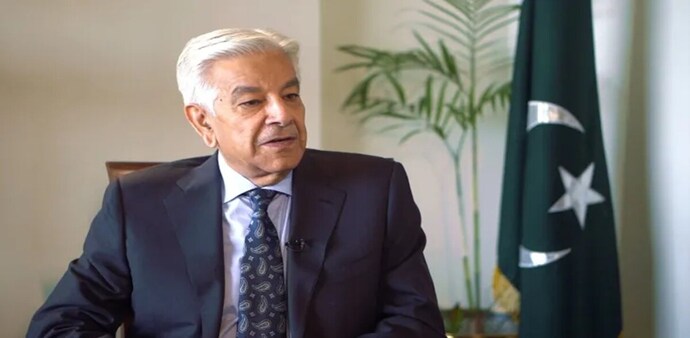
Pakistan's defence minister, Khawaja Asif, has given a direct warning to Afghanistan's Taliban government ahead of a final round of peace talks scheduled to take place in Istanbul, Turkey. Tensions between the two countries have risen following deadly border clashes and failed attempts at negotiation in previous sessions.
The upcoming discussions are viewed as pivotal for resolving disputes and addressing unfulfilled agreements, with both sides under pressure to reach a compromise.
In an interview with Geo News, Khawaja Asif stated, "If talks fail, only war will happen," highlighting the gravity of the situation should diplomatic efforts collapse. Asif's remarks have circulated widely on social media, further fuelling concern about the possibility of armed conflict between the neighbouring states.
During earlier talks on 29 October, Asif warned Afghanistan that Pakistan could 'push them back to the caves' if another militant attack occurred on its territory, according to local media. These comments underscored Islamabad's growing frustration over cross-border security issues and the lack of progress in negotiations.
Despite his stern warnings, Asif expressed hope that the Istanbul meeting would help both countries find a 'peaceful solution to the current tensions,' according to Dawn newspaper. His dual message reflects the high stakes of the upcoming talks and the risks of further escalation if they break down.
Pakistani representatives, including Asim Malik, head of the intelligence agency, have already departed for Istanbul. The Afghan delegation is led by Abdul Haq Wasiq, with several senior officials from intelligence and foreign affairs also participating, according to Afghan sources.
The Istanbul talks follow two earlier negotiation rounds, which ended without agreement despite the involvement of mediators from Qatar and Turkey. The second round lasted four days but failed to resolve persistent disagreements, leading to a temporary ceasefire.
Political analyst Asadullah Nadeem commented, 'It is possible that this round will be the final one, either to confirm or reject the framework of an agreement previously outlined between the delegations,' reported by ANI. The outcome of these deliberations could determine the trajectory of Pakistan-Afghanistan relations in the immediate future.
The border between Pakistan and Afghanistan remains tense, with both governments seeking to secure their interests and avoid renewed violence. The international community is closely monitoring the Istanbul negotiations for signs of progress or further confrontation.
Pakistan's defence minister, Khawaja Asif, has given a direct warning to Afghanistan's Taliban government ahead of a final round of peace talks scheduled to take place in Istanbul, Turkey. Tensions between the two countries have risen following deadly border clashes and failed attempts at negotiation in previous sessions.
The upcoming discussions are viewed as pivotal for resolving disputes and addressing unfulfilled agreements, with both sides under pressure to reach a compromise.
In an interview with Geo News, Khawaja Asif stated, "If talks fail, only war will happen," highlighting the gravity of the situation should diplomatic efforts collapse. Asif's remarks have circulated widely on social media, further fuelling concern about the possibility of armed conflict between the neighbouring states.
During earlier talks on 29 October, Asif warned Afghanistan that Pakistan could 'push them back to the caves' if another militant attack occurred on its territory, according to local media. These comments underscored Islamabad's growing frustration over cross-border security issues and the lack of progress in negotiations.
Despite his stern warnings, Asif expressed hope that the Istanbul meeting would help both countries find a 'peaceful solution to the current tensions,' according to Dawn newspaper. His dual message reflects the high stakes of the upcoming talks and the risks of further escalation if they break down.
Pakistani representatives, including Asim Malik, head of the intelligence agency, have already departed for Istanbul. The Afghan delegation is led by Abdul Haq Wasiq, with several senior officials from intelligence and foreign affairs also participating, according to Afghan sources.
The Istanbul talks follow two earlier negotiation rounds, which ended without agreement despite the involvement of mediators from Qatar and Turkey. The second round lasted four days but failed to resolve persistent disagreements, leading to a temporary ceasefire.
Political analyst Asadullah Nadeem commented, 'It is possible that this round will be the final one, either to confirm or reject the framework of an agreement previously outlined between the delegations,' reported by ANI. The outcome of these deliberations could determine the trajectory of Pakistan-Afghanistan relations in the immediate future.
The border between Pakistan and Afghanistan remains tense, with both governments seeking to secure their interests and avoid renewed violence. The international community is closely monitoring the Istanbul negotiations for signs of progress or further confrontation.