
Pakistan in crosshairs: Why IAF plans to deploy Tejas Mk1A squadrons in Rajasthan
The deployment is part of the IAF’s broader effort to replace ageing Soviet-era fighter platforms such as the MiG-21 with newer indigenous aircraft while improving rapid response capability along India’s western sector.
Business Today Desk
- May 11, 2026,
- Updated May 11, 2026 4:47 PM IST
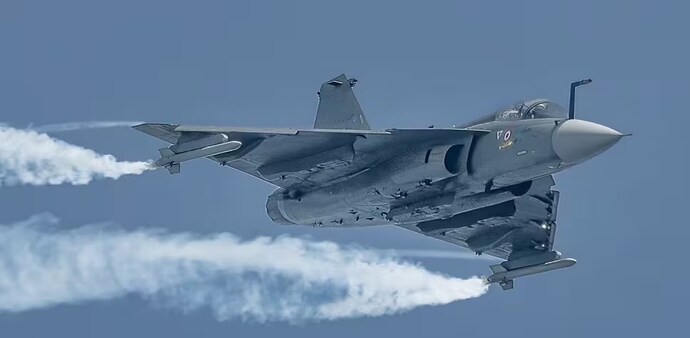
The Indian Air Force is preparing to deploy its first squadron of indigenous HAL Tejas Mk1A fighter aircraft near the Pakistan border, marking a significant step in India’s military modernisation and western front strategy.
According to defence-related reports, the first four squadrons of the Tejas Mk1A are expected to be stationed at forward air bases in Rajasthan, including Nal in Bikaner and Phalodi, both considered strategically important because of their proximity to Pakistan.
Advertisement
Focus on strengthening western air defence
The deployment is part of the IAF’s broader effort to replace ageing Soviet-era fighter platforms such as the MiG-21 with newer indigenous aircraft while improving rapid response capability along India’s western sector.
MUST READ | Mach 6+, nuclear-capable: How India’s new hypersonic system could redefine missile power
Nal airbase, which has historically hosted MiG-21 Bison squadrons, is now emerging as a key operational hub for Tejas aircraft.
Military analysts say positioning the Tejas Mk1A close to the western border would allow the IAF to improve surveillance, interception capability and strike readiness in sensitive desert sectors.
What makes the Tejas Mk1A different
The Tejas Mk1A is an upgraded version of India’s homegrown light combat aircraft programme developed by Hindustan Aeronautics Limited (HAL).
Advertisement
Compared to earlier variants, the Mk1A comes with several major upgrades, including:
- Advanced AESA radar
- Electronic warfare systems
- Beyond-visual-range missile capability
- Improved avionics
- Aerial refuelling support
Defence experts say these enhancements significantly improve survivability, combat flexibility and operational effectiveness.
India’s push for indigenous military platforms
The IAF already operates two Tejas Mk1 squadrons — No. 45 “Flying Daggers” and No. 18 “Flying Bullets”. The aircraft was first operationally deployed near the Pakistan border in 2020.
The new Mk1A deployment also aligns with the government’s broader “Aatmanirbhar Bharat” initiative aimed at boosting indigenous defence manufacturing and reducing dependence on foreign military imports.
Advertisement
The Tejas programme is viewed as a crucial part of India’s long-term effort to rebuild fighter squadron strength, which currently remains below the IAF’s sanctioned level of 42 squadrons.
Despite the strategic importance of the programme, the Tejas Mk1A induction has faced delays linked to engine supply issues and certification timelines.
Reports earlier this year indicated that deliveries had slipped beyond the original schedule. However, HAL has maintained that multiple aircraft are ready for induction once engine supplies from General Electric stabilise.
The Indian Air Force is preparing to deploy its first squadron of indigenous HAL Tejas Mk1A fighter aircraft near the Pakistan border, marking a significant step in India’s military modernisation and western front strategy.
According to defence-related reports, the first four squadrons of the Tejas Mk1A are expected to be stationed at forward air bases in Rajasthan, including Nal in Bikaner and Phalodi, both considered strategically important because of their proximity to Pakistan.
Advertisement
Focus on strengthening western air defence
The deployment is part of the IAF’s broader effort to replace ageing Soviet-era fighter platforms such as the MiG-21 with newer indigenous aircraft while improving rapid response capability along India’s western sector.
MUST READ | Mach 6+, nuclear-capable: How India’s new hypersonic system could redefine missile power
Nal airbase, which has historically hosted MiG-21 Bison squadrons, is now emerging as a key operational hub for Tejas aircraft.
Military analysts say positioning the Tejas Mk1A close to the western border would allow the IAF to improve surveillance, interception capability and strike readiness in sensitive desert sectors.
What makes the Tejas Mk1A different
The Tejas Mk1A is an upgraded version of India’s homegrown light combat aircraft programme developed by Hindustan Aeronautics Limited (HAL).
Advertisement
Compared to earlier variants, the Mk1A comes with several major upgrades, including:
- Advanced AESA radar
- Electronic warfare systems
- Beyond-visual-range missile capability
- Improved avionics
- Aerial refuelling support
Defence experts say these enhancements significantly improve survivability, combat flexibility and operational effectiveness.
India’s push for indigenous military platforms
The IAF already operates two Tejas Mk1 squadrons — No. 45 “Flying Daggers” and No. 18 “Flying Bullets”. The aircraft was first operationally deployed near the Pakistan border in 2020.
The new Mk1A deployment also aligns with the government’s broader “Aatmanirbhar Bharat” initiative aimed at boosting indigenous defence manufacturing and reducing dependence on foreign military imports.
Advertisement
The Tejas programme is viewed as a crucial part of India’s long-term effort to rebuild fighter squadron strength, which currently remains below the IAF’s sanctioned level of 42 squadrons.
Despite the strategic importance of the programme, the Tejas Mk1A induction has faced delays linked to engine supply issues and certification timelines.
Reports earlier this year indicated that deliveries had slipped beyond the original schedule. However, HAL has maintained that multiple aircraft are ready for induction once engine supplies from General Electric stabilise.
Read more!