
'Poor public diplomacy': Brahma Chellaney says CDS remarks in Singapore gave Pakistan a propaganda win
"The fact that the Singapore forum was also attended by Pakistan's chairman of the joint chiefs of staff only helped to hyphenate India with Pakistan," Chellaney noted.
- Jun 1, 2025,
- Updated Jun 1, 2025 5:10 PM IST
Geostrategist Brahma Chellaney on Sunday criticised the Modi government's post-conflict messaging strategy, calling the Chief of Defence Staff's acknowledgement of Indian aircraft losses during a recent forum in Singapore "poor public diplomacy." His remarks come amid renewed debate over narrative control following Operation Sindoor, the Indian military's four-day offensive in response to the terror attack in Pahalgam.
"The Modi government needlessly dispatched India’s Chief of Defense Staff to a forum in Singapore, where he handed a propaganda victory to Pakistan by acknowledging Indian warplane losses in a Reuters interview on the sidelines," Chellaney wrote on X. "Such admissions should have been made from Indian soil, accompanied by India’s own estimates of the damage inflicted on Pakistan in the brief war."
Chellaney also questioned the timing and location of the remarks. “The fact that the Singapore forum was also attended by Pakistan's chairman of the joint chiefs of staff only helped to hyphenate India with Pakistan,” he noted.
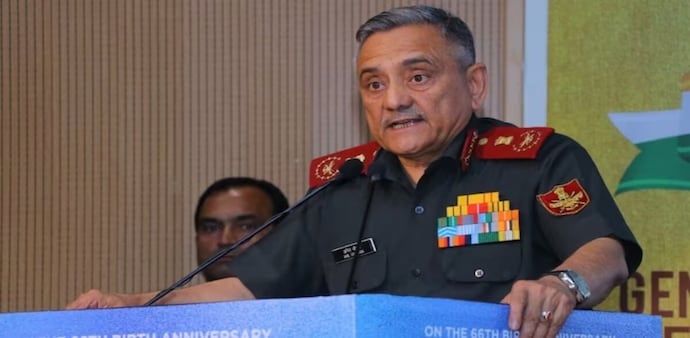
General Anil Chauhan, India’s Chief of Defence Staff, confirmed during his Singapore visit that India had suffered aircraft losses during the clashes, though he declined to provide specifics. He maintained that the important takeaway was not the downing of jets, but the tactical corrections that followed.
"So the good part is that we were able to understand the tactical mistakes which we made, remedy it, rectify it and then implement it again after two days and flew all our jets again targeting at long range," Chauhan told Bloomberg TV.
India launched Operation Sindoor on May 7, using precision airstrikes to target terrorist infrastructure in Pakistan-controlled territory. The operation was triggered by the Pahalgam terror attack and escalated into a four-day conflict. A massive Indian counterattack on May 10 forced Pakistan to call for a ceasefire, according to Indian officials.
Foreign policy analyst Sushant Sareen argued that the operation should be assessed by its objectives rather than aircraft losses. “Op Sindoor had two objectives: 1) hit terrorist bases in Pakistan & PoK. 9 bases were obliterated and objective achieved; 2) to dominate the escalation ladder. Again, this objective was achieved because despite initial losses, India not only beat back Pakistani attacks but continued to escalate until the Punjabi generals begged for a ceasefire,” he said.
Sareen also pointed out the broader outcome of the operation. “The loss of a couple of aircraft is not the metric on the basis of which Op Sindoor is to be judged. The achievement of the objective is the only metric… What followed was the grounding of the famed PAF, the complete decimation of Turkish drones and the destruction of Chinese junk tech in air defences and radars.”
Chellaney, however, warned that India’s strategic communication continues to undermine battlefield gains. "Modi has staged roadshows to cement the narrative of a decisive Indian victory… However, Trump’s repeated claims that he stopped the military hostilities by threatening India with trade sanctions have undercut Modi’s efforts. Now, the Indian Chief of Defense Staff — through a media interview in Singapore — has further complicated Modi’s attempt to control the post-conflict narrative," he said.
Geostrategist Brahma Chellaney on Sunday criticised the Modi government's post-conflict messaging strategy, calling the Chief of Defence Staff's acknowledgement of Indian aircraft losses during a recent forum in Singapore "poor public diplomacy." His remarks come amid renewed debate over narrative control following Operation Sindoor, the Indian military's four-day offensive in response to the terror attack in Pahalgam.
"The Modi government needlessly dispatched India’s Chief of Defense Staff to a forum in Singapore, where he handed a propaganda victory to Pakistan by acknowledging Indian warplane losses in a Reuters interview on the sidelines," Chellaney wrote on X. "Such admissions should have been made from Indian soil, accompanied by India’s own estimates of the damage inflicted on Pakistan in the brief war."
Chellaney also questioned the timing and location of the remarks. “The fact that the Singapore forum was also attended by Pakistan's chairman of the joint chiefs of staff only helped to hyphenate India with Pakistan,” he noted.
General Anil Chauhan, India’s Chief of Defence Staff, confirmed during his Singapore visit that India had suffered aircraft losses during the clashes, though he declined to provide specifics. He maintained that the important takeaway was not the downing of jets, but the tactical corrections that followed.
"So the good part is that we were able to understand the tactical mistakes which we made, remedy it, rectify it and then implement it again after two days and flew all our jets again targeting at long range," Chauhan told Bloomberg TV.
India launched Operation Sindoor on May 7, using precision airstrikes to target terrorist infrastructure in Pakistan-controlled territory. The operation was triggered by the Pahalgam terror attack and escalated into a four-day conflict. A massive Indian counterattack on May 10 forced Pakistan to call for a ceasefire, according to Indian officials.
Foreign policy analyst Sushant Sareen argued that the operation should be assessed by its objectives rather than aircraft losses. “Op Sindoor had two objectives: 1) hit terrorist bases in Pakistan & PoK. 9 bases were obliterated and objective achieved; 2) to dominate the escalation ladder. Again, this objective was achieved because despite initial losses, India not only beat back Pakistani attacks but continued to escalate until the Punjabi generals begged for a ceasefire,” he said.
Sareen also pointed out the broader outcome of the operation. “The loss of a couple of aircraft is not the metric on the basis of which Op Sindoor is to be judged. The achievement of the objective is the only metric… What followed was the grounding of the famed PAF, the complete decimation of Turkish drones and the destruction of Chinese junk tech in air defences and radars.”
Chellaney, however, warned that India’s strategic communication continues to undermine battlefield gains. "Modi has staged roadshows to cement the narrative of a decisive Indian victory… However, Trump’s repeated claims that he stopped the military hostilities by threatening India with trade sanctions have undercut Modi’s efforts. Now, the Indian Chief of Defense Staff — through a media interview in Singapore — has further complicated Modi’s attempt to control the post-conflict narrative," he said.