
Joining 'regime change' protests? UP's new rules could put your govt job prospects at risk
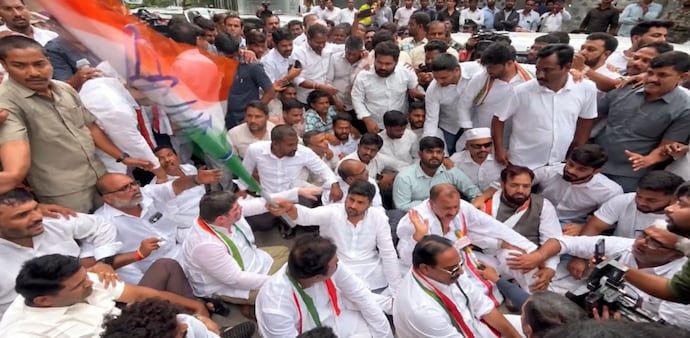
The development comes ahead of the Congress-led INDI alliance's November 1 rally, seeking the resignation of Chief Election Commissioner (CEC) Gyanesh Kumar over alleged irregularities in the Special Intensive Revision (SIR) of electoral rolls.
- Oct 29, 2026,
- Updated Oct 29, 2026 1:05 PM IST
The Uttar Pradesh government has tightened its character verification policy for candidates selected for direct recruitment to state government jobs. These guidelines apply to direct recruitments across state government departments, corporations, councils and local bodies.
The development comes ahead of the Congress-led INDI alliance's November 1 rally, seeking the resignation of Chief Election Commissioner (CEC) Gyanesh Kumar over alleged irregularities in the Special Intensive Revision (SIR) of electoral rolls.
DO CHECKOUT | “India Is Their Target”: Mohan Bhagwat Warns Of Western Influence And Regime Change
Protest-related violence may affect job eligibility
The government said that those found involved in violent activities during protests aimed at a "regime change" may be barred from employment. It, however, added that political ideology alone would not be a ground for disqualifying candidates.
FIR alone won't disqualify candidates
Further, the mere registration of an FIR or a pending investigation would also not automatically disqualify an applicant, as per the order issued by M. Devraj, Principal Secretary of the Appointment Department.
Business Today was unable to verify the claims independently.
Character verification is not a requisite for employees already serving in government departments. Information may be sought from a candidate's previous department, wherever applicable.
Exam fraud, paper leaks and cybercrime under scrutiny
Under the policy, a wide range of activities can render a candidate unsuitable for a government job. These include serious criminal offences, terrorism, corruption, exam-related fraud, paper leaks, the use of solver gangs and impersonation through dummy certificates.
Candidates linked to forgery of certificates and those having any involvement in cybercrimes, including digital arrests and UPI fraud, may also be disqualified under the new framework.
Candidates' past conduct may be examined
Candidates' activities after the of 21 may also be scrutinised under the new policy. Any involvement in the aforementioned activities within the last 3 years would be treated as evidence of continued involvement, unless there is evidence of a change in the person's conduct or outlook, according to a News18 report.
Police verification reports must be submitted within 30 days
Moreover, the police authorities will have to submit character verification reports within 30 days to prevent the recruitment process from getting stuck due to pending police verification.
What can candidates do in case of incomplete character verification?
According to reports, candidates may be issued provisional appointment letters after submitting the prescribed forms and self-declarations, subject to the result of the police verification process.
If a candidate is found ineligible or found to have provided false information, the appointment may be cancelled and he/she might face legal action, as applicable.
Less than two weeks ago, Uttar Pradesh Chief Minister Yogi Adityanath said in a post on X that power should be won through the mandate of the people and not through chaos on the streets. He also cautioned against attempts to bring about "Bangladesh-style" political upheavals in India.
On September 1, the Supreme Court quashed all FIRs registered against students who partook in the Cockroach Janta Party-led protests across India between July 20-25. The apex court said that the cases shouldn't affect their future. After this order, the party called off its September 5 march in Delhi.
Meanwhile, the Delhi High Court on Wednesday declined to entertain a petition seeking ₹50 crore in interim compensation from the Abhijeet Dipke-led CJP for allegedly causing harassment and public inconvenience due to protests and demonstrations in the national capital.
A bench comprising Acting Chief Justice Nitin Wasudeo Sambre and Justice Sanjay Sharma directed the petitioner to approach the Supreme Court as it was already hearing several petitions concerning the protests.