
‘Same short-term playbook every year’: Amitabh Kant lays out 4-point EV plan to fix Delhi’s AQI
Kant pointed out that transport is the single largest controllable source of Delhi’s air pollution, contributing nearly 25-40 per cent of PM2.5 emissions. Instead of accelerating electric mobility, he argued, policy focus has drifted towards congestion control and ageing vehicle restrictions.
- Dec 27, 2025,
- Updated Dec 27, 2025 8:50 PM IST
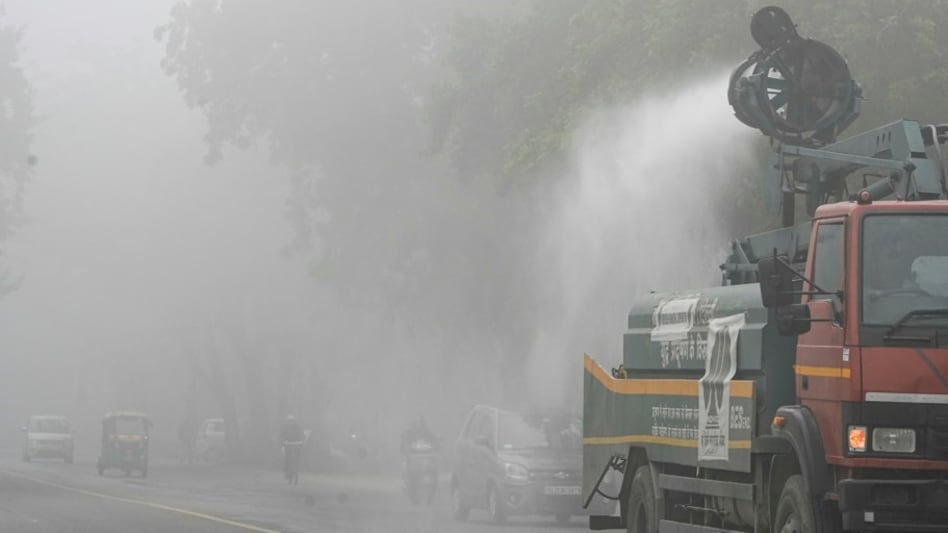
As Delhi once again slips into severe winter smog, former NITI Aayog CEO Amitabh Kant has made a factual case for a radical overhaul of the capital’s transport system, arguing that electric mobility is no longer an option but a public health imperative.
In an editorial in The Indian Express, Kant warned that Delhi’s annual cycle of emergency responses — such as traffic restrictions, school closures and short-term bans — treats symptoms rather than the disease. “Children breathe air that would trigger emergency responses in any global city. Hospitals fill with respiratory cases. Yet we return to the same short-term playbook,” he wrote.
Transport at the heart of Delhi’s pollution crisis
Kant pointed out that transport is the single largest controllable source of Delhi’s air pollution, contributing nearly 25-40 per cent of PM2.5 emissions. Instead of accelerating electric mobility, he argued, policy focus has drifted towards congestion control and ageing vehicle restrictions — measures that offer limited relief without addressing tailpipe emissions at scale.
Despite being India’s fastest-growing electric vehicle (EV) market until 2021, Delhi’s momentum has slowed. New electric vehicle registrations declined in 2024 and again in 2025, with two-wheeler EV registrations falling sharply. Kant attributed this to policy uncertainty and the vacuum created after the expiry of the Delhi EV Policy, leaving consumers and manufacturers in limbo.
Four-point roadmap to clean mobility
Kant laid out a clear, four-pronged strategy to move Delhi decisively towards zero-emission transport:
1. A world-class electric bus system: Delhi must commit to deploying 20,000 new electric buses, transforming public transport into the backbone of clean mobility. Predictable funding, clear accountability and enforceable targets are essential to make public transport reliable and attractive.
2. Accelerate EV adoption across segments: Calling for bold measures, Kant urged Delhi to go all-electric by accelerating EV adoption while phasing out new sales of non-electric two-wheelers and three-wheelers. “First, go all-electric and accelerate adoption while phasing out new ICE two-wheelers and three-wheelers starting 2026,” he wrote.
3. Phase out old and polluting vehicles: He recommended a year-round restriction on non-BS IV and BS VI vehicles, noting that Delhi cannot breathe clean air while outdated, high-emission vehicles continue to ply its roads.
4. Charging and swapping infrastructure ahead of demand: Kant stressed the need for accessible, reliable and scalable charging and battery-swapping infrastructure, warning that fragmented networks, broken chargers and uncertain uptime undermine consumer confidence. Charging infrastructure, he argued, must be treated as public utility infrastructure, not a peripheral add-on.
Clean mobility as a public health priority
“No global city has cleaned its air without cleaning its transport,” Kant wrote, underlining that clean mobility must be anchored in public health, not compromise. Predictable transitions, he said, reduce uncertainty for manufacturers, financiers and consumers alike, while sending a strong signal that air quality will not be negotiated away.
A five-year clean transport transformation, Kant argued, can change Delhi’s emissions trajectory, restore the city’s leadership in e-mobility and dramatically improve quality of life. “Delhi has the vision, policy instruments and institutional capacity,” he concluded. “What is required is clear choice and sustained execution.”
As Delhi once again slips into severe winter smog, former NITI Aayog CEO Amitabh Kant has made a factual case for a radical overhaul of the capital’s transport system, arguing that electric mobility is no longer an option but a public health imperative.
In an editorial in The Indian Express, Kant warned that Delhi’s annual cycle of emergency responses — such as traffic restrictions, school closures and short-term bans — treats symptoms rather than the disease. “Children breathe air that would trigger emergency responses in any global city. Hospitals fill with respiratory cases. Yet we return to the same short-term playbook,” he wrote.
Transport at the heart of Delhi’s pollution crisis
Kant pointed out that transport is the single largest controllable source of Delhi’s air pollution, contributing nearly 25-40 per cent of PM2.5 emissions. Instead of accelerating electric mobility, he argued, policy focus has drifted towards congestion control and ageing vehicle restrictions — measures that offer limited relief without addressing tailpipe emissions at scale.
Despite being India’s fastest-growing electric vehicle (EV) market until 2021, Delhi’s momentum has slowed. New electric vehicle registrations declined in 2024 and again in 2025, with two-wheeler EV registrations falling sharply. Kant attributed this to policy uncertainty and the vacuum created after the expiry of the Delhi EV Policy, leaving consumers and manufacturers in limbo.
Four-point roadmap to clean mobility
Kant laid out a clear, four-pronged strategy to move Delhi decisively towards zero-emission transport:
1. A world-class electric bus system: Delhi must commit to deploying 20,000 new electric buses, transforming public transport into the backbone of clean mobility. Predictable funding, clear accountability and enforceable targets are essential to make public transport reliable and attractive.
2. Accelerate EV adoption across segments: Calling for bold measures, Kant urged Delhi to go all-electric by accelerating EV adoption while phasing out new sales of non-electric two-wheelers and three-wheelers. “First, go all-electric and accelerate adoption while phasing out new ICE two-wheelers and three-wheelers starting 2026,” he wrote.
3. Phase out old and polluting vehicles: He recommended a year-round restriction on non-BS IV and BS VI vehicles, noting that Delhi cannot breathe clean air while outdated, high-emission vehicles continue to ply its roads.
4. Charging and swapping infrastructure ahead of demand: Kant stressed the need for accessible, reliable and scalable charging and battery-swapping infrastructure, warning that fragmented networks, broken chargers and uncertain uptime undermine consumer confidence. Charging infrastructure, he argued, must be treated as public utility infrastructure, not a peripheral add-on.
Clean mobility as a public health priority
“No global city has cleaned its air without cleaning its transport,” Kant wrote, underlining that clean mobility must be anchored in public health, not compromise. Predictable transitions, he said, reduce uncertainty for manufacturers, financiers and consumers alike, while sending a strong signal that air quality will not be negotiated away.
A five-year clean transport transformation, Kant argued, can change Delhi’s emissions trajectory, restore the city’s leadership in e-mobility and dramatically improve quality of life. “Delhi has the vision, policy instruments and institutional capacity,” he concluded. “What is required is clear choice and sustained execution.”