
Saudi co-funded Pak's nuclear program? Ex-US diplomat raises alarm after Saudi Arabia-Pakistan defence pact
Khalilzad went on to ponder whether this agreement signals a shift in the regional balance of power, particularly in light of the broader Middle Eastern dynamics.
- Sep 18, 2025,
- Updated Sep 18, 2025 3:01 PM IST
The signing of a new strategic defense pact between Pakistan and Saudi Arabia has raised significant concerns and questions, particularly regarding the implications for regional security and the potential for deeper military cooperation, including in nuclear capabilities.
Zalmay Khalilzad, a former US diplomat, on Thursday expressed concerns about the nature of the agreement and its broader geopolitical ramifications. "Does this confirm long-standing rumors that the Pakistani nuclear weapons program is unofficially 'co-sponsored' by the Saudis?" Khalilzad questioned in a post on X.
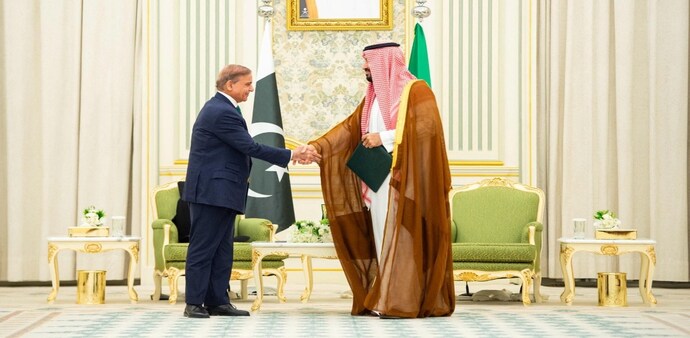
The 'Strategic Mutual Defence Agreement' signed on Wednesday during Pakistani Prime Minister Shehbaz Sharif's state visit to Riyadh is designed to strengthen the defense cooperation between the two nations. The agreement explicitly states that "any aggression against either country shall be considered an act of aggression against both," signaling a significant military alliance between the two.
Khalilzad went on to ponder whether this agreement signals a shift in the regional balance of power, particularly in light of the broader Middle Eastern dynamics. "Is the agreement an indication of declining confidence in US deterrence and defense on the part of Saudi Arabia and perhaps others?" he asked. The former diplomat highlighted that Pakistan, with its nuclear weapons and delivery systems, could potentially target not only regional adversaries like Israel but also has the capability to develop systems capable of reaching as far as the United States.
While Saudi Arabia's relationship with the US has long been defined by shared security concerns and oil interests, Khalilzad pointed out that Saudi Arabia's willingness to enter into such a strategic defense pact with Pakistan raises significant concerns about the future of US-Saudi relations. "If Saudi Arabia no longer trusts American security guarantees, why should anyone else?" Khalilzad asked.
The agreement also highlights Saudi Arabia's shift in defense alliances, particularly with its growing ties to Pakistan's military, which is heavily supported by China. As Khalilzad noted, "81% of Pakistan's weapon imports come from China," indicating Saudi Arabia's indirect alignment with the Chinese military-industrial complex. This shift further underscores the evolving security dynamics in the Middle East.
The timing of this pact also comes amid the ongoing conflict in Gaza, which has led to increasing divisions in the region. The United States' firm stance on supporting Israel has left many Gulf states, including Saudi Arabia, reassessing their defense options. "It's immensely telling in and of itself that this deal happened and wasn't prevented by the US," Khalilzad remarked.
India, in response to the signing of the defense pact, has announced that it will assess the implications of the agreement for its national security as well as regional stability. The Indian government remains vigilant about the growing defense ties between Pakistan and Saudi Arabia and has reiterated its commitment to safeguarding its interests. "The government remains committed to protecting India's national interests and ensuring comprehensive national security in all domains," said External Affairs Ministry spokesperson Randhir Jaiswal.
The new pact marks a significant shift in the security dynamics of the Middle East and South Asia, with potential far-reaching consequences. If Saudi Arabia's defense ties with Pakistan continue to grow, it could further complicate global alliances, particularly concerning India's security.
The signing of a new strategic defense pact between Pakistan and Saudi Arabia has raised significant concerns and questions, particularly regarding the implications for regional security and the potential for deeper military cooperation, including in nuclear capabilities.
Zalmay Khalilzad, a former US diplomat, on Thursday expressed concerns about the nature of the agreement and its broader geopolitical ramifications. "Does this confirm long-standing rumors that the Pakistani nuclear weapons program is unofficially 'co-sponsored' by the Saudis?" Khalilzad questioned in a post on X.
The 'Strategic Mutual Defence Agreement' signed on Wednesday during Pakistani Prime Minister Shehbaz Sharif's state visit to Riyadh is designed to strengthen the defense cooperation between the two nations. The agreement explicitly states that "any aggression against either country shall be considered an act of aggression against both," signaling a significant military alliance between the two.
Khalilzad went on to ponder whether this agreement signals a shift in the regional balance of power, particularly in light of the broader Middle Eastern dynamics. "Is the agreement an indication of declining confidence in US deterrence and defense on the part of Saudi Arabia and perhaps others?" he asked. The former diplomat highlighted that Pakistan, with its nuclear weapons and delivery systems, could potentially target not only regional adversaries like Israel but also has the capability to develop systems capable of reaching as far as the United States.
While Saudi Arabia's relationship with the US has long been defined by shared security concerns and oil interests, Khalilzad pointed out that Saudi Arabia's willingness to enter into such a strategic defense pact with Pakistan raises significant concerns about the future of US-Saudi relations. "If Saudi Arabia no longer trusts American security guarantees, why should anyone else?" Khalilzad asked.
The agreement also highlights Saudi Arabia's shift in defense alliances, particularly with its growing ties to Pakistan's military, which is heavily supported by China. As Khalilzad noted, "81% of Pakistan's weapon imports come from China," indicating Saudi Arabia's indirect alignment with the Chinese military-industrial complex. This shift further underscores the evolving security dynamics in the Middle East.
The timing of this pact also comes amid the ongoing conflict in Gaza, which has led to increasing divisions in the region. The United States' firm stance on supporting Israel has left many Gulf states, including Saudi Arabia, reassessing their defense options. "It's immensely telling in and of itself that this deal happened and wasn't prevented by the US," Khalilzad remarked.
India, in response to the signing of the defense pact, has announced that it will assess the implications of the agreement for its national security as well as regional stability. The Indian government remains vigilant about the growing defense ties between Pakistan and Saudi Arabia and has reiterated its commitment to safeguarding its interests. "The government remains committed to protecting India's national interests and ensuring comprehensive national security in all domains," said External Affairs Ministry spokesperson Randhir Jaiswal.
The new pact marks a significant shift in the security dynamics of the Middle East and South Asia, with potential far-reaching consequences. If Saudi Arabia's defense ties with Pakistan continue to grow, it could further complicate global alliances, particularly concerning India's security.