
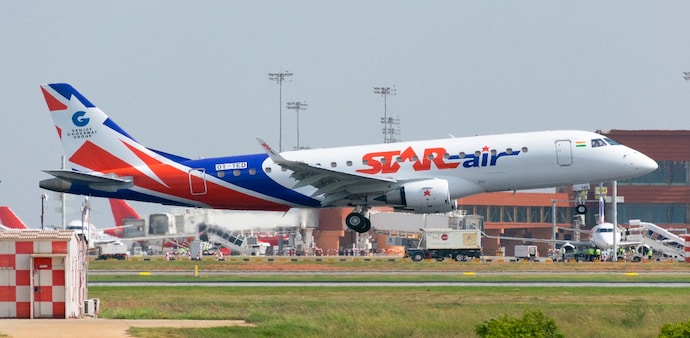
Star Air cuts weekly flights by 15-20% amid rising fuel costs; check details
Aviation turbine fuel is one of the largest components of an airline's operating expenses, accounting for around 40 per cent of total costs
- Nov 5, 2026,
- Updated Nov 5, 2026 5:20 AM IST
Regional airline Star Air has reduced its weekly flight operations by 15-20 per cent amid rising aviation turbine fuel (ATF) prices, highlighting the growing financial pressure on India's aviation sector. The airline is also seeking a special fuel-pricing mechanism for regional carriers to help manage escalating operational expenses and maintain connectivity across smaller cities.
Star Air has reduced its weekly flight schedule to 52 flights during the ongoing winter schedule. The move comes as rising fuel costs continue to squeeze airline finances, particularly those of regional operators that have limited flexibility to increase ticket prices.
READ THIS: Flying via Mumbai on November 19? Six-hour airport shutdown could disrupt your travel plans
Rising ATF prices put pressure on airlines
Aviation turbine fuel is one of the largest components of an airline's operating expenses, accounting for around 40 per cent of total costs. The recent surge in fuel prices, partly linked to the crisis in West Asia, has added to the financial challenges facing carriers.
For regional airlines such as Star Air, the impact is particularly significant because they operate on routes connecting smaller cities and towns, where demand and ticket pricing can limit their ability to pass on higher costs to passengers.
The airline's management believes a dedicated pricing mechanism for regional carriers could help cushion the impact of fuel-price volatility while supporting affordable air travel and regional connectivity.
ALSO READ: Air India bets big on global expansion, CEO signals more widebody orders
Star Air seeks special fuel-pricing mechanism
According to the report, the airline has called for a special arrangement that would allow regional carriers to access aviation fuel at more stable prices. The proposal could include a separate pricing structure for airlines operating specific routes under the government's Regional Connectivity Scheme, known as UDAN (Ude Desh ka Aam Nagrik).
Regional airlines account for approximately 3 per cent of the country's total ATF consumption, the executive noted. A targeted support mechanism could therefore help these operators without requiring a broad-based intervention across the aviation industry.
The proposal comes after the government introduced a Price Stabilisation Fund (PSF) earlier in 2026 to provide relief to airlines facing exceptional fuel-price volatility. The scheme has since lapsed, and the government is yet to take a final decision on whether to reintroduce it.