
'Tariff foreign remote workers': Peter Navarro drags India into new flashpoint
The U.S. currently doesn’t tax services. But if implemented, such a move could disrupt global outsourcing and draw legal pushback at the World Trade Organization.
- Sep 4, 2025,
- Updated Sep 4, 2025 6:50 AM IST
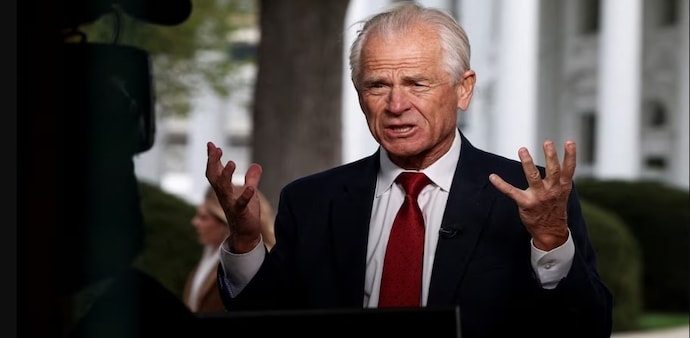
Peter Navarro has stirred fresh outrage. He is now backing a push to slap tariffs on foreign remote workers while doubling down on his attacks against India’s economy and leadership.
Donald Trump's trade advisor reposted a call from right-wing commentator Jack Posobiec urging tariffs on outsourced remote work. “Countries must pay for the privilege of providing services remotely to the US the same way as goods,” Posobiec wrote. Navarro amplified the message without caveat.
The U.S. currently doesn’t tax services. But if implemented, such a move could disrupt global outsourcing and draw legal pushback at the World Trade Organization. Countries like India — with massive remote workforces — would likely retaliate with tariffs on U.S. tech exports or restrictions on American firms hiring locally.
Navarro’s endorsement comes amid a storm over his recent remarks justifying Trump’s proposed 50% tariffs on Indian goods. “India is the maharaja of tariffs. They have the highest tariffs in the world. They export us a bunch of stuff. So, who gets hurt? Workers in America, taxpayers, Ukrainians,” he said.
He also criticized Indian Prime Minister Narendra Modi’s foreign policy, questioning his ties with Russia and China. “Modi is a great leader,” Navarro said, “but I don’t understand why he is getting into bed with Putin and Xi Jinping when India is the biggest democracy in the world.”
His most inflammatory remark came next: “You have got Brahmins profiteering at the expense of the Indian people, and we want that to stop.”
The comment sparked backlash across communities, with critics accusing Navarro of misrepresenting the caste system and dragging Indian social issues into American trade politics. In the U.S., “Brahmin” typically refers to wealthy elites — a definition that doesn’t map cleanly onto Indian realities.
Peter Navarro has stirred fresh outrage. He is now backing a push to slap tariffs on foreign remote workers while doubling down on his attacks against India’s economy and leadership.
Donald Trump's trade advisor reposted a call from right-wing commentator Jack Posobiec urging tariffs on outsourced remote work. “Countries must pay for the privilege of providing services remotely to the US the same way as goods,” Posobiec wrote. Navarro amplified the message without caveat.
The U.S. currently doesn’t tax services. But if implemented, such a move could disrupt global outsourcing and draw legal pushback at the World Trade Organization. Countries like India — with massive remote workforces — would likely retaliate with tariffs on U.S. tech exports or restrictions on American firms hiring locally.
Navarro’s endorsement comes amid a storm over his recent remarks justifying Trump’s proposed 50% tariffs on Indian goods. “India is the maharaja of tariffs. They have the highest tariffs in the world. They export us a bunch of stuff. So, who gets hurt? Workers in America, taxpayers, Ukrainians,” he said.
He also criticized Indian Prime Minister Narendra Modi’s foreign policy, questioning his ties with Russia and China. “Modi is a great leader,” Navarro said, “but I don’t understand why he is getting into bed with Putin and Xi Jinping when India is the biggest democracy in the world.”
His most inflammatory remark came next: “You have got Brahmins profiteering at the expense of the Indian people, and we want that to stop.”
The comment sparked backlash across communities, with critics accusing Navarro of misrepresenting the caste system and dragging Indian social issues into American trade politics. In the U.S., “Brahmin” typically refers to wealthy elites — a definition that doesn’t map cleanly onto Indian realities.