
'Tatas today are the face of India...': Former Solicitor General Harish Salve backs Tata Sons public listing
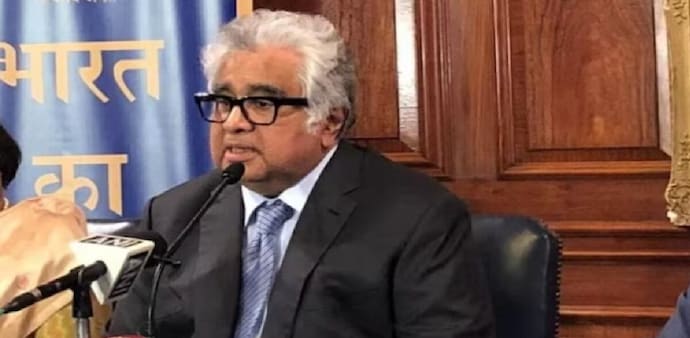
Addressing questions regarding the market listing of Tata Sons, Salve emphasised that the group’s national and global scale demands institutional evolution and professional stewardship.
- Sep 19, 2026,
- Updated Sep 19, 2026 8:10 AM IST
Tensions inside Bombay House reached a boiling point as senior advocate Harish Salve warned that "no company can function in deadlock" amid a high-stakes governance battle between Tata Sons and Tata Trusts. Speaking from London, the former Solicitor General of India insisted that an enterprise controlling assets worth Rs 2 lakh crore cannot remain hamstrung by internal trustee rifts.
Describing Tata Sons’ legal position as "legally perfect," Salve asserted that becoming a public entity is the natural path forward. Converting into a public company would dismantle restrictive clauses in the Articles of Association, paving the way for stock exchange listing and ensuring transparency across critical operations spanning aviation, defense, and green hydrogen.
Salve’s perspective on boardroom governance
Addressing questions regarding the market listing of Tata Sons, Salve emphasised that the group’s national and global scale demands institutional evolution and professional stewardship.
MUST READ | Tata Sons listing explained: Why the holding company was required to go public
"Tatas today are not even an institution. Tatas today are the face of India. It is India's largest corporate enterprise with the highest rating in ethics, governance, and management. Tatas has so many sensitive assets which the government has given them. Air India is a very sensitive asset which they've taken from the government and are trying to put back on its feet. They are doing defense work for government, they are setting up hydrogen projects. They are a global institution. A global institution cannot be run by three trustees saying we want it to go by our culture, what culture are we talking about? Today, in the day and age of transparency, an institution must refresh itself from time to time and the best talent must run this institution for the sake of not just the company, not for the shareholders, but for India," he told ANI.
Defending recent contentious board proceedings — where a deadlock between attending trustees was resolved via a chairman’s casting vote — Salve noted that such impasses only reinforce the necessity of transitioning to a public framework.
Noel Tata’s viewpoint & Tata Trusts’ stance
The resistance within Tata Trusts is led by Chairman Noel Tata, who continues to oppose converting Tata Sons into a public entity. Tata Trusts, which commands a 66 percent controlling stake in Tata Sons, maintains that the conglomerate’s century-old structure must be preserved rather than opened to direct public market scrutiny.
Challenging unilateral board resolutions as illegal, Tata Trusts voiced its firm opposition to an immediate listing: "The Board agreed that all available options, and not listing alone, should be thoroughly explored and assessed on an immediate basis, with the findings and recommendations presented to the Board," Tata Trusts said.
Seeking alternative resolutions to keep the holding company closely held, Noel Tata has also advanced a proposal centered around a Rs 25,000-crore equity buyout of minority shareholders.
SP Group welcomes public listing push
The Shapoorji Pallonji Group, holding an 18.37 percent minority stake in Tata Sons, has aligned with the RBI’s regulatory push for a public listing. The SP Group welcomed the transition, viewing an initial public offering as an essential step toward establishing fair value, restoring shareholder transparency, and securing long-term governance stability for the conglomerate.
Tensions inside Bombay House reached a boiling point as senior advocate Harish Salve warned that "no company can function in deadlock" amid a high-stakes governance battle between Tata Sons and Tata Trusts. Speaking from London, the former Solicitor General of India insisted that an enterprise controlling assets worth Rs 2 lakh crore cannot remain hamstrung by internal trustee rifts.
Describing Tata Sons’ legal position as "legally perfect," Salve asserted that becoming a public entity is the natural path forward. Converting into a public company would dismantle restrictive clauses in the Articles of Association, paving the way for stock exchange listing and ensuring transparency across critical operations spanning aviation, defense, and green hydrogen.
Salve’s perspective on boardroom governance
Addressing questions regarding the market listing of Tata Sons, Salve emphasised that the group’s national and global scale demands institutional evolution and professional stewardship.
MUST READ | Tata Sons listing explained: Why the holding company was required to go public
"Tatas today are not even an institution. Tatas today are the face of India. It is India's largest corporate enterprise with the highest rating in ethics, governance, and management. Tatas has so many sensitive assets which the government has given them. Air India is a very sensitive asset which they've taken from the government and are trying to put back on its feet. They are doing defense work for government, they are setting up hydrogen projects. They are a global institution. A global institution cannot be run by three trustees saying we want it to go by our culture, what culture are we talking about? Today, in the day and age of transparency, an institution must refresh itself from time to time and the best talent must run this institution for the sake of not just the company, not for the shareholders, but for India," he told ANI.
Defending recent contentious board proceedings — where a deadlock between attending trustees was resolved via a chairman’s casting vote — Salve noted that such impasses only reinforce the necessity of transitioning to a public framework.
Noel Tata’s viewpoint & Tata Trusts’ stance
The resistance within Tata Trusts is led by Chairman Noel Tata, who continues to oppose converting Tata Sons into a public entity. Tata Trusts, which commands a 66 percent controlling stake in Tata Sons, maintains that the conglomerate’s century-old structure must be preserved rather than opened to direct public market scrutiny.
Challenging unilateral board resolutions as illegal, Tata Trusts voiced its firm opposition to an immediate listing: "The Board agreed that all available options, and not listing alone, should be thoroughly explored and assessed on an immediate basis, with the findings and recommendations presented to the Board," Tata Trusts said.
Seeking alternative resolutions to keep the holding company closely held, Noel Tata has also advanced a proposal centered around a Rs 25,000-crore equity buyout of minority shareholders.
SP Group welcomes public listing push
The Shapoorji Pallonji Group, holding an 18.37 percent minority stake in Tata Sons, has aligned with the RBI’s regulatory push for a public listing. The SP Group welcomed the transition, viewing an initial public offering as an essential step toward establishing fair value, restoring shareholder transparency, and securing long-term governance stability for the conglomerate.