
'They'll be paying tariffs': Trump on India-US trade deal after Supreme Court ruling
On Friday, the US Supreme Court struck down Trump's reciprocal tariffs under the International Emergency Economic Powers Act (IEEPA), a law intended for national emergencies.
- Feb 21, 2026,
- Updated Feb 21, 2026 7:45 AM IST
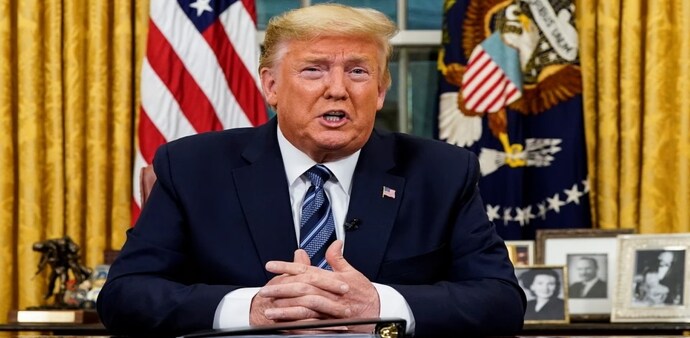
US President Donald Trump on Saturday said that there would be no change in the India-US trade deal despite the Supreme Court striking down his earlier reciprocal tariffs. Trump told reporters that India would be paying tariffs and not America.
On Friday, the US Supreme Court struck down Trump's reciprocal tariffs under the International Emergency Economic Powers Act (IEEPA), a law intended for national emergencies.
"Nothing changes. They'll be paying tariffs, and we will not be paying tariffs. Our deal with India is they pay tariffs; this is a reversal from what it used to be, as you know," he said.
He further praised Prime Minister Narendra Modi, calling him a "great man".
"India, I think Prime Minister Modi is a great gentleman, a great man, actually. But he was much smarter than the people that he was against in terms of the United States. He was ripping us off in India. So we made a deal with India, and it's a fair deal now, and we are not paying tariffs to them, and they are paying tariffs. We did a little flip," Trump said.
What happened in the US Supreme Court?
The case was brought by businesses affected by the tariffs along with 12 US states, most of them led by Democratic governors. They challenged Trump's unilateral use of the law to impose import taxes.
The President defended the tariffs as key to protecting the US economic security, warning that the country would be weakened without them. He argued that the US had been treated unfairly by several countries, including China and India.
In a 6-3 ruling, the court upheld a lower court's decision that found Trump exceeded his authority under the IEEPA. The bench said that the IEEPA does not grant the President the blanket authority to impose broad-based global tariffs under a national emergency declaration.
The court concluded that such sweeping measures require clear authorisation from Congress rather than unilateral executive action.
What happens next?
After the Supreme Court ruling, Trump called the decision a "disgrace" and signalled that his administration is preparing a "backup plan".
A White House official said that the newly announced 10 per cent global tariff would apply to India. "Yes, 10% until another authority is invoked,” the official said, whether India would face the new tariffs and whether it would replace tariffs that were previously imposed under the IEEPA.
He also urged all trade partners to adhere strictly to existing trade agreements, adding that Washington expects countries to "abide by the trade deals".
US President Donald Trump on Saturday said that there would be no change in the India-US trade deal despite the Supreme Court striking down his earlier reciprocal tariffs. Trump told reporters that India would be paying tariffs and not America.
On Friday, the US Supreme Court struck down Trump's reciprocal tariffs under the International Emergency Economic Powers Act (IEEPA), a law intended for national emergencies.
"Nothing changes. They'll be paying tariffs, and we will not be paying tariffs. Our deal with India is they pay tariffs; this is a reversal from what it used to be, as you know," he said.
He further praised Prime Minister Narendra Modi, calling him a "great man".
"India, I think Prime Minister Modi is a great gentleman, a great man, actually. But he was much smarter than the people that he was against in terms of the United States. He was ripping us off in India. So we made a deal with India, and it's a fair deal now, and we are not paying tariffs to them, and they are paying tariffs. We did a little flip," Trump said.
What happened in the US Supreme Court?
The case was brought by businesses affected by the tariffs along with 12 US states, most of them led by Democratic governors. They challenged Trump's unilateral use of the law to impose import taxes.
The President defended the tariffs as key to protecting the US economic security, warning that the country would be weakened without them. He argued that the US had been treated unfairly by several countries, including China and India.
In a 6-3 ruling, the court upheld a lower court's decision that found Trump exceeded his authority under the IEEPA. The bench said that the IEEPA does not grant the President the blanket authority to impose broad-based global tariffs under a national emergency declaration.
The court concluded that such sweeping measures require clear authorisation from Congress rather than unilateral executive action.
What happens next?
After the Supreme Court ruling, Trump called the decision a "disgrace" and signalled that his administration is preparing a "backup plan".
A White House official said that the newly announced 10 per cent global tariff would apply to India. "Yes, 10% until another authority is invoked,” the official said, whether India would face the new tariffs and whether it would replace tariffs that were previously imposed under the IEEPA.
He also urged all trade partners to adhere strictly to existing trade agreements, adding that Washington expects countries to "abide by the trade deals".