
'US has deliberately become a lonelier power': EAM Jaishankar on shifting global order
No one in the room would disagree with the fact that the landscape today is primarily marked by a radical repositioning of the US, says EAM Jaishankar
- Oct 4, 2026,
- Updated Oct 4, 2026 9:13 PM IST
External Affairs Minister S Jaishankar said on Sunday that the United States (US) has "deliberately become a lonelier power" as global geopolitics undergoes a major shift.
The EAM said the global order was being shaped by a "radical repositioning" of the US and the growing power of China. He also added that the resulting competition had also led countries to use whatever leverage they have.
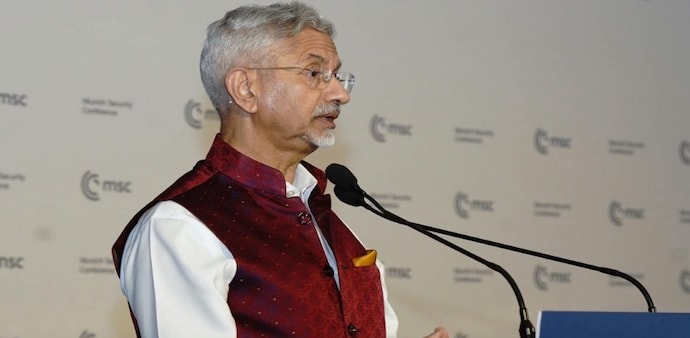
"No one in the room would disagree with the fact that the landscape today is primarily marked by a radical repositioning of the United States. A repositioning, which is a posture of choice and, in a way, it has deliberately become a lonelier power," he said while speaking at the Munich Leaders Meeting in New Delhi.
"The second feature of the landscape is, of course, the rise of China. China, which sees itself as a unique country that is in a way both its self-perception, in many ways, also the reality. And we are looking at very sharp competition," he added.
'Weaponisation' of leverage
The EAM said the competition was not limited to Washington and Beijing. That competition today, he added, not limited to these two countries, has led to a weaponisation of any leverage that any country has. "And that competition coexists with the complexity of interdependence."
He said emerging and middle powers would need to strengthen cooperation among themselves while also maintaining ties with both the US and China. "Amongst the emerging and middle powers, to the extent that they don’t have direct clashes of interest, they have an interest in strengthening their interstate cooperation, but it is also natural that they would have cooperation with the US and China," he said.
Quad, BRICS and other groupings
Jaishankar pointed to several examples of countries working together despite the broader geopolitical competition. He cited the Quad and connectivity projects such as the India-Middle East-Europe Economic Corridor, the International North-South Transport Corridor, and the Northern Sea Route.
He also described BRICS as an example of countries coming together because their collective voice can be stronger than individual ones.
"The International Solar Alliance or the Coalition for Disaster Resilient Infrastructure, both of which India initiated and which have been very successful," he said. "You have this situation where a number of countries, not necessarily the leading countries… they come together where their interests require them to do so: they find working arrangements, develop an agenda, develop organizations, develop habits of cooperation, and this is today’s evolving global order."
External Affairs Minister S Jaishankar said on Sunday that the United States (US) has "deliberately become a lonelier power" as global geopolitics undergoes a major shift.
The EAM said the global order was being shaped by a "radical repositioning" of the US and the growing power of China. He also added that the resulting competition had also led countries to use whatever leverage they have.
"No one in the room would disagree with the fact that the landscape today is primarily marked by a radical repositioning of the United States. A repositioning, which is a posture of choice and, in a way, it has deliberately become a lonelier power," he said while speaking at the Munich Leaders Meeting in New Delhi.
"The second feature of the landscape is, of course, the rise of China. China, which sees itself as a unique country that is in a way both its self-perception, in many ways, also the reality. And we are looking at very sharp competition," he added.
'Weaponisation' of leverage
The EAM said the competition was not limited to Washington and Beijing. That competition today, he added, not limited to these two countries, has led to a weaponisation of any leverage that any country has. "And that competition coexists with the complexity of interdependence."
He said emerging and middle powers would need to strengthen cooperation among themselves while also maintaining ties with both the US and China. "Amongst the emerging and middle powers, to the extent that they don’t have direct clashes of interest, they have an interest in strengthening their interstate cooperation, but it is also natural that they would have cooperation with the US and China," he said.
Quad, BRICS and other groupings
Jaishankar pointed to several examples of countries working together despite the broader geopolitical competition. He cited the Quad and connectivity projects such as the India-Middle East-Europe Economic Corridor, the International North-South Transport Corridor, and the Northern Sea Route.
He also described BRICS as an example of countries coming together because their collective voice can be stronger than individual ones.
"The International Solar Alliance or the Coalition for Disaster Resilient Infrastructure, both of which India initiated and which have been very successful," he said. "You have this situation where a number of countries, not necessarily the leading countries… they come together where their interests require them to do so: they find working arrangements, develop an agenda, develop organizations, develop habits of cooperation, and this is today’s evolving global order."