
US sent warships in 1971, we still won: Manish Tewari to Trump after tariff threat over Russia oil
Manish Tewari's remarks came hours after Trump said he would raise tariffs on India, accusing the country of profiting from Russian oil sales.
- Aug 5, 2025,
- Updated Aug 5, 2025 2:34 PM IST
Congress MP Manish Tewari on Monday responded to US President Donald Trump's new tariff threats, invoking the 1971 Indo-Pakistan war and America's failed attempt to pressure India with the Seventh Fleet. "Don't lose sleep on it, Donald Trump," Tewari wrote on X. "Your nation sent the seventh fleet into the Bay of Bengal in 1971 to deter us from reordering the political map of South Asia. We withstood that. We have enough resilience as a nation to withstand your Tariff threat. Thank you very much for your attention to this matter SIR."
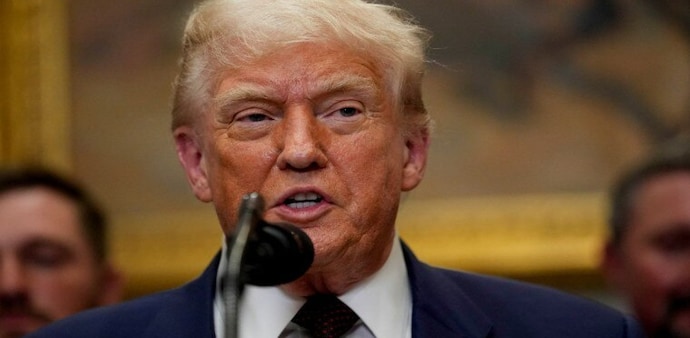
Tewari's remarks came hours after Trump said he would raise tariffs on India, accusing the country of profiting from Russian oil sales. "India is not only buying massive amounts of Russian Oil, they are then, for much of the Oil purchased, selling it on the Open Market for big profits," Trump wrote on Truth Social. "They don't care how many people in Ukraine are being killed by the Russian War Machine. Because of this, I will be substantially raising the Tariff paid by India to the USA."
Trump had previously attacked India for its close ties with Russia, calling India and Russia "dead economies" and accusing New Delhi of maintaining one of the "most strenuous and obnoxious non-monetary Trade Barriers of any country." Last week, the White House confirmed a 25 per cent tariff on Indian goods under an executive order.
The Indian government responded on Monday with a detailed rebuttal, defending its Russian oil imports and calling the targeting of India "unjustified and unreasonable." The Ministry of External Affairs said: "India has been targeted by the United States and the European Union for importing oil from Russia after the commencement of the Ukraine conflict. In fact, India began importing from Russia because traditional supplies were diverted to Europe after the outbreak of the conflict. The United States at that time actively encouraged such imports by India for strengthening global energy markets stability."
The ministry further said that India's imports are meant to ensure predictable and affordable energy costs to the Indian consumer. "They are a necessity compelled by global market situation. However, it is revealing that the very nations criticizing India are themselves indulging in trade with Russia. Unlike our case, such trade is not even a vital national compulsion."
"Where the United States is concerned, it continues to import from Russia uranium hexafluoride for its nuclear industry, palladium for its EV industry, fertilizers as well as chemicals," the statement noted, while citing Europe's record-high trade volumes with Russia in energy, machinery, and chemicals.
Tewari's reference to the 1971 standoff between India and the US recalled a crucial chapter in Indian foreign policy history. During the Bangladesh Liberation War, the US deployed the Seventh Fleet in the Bay of Bengal as a show of strength to deter India. But India, backed diplomatically and militarily by the Soviet Union, pushed ahead with military operations that ultimately led to the creation of Bangladesh.
Congress MP Manish Tewari on Monday responded to US President Donald Trump's new tariff threats, invoking the 1971 Indo-Pakistan war and America's failed attempt to pressure India with the Seventh Fleet. "Don't lose sleep on it, Donald Trump," Tewari wrote on X. "Your nation sent the seventh fleet into the Bay of Bengal in 1971 to deter us from reordering the political map of South Asia. We withstood that. We have enough resilience as a nation to withstand your Tariff threat. Thank you very much for your attention to this matter SIR."
Tewari's remarks came hours after Trump said he would raise tariffs on India, accusing the country of profiting from Russian oil sales. "India is not only buying massive amounts of Russian Oil, they are then, for much of the Oil purchased, selling it on the Open Market for big profits," Trump wrote on Truth Social. "They don't care how many people in Ukraine are being killed by the Russian War Machine. Because of this, I will be substantially raising the Tariff paid by India to the USA."
Trump had previously attacked India for its close ties with Russia, calling India and Russia "dead economies" and accusing New Delhi of maintaining one of the "most strenuous and obnoxious non-monetary Trade Barriers of any country." Last week, the White House confirmed a 25 per cent tariff on Indian goods under an executive order.
The Indian government responded on Monday with a detailed rebuttal, defending its Russian oil imports and calling the targeting of India "unjustified and unreasonable." The Ministry of External Affairs said: "India has been targeted by the United States and the European Union for importing oil from Russia after the commencement of the Ukraine conflict. In fact, India began importing from Russia because traditional supplies were diverted to Europe after the outbreak of the conflict. The United States at that time actively encouraged such imports by India for strengthening global energy markets stability."
The ministry further said that India's imports are meant to ensure predictable and affordable energy costs to the Indian consumer. "They are a necessity compelled by global market situation. However, it is revealing that the very nations criticizing India are themselves indulging in trade with Russia. Unlike our case, such trade is not even a vital national compulsion."
"Where the United States is concerned, it continues to import from Russia uranium hexafluoride for its nuclear industry, palladium for its EV industry, fertilizers as well as chemicals," the statement noted, while citing Europe's record-high trade volumes with Russia in energy, machinery, and chemicals.
Tewari's reference to the 1971 standoff between India and the US recalled a crucial chapter in Indian foreign policy history. During the Bangladesh Liberation War, the US deployed the Seventh Fleet in the Bay of Bengal as a show of strength to deter India. But India, backed diplomatically and militarily by the Soviet Union, pushed ahead with military operations that ultimately led to the creation of Bangladesh.