
'US would face recession, oil at $150 if India stopped buying Russian oil': Fareed Zakaria warns Trump
"It's puzzling what Trump is doing. It is a reversal of really 25 years of American foreign policy," says Fareed Zakaria
- Aug 12, 2025,
- Updated Aug 12, 2025 4:26 PM IST
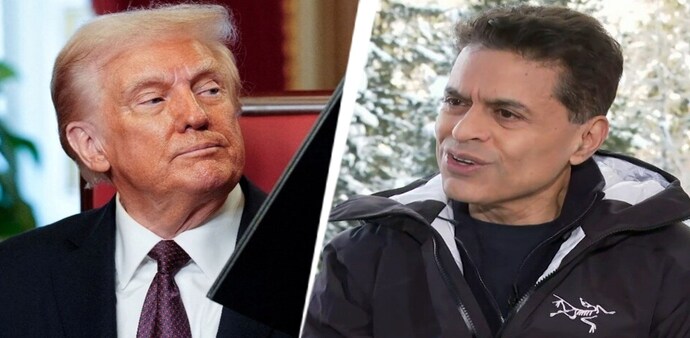
Political commentator and author Fareed Zakaria has said that US President Donald Trump's decision to impose a 50% tariff on Indian imports makes no sense and that it has left many in Washington puzzled.
In an interview with News18, Zakaria argued that if India and China stopped buying Russian oil, crude prices could surge to $150 a barrel, which would harm global economies. He described Trump's tariff move as an illogical reversal of 25 years of bipartisan US foreign policy that had strengthened ties with India.
"It's puzzling what Trump is doing. It is a reversal of really 25 years of American foreign policy. If you go back to the Clinton administration after the Cold War, a strategic decision was made that the United States wanted to be closer to India," the author said. He noted that in the last two decades, every American administration had worked to bolster relations with India, viewing it as a vital geopolitical and economic ally in Asia.
"Trump is really reversing 25 years of bipartisan American foreign policy that saw a new strategic alliance with India as in the United States's vital national interest both geopolitically and geoeconomically," Zakaria added.
The 50% tariff, which will come into effect on August 27, is set to penalise India for buying Russian oil, with Zakaria pointing out that China buys more oil from Russia than India, making the justification for the tariff even more flawed. "The excuse for the highly punitive tariffs-the buying of Russian oil-makes no sense because China buys more oil than India does."
"If India and China didn't buy Russian oil," the foreign policy watcher further said, "oil would be $150 a barrel because you would have taken all that supply off the market, it would cause a recession in the Western world, it would cause a recession in America - and Trump surely doesn't want to do that."
Zakaria praised the Biden administration's approach, which aimed to get Russia to discount its oil further through price caps. This move, he said, ensured a steady supply of oil for the world but did not end up with massive Russian revenues for Russian President Vladimir Putin.
The author also raised doubts about the rationale behind Trump's decision, stating that it seemed to be driven by personal interests. "It's highly personalistic. We're dealing with somebody, it's almost like dealing with the dictator of a third-world country where the personal interests, the personal aggravations make a huge difference," Zakaria said. He cited Trump's treatment of other countries, such as Brazil, as an example of how personal grievances influence his policy decisions.
Zakaria also pointed out the unusual nature of Trump's relationship with Pakistan. "It is extraordinarily unusual for the president of the United States to grant a military dictator, the head of the Pakistani army, a two-hour meeting in the Oval Office," he said. This meeting, the global affairs expert explained, was unprecedented and linked to a reported business interest involving the Trump family and a Pakistani crypto venture.
He concluded by questioning the logic of the tariffs, stating, "It makes no rational logical sense-because India's trade with the US is too small, China buys more Russian oil than India does, and if both of them were to stop, oil would go up to $150 a barrel. So the problem here is we have eliminated all rational explanations for tariffs on India."
Political commentator and author Fareed Zakaria has said that US President Donald Trump's decision to impose a 50% tariff on Indian imports makes no sense and that it has left many in Washington puzzled.
In an interview with News18, Zakaria argued that if India and China stopped buying Russian oil, crude prices could surge to $150 a barrel, which would harm global economies. He described Trump's tariff move as an illogical reversal of 25 years of bipartisan US foreign policy that had strengthened ties with India.
"It's puzzling what Trump is doing. It is a reversal of really 25 years of American foreign policy. If you go back to the Clinton administration after the Cold War, a strategic decision was made that the United States wanted to be closer to India," the author said. He noted that in the last two decades, every American administration had worked to bolster relations with India, viewing it as a vital geopolitical and economic ally in Asia.
"Trump is really reversing 25 years of bipartisan American foreign policy that saw a new strategic alliance with India as in the United States's vital national interest both geopolitically and geoeconomically," Zakaria added.
The 50% tariff, which will come into effect on August 27, is set to penalise India for buying Russian oil, with Zakaria pointing out that China buys more oil from Russia than India, making the justification for the tariff even more flawed. "The excuse for the highly punitive tariffs-the buying of Russian oil-makes no sense because China buys more oil than India does."
"If India and China didn't buy Russian oil," the foreign policy watcher further said, "oil would be $150 a barrel because you would have taken all that supply off the market, it would cause a recession in the Western world, it would cause a recession in America - and Trump surely doesn't want to do that."
Zakaria praised the Biden administration's approach, which aimed to get Russia to discount its oil further through price caps. This move, he said, ensured a steady supply of oil for the world but did not end up with massive Russian revenues for Russian President Vladimir Putin.
The author also raised doubts about the rationale behind Trump's decision, stating that it seemed to be driven by personal interests. "It's highly personalistic. We're dealing with somebody, it's almost like dealing with the dictator of a third-world country where the personal interests, the personal aggravations make a huge difference," Zakaria said. He cited Trump's treatment of other countries, such as Brazil, as an example of how personal grievances influence his policy decisions.
Zakaria also pointed out the unusual nature of Trump's relationship with Pakistan. "It is extraordinarily unusual for the president of the United States to grant a military dictator, the head of the Pakistani army, a two-hour meeting in the Oval Office," he said. This meeting, the global affairs expert explained, was unprecedented and linked to a reported business interest involving the Trump family and a Pakistani crypto venture.
He concluded by questioning the logic of the tariffs, stating, "It makes no rational logical sense-because India's trade with the US is too small, China buys more Russian oil than India does, and if both of them were to stop, oil would go up to $150 a barrel. So the problem here is we have eliminated all rational explanations for tariffs on India."