
Visiting a sick father, eight members of a Gurugram family die in Malviya Nagar fire
The family had checked into the Flourish Stay B&B to stay close to Max Hospital in Saket, where a member of their family was undergoing treatment
- Jun 4, 2026,
- Updated Jun 4, 2026 9:48 AM IST
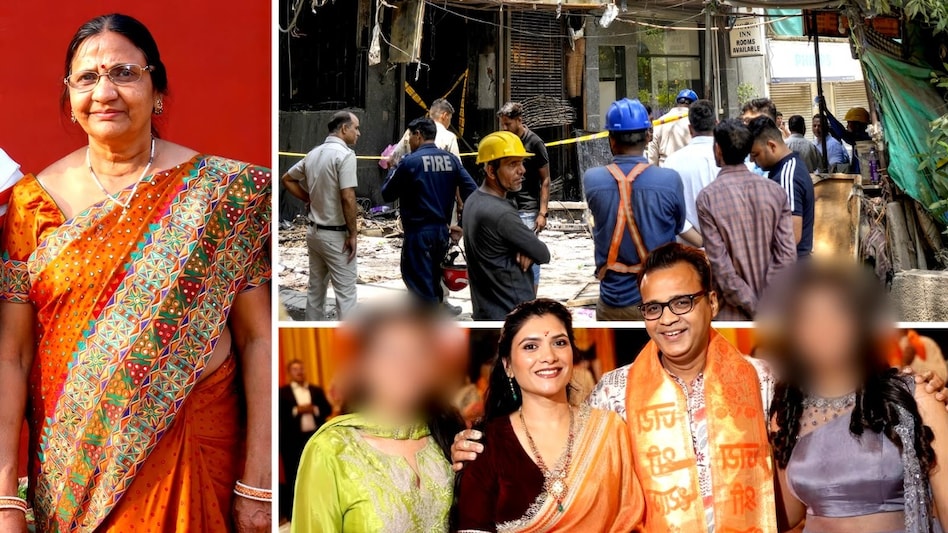
A visit to care for a sick father ended in unimaginable tragedy for a Gurugram family, as a devastating fire at a Malviya Nagar hotel claimed the lives of eight relatives across two generations. The family had checked into the Flourish Stay B&B to stay close to Max Hospital in Saket, where a member of their family was undergoing treatment, only to be caught in an inferno that killed 21 people, including nine Indians and 12 foreigners.
Who were the family members?
Among the dead were 48-year-old Vivek Aggarwal, his wife Tarjni, their daughters Jivisha and Varya, along with family members Jhaveri, Ashok Aggarwal, Kamla, and Prem Lata Aggarwal.
ALSO READ: Bihar hospital fire: 3 dead, ICU chief gravely injured, families allege staff fled the scene
The family had checked into the hotel to remain close to Max Hospital in Saket, where Vivek's elderly father, Radheshayam Aggarwal, in his 80s and being treated for a lung ailment. Three additional relatives from Tarjni's maternal side had also travelled to Delhi to visit Radheshayam and were staying with the family. They too died in the blaze, taking the family's toll to eight.
The fire broke out around 8:30 am and spread rapidly through the five-floor building, which had only one entry and exit point, permanently sealed windows, and a sensor-operated main door. The structural design left virtually no room for escape.
As relatives gathered at Max Hospital in the aftermath, grief and disbelief were written across every face. Perhaps the most devastating dimension of the tragedy is that Radheshayam himself, still receiving treatment, may not yet fully know that he has lost his wife, his son, his daughter-in-law, two granddaughters, and three relatives who had come to be by his side.
Neighbours in Gurugram remembered Vivek as a gentle, family-oriented man who had made the trip to Delhi for no reason other than to be with his father.
MUST READ: Malviya Nagar fire tragedy: What Delhi Government’s new fire safety rules say
A trail of safety failures
A preliminary investigation has exposed a series of serious regulatory and safety lapses at the hotel. The probe found an unlicensed restaurant operating on the ground floor, a locked grill in the basement, inadequate escape routes, and small windows that would have severely hampered any evacuation attempt.
Investigators are now examining whether the hotel was operating beyond its authorised capacity, a question that has already yielded a damning answer. The establishment was approved to run six rooms under the bed-and-breakfast policy. At the time of the fire, 25 rooms were in operation.
The probe is also looking at whether the basement had adequate access and exit arrangements, what role unauthorised commercial activity within the building may have played in escalating the fire risk, and whether the hotel's location in a congested neighbourhood, with overhead electrical cables surrounding the structure, hindered firefighting operations and delayed rescue efforts.
A visit to care for a sick father ended in unimaginable tragedy for a Gurugram family, as a devastating fire at a Malviya Nagar hotel claimed the lives of eight relatives across two generations. The family had checked into the Flourish Stay B&B to stay close to Max Hospital in Saket, where a member of their family was undergoing treatment, only to be caught in an inferno that killed 21 people, including nine Indians and 12 foreigners.
Who were the family members?
Among the dead were 48-year-old Vivek Aggarwal, his wife Tarjni, their daughters Jivisha and Varya, along with family members Jhaveri, Ashok Aggarwal, Kamla, and Prem Lata Aggarwal.
ALSO READ: Bihar hospital fire: 3 dead, ICU chief gravely injured, families allege staff fled the scene
The family had checked into the hotel to remain close to Max Hospital in Saket, where Vivek's elderly father, Radheshayam Aggarwal, in his 80s and being treated for a lung ailment. Three additional relatives from Tarjni's maternal side had also travelled to Delhi to visit Radheshayam and were staying with the family. They too died in the blaze, taking the family's toll to eight.
The fire broke out around 8:30 am and spread rapidly through the five-floor building, which had only one entry and exit point, permanently sealed windows, and a sensor-operated main door. The structural design left virtually no room for escape.
As relatives gathered at Max Hospital in the aftermath, grief and disbelief were written across every face. Perhaps the most devastating dimension of the tragedy is that Radheshayam himself, still receiving treatment, may not yet fully know that he has lost his wife, his son, his daughter-in-law, two granddaughters, and three relatives who had come to be by his side.
Neighbours in Gurugram remembered Vivek as a gentle, family-oriented man who had made the trip to Delhi for no reason other than to be with his father.
MUST READ: Malviya Nagar fire tragedy: What Delhi Government’s new fire safety rules say
A trail of safety failures
A preliminary investigation has exposed a series of serious regulatory and safety lapses at the hotel. The probe found an unlicensed restaurant operating on the ground floor, a locked grill in the basement, inadequate escape routes, and small windows that would have severely hampered any evacuation attempt.
Investigators are now examining whether the hotel was operating beyond its authorised capacity, a question that has already yielded a damning answer. The establishment was approved to run six rooms under the bed-and-breakfast policy. At the time of the fire, 25 rooms were in operation.
The probe is also looking at whether the basement had adequate access and exit arrangements, what role unauthorised commercial activity within the building may have played in escalating the fire risk, and whether the hotel's location in a congested neighbourhood, with overhead electrical cables surrounding the structure, hindered firefighting operations and delayed rescue efforts.