
Women’s quota debate: Rahul’s ‘wife issue’ joke sparks laughter in Lok Sabha
He also praised his sister Priyanka Gandhi Vadra. “Yesterday I saw my sister accomplish in five minutes what I haven’t managed in maybe 20 years of my political career,” Gandhi said. “She made Amit Shah smile. That’s something I clearly need to learn.”
- Apr 17, 2026,
- Updated Apr 17, 2026 5:51 PM IST
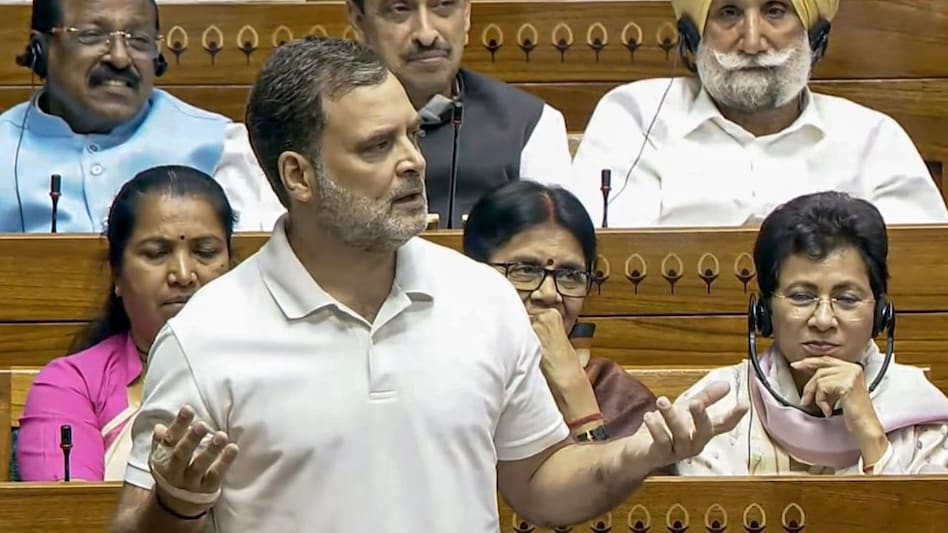
A charged debate in Parliament over the women’s reservation issue briefly turned lighter when Rahul Gandhi injected humour into the proceedings with a self-referential quip about his bachelorhood — drawing laughter even as political tempers remained high.
Speaking during the special session of Parliament on women’s reservation and delimitation, Rahul Gandhi emphasised the profound influence women have in shaping individuals and society. He noted that everyone draws guidance and learning from women in their families — be it mothers, sisters, or wives.
“Women are a central force, a driving force in our national imagination and in our national perspective. All of us, every single one in the room, has been influenced, taught, learnt a lot from women in their lives,” he said.
Striking a lighter note during his address, Gandhi added that both he and Prime Minister Narendra Modi are exceptions in one regard. “The Prime Minister and I don’t have that ‘wife issue’, so we don’t get that input — but we do have our mothers and our sisters,” he quipped, triggering laughter across party lines.
Speaking during the discussion on the women’s quota and its linkage with delimitation, the Leader of the Opposition sharpened his criticism of the government’s approach, reiterating that the issue was being politically framed rather than implemented in earnest.
He argued that delaying the rollout of reservations until after a future census and delimitation exercise weakens the intent of the legislation and sidelines key concerns such as representation for marginalised groups.
A sibling moment in Parliament
The debate took on an even warmer tone when Gandhi paused to speak about his sister, Priyanka Gandhi Vadra, recalling a moment from the previous day’s proceedings that left him both amused and proud.
Watching her address the House, he said, he had witnessed something he himself had failed to achieve in over two decades of political life — making Union Home Minister Amit Shah smile.
“Yesterday I saw my sister accomplish in five minutes what I haven’t managed in maybe 20 years of my political career,” Gandhi said. “She made Amit Shah smile. That’s something I clearly need to learn. As an elder brother, I felt very proud.”
The moment he referred to came during Priyanka Gandhi Vadra’s intervention in the debate on bills linked to the women’s quota law and the proposed delimitation exercise. Mid-speech, she turned towards Shah and delivered a sharp yet playful remark, suggesting that even the ancient strategist Chanakya would be surprised by the government’s political manoeuvring.
“The Home Minister is smiling. The whole plan is already laid out — if Chanakya were alive today, even he would be taken aback by your political shrewdness,” she said, before adding with a hint of irony that his reaction seemed to suggest agreement.
Shah, visibly amused, took the comment in stride, prompting smiles across the House — an unusual moment of levity in an otherwise tense exchange.
Politics and punchlines
The broader debate has been deeply contentious. Gandhi has accused the government of using the women’s reservation framework as a political tool tied to delimitation — an exercise that redraws parliamentary constituencies. According to him, this linkage risks altering electoral balances while delaying actual empowerment of women.
Government representatives, on the other hand, have pushed back, questioning why earlier administrations did not implement similar measures and defending the current roadmap.
The women’s reservation proposal — aimed at allocating 33% of seats in Parliament and state assemblies to women — remains a politically sensitive reform, with disagreements not over its intent, but over its timing, structure, and linkage to broader electoral changes.
A charged debate in Parliament over the women’s reservation issue briefly turned lighter when Rahul Gandhi injected humour into the proceedings with a self-referential quip about his bachelorhood — drawing laughter even as political tempers remained high.
Speaking during the special session of Parliament on women’s reservation and delimitation, Rahul Gandhi emphasised the profound influence women have in shaping individuals and society. He noted that everyone draws guidance and learning from women in their families — be it mothers, sisters, or wives.
“Women are a central force, a driving force in our national imagination and in our national perspective. All of us, every single one in the room, has been influenced, taught, learnt a lot from women in their lives,” he said.
Striking a lighter note during his address, Gandhi added that both he and Prime Minister Narendra Modi are exceptions in one regard. “The Prime Minister and I don’t have that ‘wife issue’, so we don’t get that input — but we do have our mothers and our sisters,” he quipped, triggering laughter across party lines.
Speaking during the discussion on the women’s quota and its linkage with delimitation, the Leader of the Opposition sharpened his criticism of the government’s approach, reiterating that the issue was being politically framed rather than implemented in earnest.
He argued that delaying the rollout of reservations until after a future census and delimitation exercise weakens the intent of the legislation and sidelines key concerns such as representation for marginalised groups.
A sibling moment in Parliament
The debate took on an even warmer tone when Gandhi paused to speak about his sister, Priyanka Gandhi Vadra, recalling a moment from the previous day’s proceedings that left him both amused and proud.
Watching her address the House, he said, he had witnessed something he himself had failed to achieve in over two decades of political life — making Union Home Minister Amit Shah smile.
“Yesterday I saw my sister accomplish in five minutes what I haven’t managed in maybe 20 years of my political career,” Gandhi said. “She made Amit Shah smile. That’s something I clearly need to learn. As an elder brother, I felt very proud.”
The moment he referred to came during Priyanka Gandhi Vadra’s intervention in the debate on bills linked to the women’s quota law and the proposed delimitation exercise. Mid-speech, she turned towards Shah and delivered a sharp yet playful remark, suggesting that even the ancient strategist Chanakya would be surprised by the government’s political manoeuvring.
“The Home Minister is smiling. The whole plan is already laid out — if Chanakya were alive today, even he would be taken aback by your political shrewdness,” she said, before adding with a hint of irony that his reaction seemed to suggest agreement.
Shah, visibly amused, took the comment in stride, prompting smiles across the House — an unusual moment of levity in an otherwise tense exchange.
Politics and punchlines
The broader debate has been deeply contentious. Gandhi has accused the government of using the women’s reservation framework as a political tool tied to delimitation — an exercise that redraws parliamentary constituencies. According to him, this linkage risks altering electoral balances while delaying actual empowerment of women.
Government representatives, on the other hand, have pushed back, questioning why earlier administrations did not implement similar measures and defending the current roadmap.
The women’s reservation proposal — aimed at allocating 33% of seats in Parliament and state assemblies to women — remains a politically sensitive reform, with disagreements not over its intent, but over its timing, structure, and linkage to broader electoral changes.