
RBI raises repo rate after nearly 4 years: Are more hikes coming? Here’s what economists say
While some economists see one more rate hike of 25 bps, a few others see more increases, with inflation likely to accelerate in coming quarters due to the deficient rainfall
- Oct 7, 2026,
- Updated Oct 7, 2026 8:00 PM IST
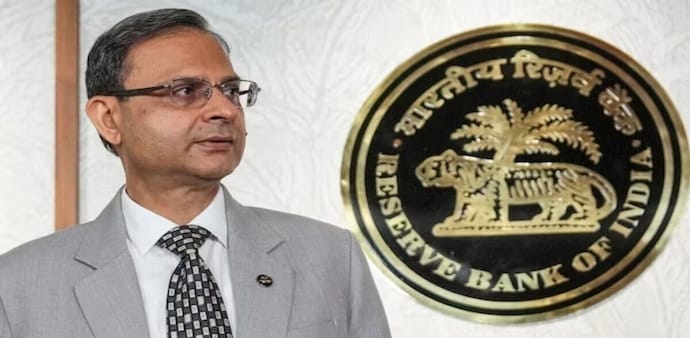
The Reserve Bank of India Governor Sanjay Malhotra, on October 7, made it clear that there was no chance of a rate cut for now, and the only possibility looking ahead was either a hike or a pause.
Malhotra's statement came after the Monetary Policy Committee's (MPC) decision to increase the benchmark repo rate by 25 basis points to 5.50%, its first increase in nearly four years, as high crude oil prices and a deficient southwest monsoon have raised further concerns about inflation. The MPC also changed its stance to calibrated tightening.
The RBI's rate hike followed similar increases by a few other major central banks, including the Bank of Japan, the US Federal Reserve and the European Central Bank.
Inflation has already been on an upswing. As per the latest available data, CPI (consumer price index) inflation rose to 4.82% in August from 4.45% in July.
The Reserve Bank is now expecting CPI inflation at 5.2% for the financial year ending March 2026, higher than its earlier expectation of 5%. Inflation in the second, third as well as the fourth quarter is expected to now remain above the targeted 4%.
CPI in July-September is seen at 4.9%, rising further to 6% in the October-December quarter and then projected to come in at 5.7% in January-March.
At the same time, the RBI has raised its GDP growth forecast for the full year 2026-27 to 7.1% from the 6.7% projected earlier.
The near-term outlook on inflation points towards continued supply-side pressures, on account of the deficient southwest monsoon, El Niño conditions and high volatility in international oil prices, Malhotra said.
"Price pressures are increasingly becoming visible across a range of commodities within the food component, apart from oil. In addition, early signs of inflation becoming generalised are also evident from the increase in core inflation and higher inflation across a larger segment of the CPI basket," he pointed.
Most economists had already pencilled in a 25 bps hike this time around and see more rate hikes ahead.
Rajani Sinha, chief economist at CareEdge Ratings, noted that domestic economic momentum is expected to remain healthy in FY27 despite some moderation in the second half. However, RBI’s concerns remain tilted toward inflation, as CPI inflation is projected to touch the upper tolerance limit of 6%, she said.
However, with inflation expected to moderate from the fourth quarter, the rate hike cycle may be "shallow", Sinha said, seeing scope for another 25-50 bps rate hike.
UBS Economist Tanvee Gupta Jain also sees a cumulative rate hike of 50-75 bps, with another 25 bps hike in December.
Jain noted that while the anticipated Super El Niño has had a limited impact on food prices thus far, inflation risks remain elevated due to uncertainty surrounding summer crop yields and the winter crop outlook amid below-normal reservoir levels.
"Our estimates suggest that headline inflation will remain above 5.5% for three consecutive quarters starting in the third quarter of FY27, significantly above the RBI's medium-term target of 4%. As inflation accelerates, real policy rates are likely to turn negative, necessitating a recalibration of monetary policy," she pointed.
ICRA, meanwhile, expects only one other rate hike of 25 bps in December, and no further tightening, unless there are sizeable negative surprises on the inflation front. The credit ratings agency, though, sees sizeable risks to RBI's growth outlook.
"The deficient monsoon and year-on-year decline in reservoir storage pose risks to rabi sowing and prospects for crop output, which may weigh on consumption demand in the second half of FY2027. Elevated crude oil prices and other inflationary pressures would dent corporate margins and dampen private consumption," it said.
Pranjul Bhandari, HSBC's chief India economist, is also not expecting a deep rate hike cycle. She noted that in recent El Niño years, the RBI didn't hike rates, but rather it chose to look through the price spike and be more sensitive to growth.
"We believe the policy meeting was responsible, as the RBI, which is also the risk manager of the economy, has started to work with a scenario in which the external environment can be uneasy for longer. For now, we stick to our view that this will be a 50 bps rate hiking cycle, of which 25 bps was delivered today," Bhandari said.
Indranil Pan, chief economist at Yes Bank, on the other hand, believes more hikes may be needed. “A bit surprising was the change in stance to calibrated tightening, despite an acknowledgement that currently there are limited signs of supply-side pressures getting embedded in pricing behaviour. A December hike of 25 bps is a certainty now. The RBI will continue to remain data-dependent and factor in the breadth of inflation pressures in the months ahead to determine the cumulative dose of hikes. Given that the RBI now sees the first quarter FY27 inflation print at 5.6%, a total of 100 bps may be needed in this cycle," opined Pan.
The Reserve Bank of India Governor Sanjay Malhotra, on October 7, made it clear that there was no chance of a rate cut for now, and the only possibility looking ahead was either a hike or a pause.
Malhotra's statement came after the Monetary Policy Committee's (MPC) decision to increase the benchmark repo rate by 25 basis points to 5.50%, its first increase in nearly four years, as high crude oil prices and a deficient southwest monsoon have raised further concerns about inflation. The MPC also changed its stance to calibrated tightening.
The RBI's rate hike followed similar increases by a few other major central banks, including the Bank of Japan, the US Federal Reserve and the European Central Bank.
Inflation has already been on an upswing. As per the latest available data, CPI (consumer price index) inflation rose to 4.82% in August from 4.45% in July.
The Reserve Bank is now expecting CPI inflation at 5.2% for the financial year ending March 2026, higher than its earlier expectation of 5%. Inflation in the second, third as well as the fourth quarter is expected to now remain above the targeted 4%.
CPI in July-September is seen at 4.9%, rising further to 6% in the October-December quarter and then projected to come in at 5.7% in January-March.
At the same time, the RBI has raised its GDP growth forecast for the full year 2026-27 to 7.1% from the 6.7% projected earlier.
The near-term outlook on inflation points towards continued supply-side pressures, on account of the deficient southwest monsoon, El Niño conditions and high volatility in international oil prices, Malhotra said.
"Price pressures are increasingly becoming visible across a range of commodities within the food component, apart from oil. In addition, early signs of inflation becoming generalised are also evident from the increase in core inflation and higher inflation across a larger segment of the CPI basket," he pointed.
Most economists had already pencilled in a 25 bps hike this time around and see more rate hikes ahead.
Rajani Sinha, chief economist at CareEdge Ratings, noted that domestic economic momentum is expected to remain healthy in FY27 despite some moderation in the second half. However, RBI’s concerns remain tilted toward inflation, as CPI inflation is projected to touch the upper tolerance limit of 6%, she said.
However, with inflation expected to moderate from the fourth quarter, the rate hike cycle may be "shallow", Sinha said, seeing scope for another 25-50 bps rate hike.
UBS Economist Tanvee Gupta Jain also sees a cumulative rate hike of 50-75 bps, with another 25 bps hike in December.
Jain noted that while the anticipated Super El Niño has had a limited impact on food prices thus far, inflation risks remain elevated due to uncertainty surrounding summer crop yields and the winter crop outlook amid below-normal reservoir levels.
"Our estimates suggest that headline inflation will remain above 5.5% for three consecutive quarters starting in the third quarter of FY27, significantly above the RBI's medium-term target of 4%. As inflation accelerates, real policy rates are likely to turn negative, necessitating a recalibration of monetary policy," she pointed.
ICRA, meanwhile, expects only one other rate hike of 25 bps in December, and no further tightening, unless there are sizeable negative surprises on the inflation front. The credit ratings agency, though, sees sizeable risks to RBI's growth outlook.
"The deficient monsoon and year-on-year decline in reservoir storage pose risks to rabi sowing and prospects for crop output, which may weigh on consumption demand in the second half of FY2027. Elevated crude oil prices and other inflationary pressures would dent corporate margins and dampen private consumption," it said.
Pranjul Bhandari, HSBC's chief India economist, is also not expecting a deep rate hike cycle. She noted that in recent El Niño years, the RBI didn't hike rates, but rather it chose to look through the price spike and be more sensitive to growth.
"We believe the policy meeting was responsible, as the RBI, which is also the risk manager of the economy, has started to work with a scenario in which the external environment can be uneasy for longer. For now, we stick to our view that this will be a 50 bps rate hiking cycle, of which 25 bps was delivered today," Bhandari said.
Indranil Pan, chief economist at Yes Bank, on the other hand, believes more hikes may be needed. “A bit surprising was the change in stance to calibrated tightening, despite an acknowledgement that currently there are limited signs of supply-side pressures getting embedded in pricing behaviour. A December hike of 25 bps is a certainty now. The RBI will continue to remain data-dependent and factor in the breadth of inflation pressures in the months ahead to determine the cumulative dose of hikes. Given that the RBI now sees the first quarter FY27 inflation print at 5.6%, a total of 100 bps may be needed in this cycle," opined Pan.