
Aurobindo's biologics pipeline includes 15 products across oncology, immunology, respiratory therapies
Europe business crosses €1 billion as the drugmaker increases focus on regulated markets and biologics.
- May 22, 2026,
- Updated May 22, 2026 11:10 AM IST
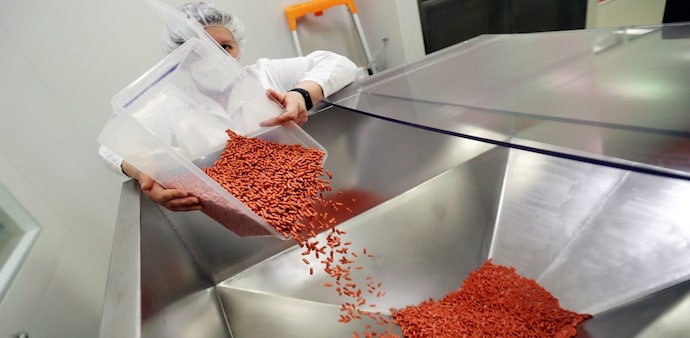
Hyderabad-based Aurobindo Pharma is increasing investments in biologics manufacturing and biosimilars as the company expands beyond conventional generics and deepens its presence in regulated markets.
The company’s biologics arm, CuraTeQ Biologics, now has a pipeline of 15 products across oncology, immunology and respiratory therapies, with filings and launches planned across Europe, the UK, Canada and other markets. Aurobindo said several global biologic drugs are expected to lose patent protection between 2028 and 2035, creating opportunities for biosimilars manufacturers.
The company said more than 30 leading biologic drugs, each generating between $1 billion and $30 billion in annual sales, are expected to lose patent protection globally over the next decade. CuraTeQ is focusing on oncology and immunology therapies, segments where demand for lower-cost treatment alternatives is increasing. CuraTeQ has already received approvals for products in Europe, the UK and Canada. The company plans to file Denosumab and Omalizumab biosimilars with European regulators this year, followed by filings in the US market.
MUST READ | Dr Reddy’s launches oral semaglutide tablets at ₹99 per pill in India
Aurobindo said CuraTeQ is expected to have seven to eight marketed products across Europe, the UK and Canada by 2030, while some products are also being prepared for the US market. The company is also advancing pipeline candidates in autoimmune disorders and cancer therapies.
Alongside biosimilars, Aurobindo is also expanding biologics contract manufacturing through TheraNym, its biologics CDMO business. The company is commissioning a 60 kL mammalian cell culture facility by end-2026 and is planning another biologics facility under an expanded arrangement with MSD. The second facility is expected to involve capital expenditure of $150-175 million.
The company said the global biologics CDMO market is growing at over 12% annually as pharmaceutical companies increasingly outsource complex biologics manufacturing to specialised partners.
DON'T MISS | Here's how Apollo is expanding its hospital pipeline
At the same time, Aurobindo’s Europe formulations business crossed the €1 billion revenue mark in FY26. Revenue from Europe rose 30.2% year-on-year in the March quarter to Rs 2,795 crore and contributed 31.6% of consolidated revenue.
“Consistent volumes coupled with improved operating efficiencies, and disciplined execution have contributed positively to our results. Investments in capacity expansion and recently commercialised facilities are expected to support sustainable growth,” K Nithyananda Reddy, Vice-Chairman and Managing Director said.
The company also launched 12 products in the US market during the quarter and received nine final ANDA approvals from the US Food and Drug Administration.
For the quarter ended March 2026, Aurobindo Pharma reported consolidated revenue of Rs 8,853 crore, while net profit stood at Rs 921 crore.
Hyderabad-based Aurobindo Pharma is increasing investments in biologics manufacturing and biosimilars as the company expands beyond conventional generics and deepens its presence in regulated markets.
The company’s biologics arm, CuraTeQ Biologics, now has a pipeline of 15 products across oncology, immunology and respiratory therapies, with filings and launches planned across Europe, the UK, Canada and other markets. Aurobindo said several global biologic drugs are expected to lose patent protection between 2028 and 2035, creating opportunities for biosimilars manufacturers.
The company said more than 30 leading biologic drugs, each generating between $1 billion and $30 billion in annual sales, are expected to lose patent protection globally over the next decade. CuraTeQ is focusing on oncology and immunology therapies, segments where demand for lower-cost treatment alternatives is increasing. CuraTeQ has already received approvals for products in Europe, the UK and Canada. The company plans to file Denosumab and Omalizumab biosimilars with European regulators this year, followed by filings in the US market.
MUST READ | Dr Reddy’s launches oral semaglutide tablets at ₹99 per pill in India
Aurobindo said CuraTeQ is expected to have seven to eight marketed products across Europe, the UK and Canada by 2030, while some products are also being prepared for the US market. The company is also advancing pipeline candidates in autoimmune disorders and cancer therapies.
Alongside biosimilars, Aurobindo is also expanding biologics contract manufacturing through TheraNym, its biologics CDMO business. The company is commissioning a 60 kL mammalian cell culture facility by end-2026 and is planning another biologics facility under an expanded arrangement with MSD. The second facility is expected to involve capital expenditure of $150-175 million.
The company said the global biologics CDMO market is growing at over 12% annually as pharmaceutical companies increasingly outsource complex biologics manufacturing to specialised partners.
DON'T MISS | Here's how Apollo is expanding its hospital pipeline
At the same time, Aurobindo’s Europe formulations business crossed the €1 billion revenue mark in FY26. Revenue from Europe rose 30.2% year-on-year in the March quarter to Rs 2,795 crore and contributed 31.6% of consolidated revenue.
“Consistent volumes coupled with improved operating efficiencies, and disciplined execution have contributed positively to our results. Investments in capacity expansion and recently commercialised facilities are expected to support sustainable growth,” K Nithyananda Reddy, Vice-Chairman and Managing Director said.
The company also launched 12 products in the US market during the quarter and received nine final ANDA approvals from the US Food and Drug Administration.
For the quarter ended March 2026, Aurobindo Pharma reported consolidated revenue of Rs 8,853 crore, while net profit stood at Rs 921 crore.