
NITI Aayog launches new platforms to scale up electric truck adoption
The launch of PACT and the ZET Marketplace is aimed at addressing these challenges by bringing different stakeholders together and creating greater visibility around demand and investment
- Sep 7, 2026,
- Updated Sep 7, 2026 8:37 PM IST
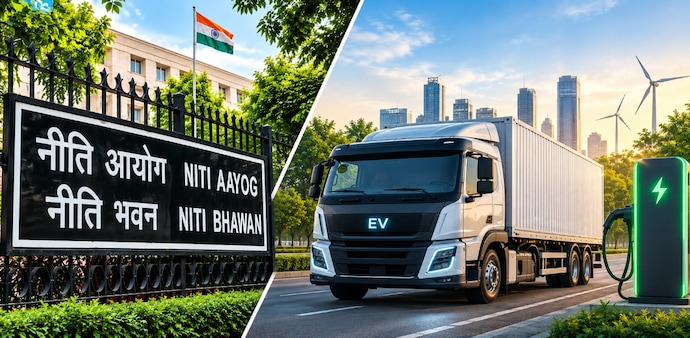
India is stepping up efforts to electrify its freight sector, with NITI Aayog launching two platforms aimed at tackling key challenges facing electric truck adoption, including fragmented demand, high financing costs, and inadequate charging infrastructure.
At the fifth e-FAST India Summit 2026 on Monday, NITI Aayog Member Rajiv Gauba launched the Platform for Aggregating Clean Transport (PACT) and the Zero Emission Truck (ZET) Marketplace. The initiatives are aimed at moving electric freight from individual pilot projects towards larger-scale commercial deployment.
Electric freight vehicle adoption has begun to pick up, with deployments rising more than fourfold from 201 vehicles in FY25 to 826 in FY26. More than 3,000 electric medium- and heavy-duty trucks are now estimated to be operating across India.
Don't Miss: Kia launches Sorento at ₹28 lakh; targets 30% EV, hybrid sales by 2030
However, adoption of heavy electric trucks remains at an early stage. Gauba said only around 800 heavy-duty electric trucks were sold in 2025. Heavy trucks account for just 3-4% of India’s vehicle fleet but contribute more than a third of transport-sector carbon emissions. Around 70% of the country’s freight moves by road.
PACT to aggregate demand for electric trucks
PACT is designed to bring together shippers, logistics service providers, truck manufacturers, financiers, charge-point operators, and other stakeholders, while aggregating freight demand across identified corridors.
The platform is expected to give manufacturers and charging companies greater visibility on future demand and help financiers assess the commercial viability of electric trucking projects. It will also help identify freight corridors where electric trucks can be deployed at scale.
Gauba said the next phase of India’s electric mobility transition would require greater focus on demand aggregation, innovative financing, and coordinated corridor planning.
Must Read: EV subsidies to end, industry must prepare to stand on its own: Heavy Industries Secy Kamran Rizvi
Financing a key challenge
High financing costs remain a major hurdle for electric commercial vehicles, partly because of uncertainty around residual values, battery life, and resale.
Gauba called for blended finance mechanisms and leasing models that could bring the cost of capital for electric trucks closer to that of conventional diesel vehicles.
MoRTH Secretary V Umashankar said greater transparency around battery health could also help address some of these concerns. Battery-health monitoring systems could improve resale values, reduce financing risks and encourage greater investment in electric trucks.
For fleet operators, the economics of electric trucking depend on several factors beyond the upfront vehicle cost, including utilisation, charging availability, financing costs and freight demand.
ZET Marketplace to connect buyers, manufacturers and financiers
The ZET Marketplace, launched alongside PACT, will connect electric truck manufacturers with logistics companies, charge-point operators, financiers and technology providers.
The platform will allow participants to showcase products, identify commercial opportunities and develop partnerships around zero-emission freight projects.
The initiatives come as the government seeks to build out the wider ecosystem for electric mobility through measures including the production-linked incentive schemes for automobiles and advanced chemistry cells, PM E-DRIVE and investments by oil marketing companies.
Heavy trucking, however, presents a different challenge from passenger vehicles and urban buses. Long-distance freight requires high vehicle utilisation, reliable charging access and financing models that take battery-related risks into account.
The launch of PACT and the ZET Marketplace is aimed at addressing these challenges by bringing different stakeholders together and creating greater visibility around demand and investment.
India is stepping up efforts to electrify its freight sector, with NITI Aayog launching two platforms aimed at tackling key challenges facing electric truck adoption, including fragmented demand, high financing costs, and inadequate charging infrastructure.
At the fifth e-FAST India Summit 2026 on Monday, NITI Aayog Member Rajiv Gauba launched the Platform for Aggregating Clean Transport (PACT) and the Zero Emission Truck (ZET) Marketplace. The initiatives are aimed at moving electric freight from individual pilot projects towards larger-scale commercial deployment.
Electric freight vehicle adoption has begun to pick up, with deployments rising more than fourfold from 201 vehicles in FY25 to 826 in FY26. More than 3,000 electric medium- and heavy-duty trucks are now estimated to be operating across India.
Don't Miss: Kia launches Sorento at ₹28 lakh; targets 30% EV, hybrid sales by 2030
However, adoption of heavy electric trucks remains at an early stage. Gauba said only around 800 heavy-duty electric trucks were sold in 2025. Heavy trucks account for just 3-4% of India’s vehicle fleet but contribute more than a third of transport-sector carbon emissions. Around 70% of the country’s freight moves by road.
PACT to aggregate demand for electric trucks
PACT is designed to bring together shippers, logistics service providers, truck manufacturers, financiers, charge-point operators, and other stakeholders, while aggregating freight demand across identified corridors.
The platform is expected to give manufacturers and charging companies greater visibility on future demand and help financiers assess the commercial viability of electric trucking projects. It will also help identify freight corridors where electric trucks can be deployed at scale.
Gauba said the next phase of India’s electric mobility transition would require greater focus on demand aggregation, innovative financing, and coordinated corridor planning.
Must Read: EV subsidies to end, industry must prepare to stand on its own: Heavy Industries Secy Kamran Rizvi
Financing a key challenge
High financing costs remain a major hurdle for electric commercial vehicles, partly because of uncertainty around residual values, battery life, and resale.
Gauba called for blended finance mechanisms and leasing models that could bring the cost of capital for electric trucks closer to that of conventional diesel vehicles.
MoRTH Secretary V Umashankar said greater transparency around battery health could also help address some of these concerns. Battery-health monitoring systems could improve resale values, reduce financing risks and encourage greater investment in electric trucks.
For fleet operators, the economics of electric trucking depend on several factors beyond the upfront vehicle cost, including utilisation, charging availability, financing costs and freight demand.
ZET Marketplace to connect buyers, manufacturers and financiers
The ZET Marketplace, launched alongside PACT, will connect electric truck manufacturers with logistics companies, charge-point operators, financiers and technology providers.
The platform will allow participants to showcase products, identify commercial opportunities and develop partnerships around zero-emission freight projects.
The initiatives come as the government seeks to build out the wider ecosystem for electric mobility through measures including the production-linked incentive schemes for automobiles and advanced chemistry cells, PM E-DRIVE and investments by oil marketing companies.
Heavy trucking, however, presents a different challenge from passenger vehicles and urban buses. Long-distance freight requires high vehicle utilisation, reliable charging access and financing models that take battery-related risks into account.
The launch of PACT and the ZET Marketplace is aimed at addressing these challenges by bringing different stakeholders together and creating greater visibility around demand and investment.