
Air India Ahmedabad crash: Several missing pieces wait clarity a year later
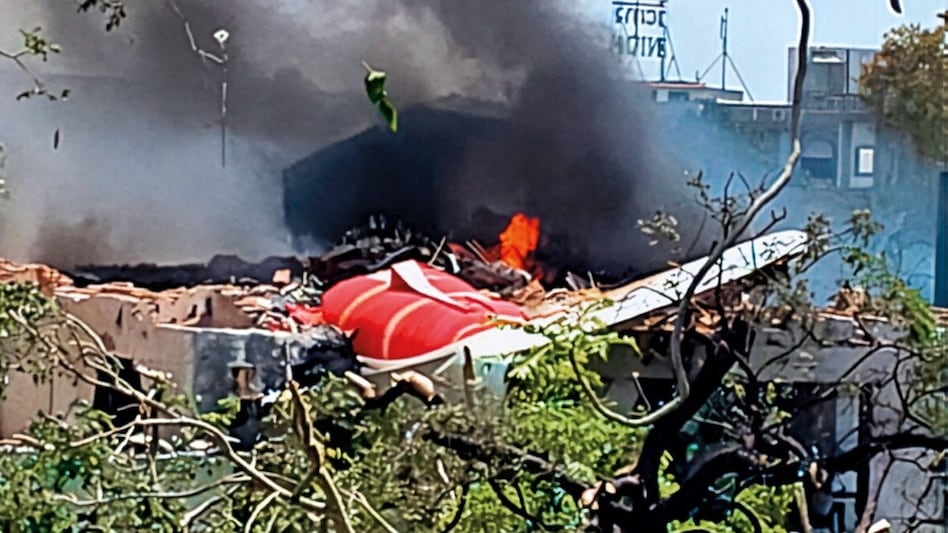
Families of Air India crash victims await final report on fatal B787 flight of June 12, 2025, killing 270 people. With investigations on, AAIB is set to release an interim report a year later
- Jun 9, 2026,
- Updated Jun 9, 2026 2:15 PM IST
Was it human error or faulty fuel switches on the Boeing 787 airplane that led to the Air India crash in Ahmedabad last year? There is still no clarity on this central question as families of the 270 people killed in the incident await answers.
The flight to London crashed seconds after lifting off at the Ahmedabad airport on June 12, 2025. A preliminary report released a month after the crash reported that fuel switches were recorded as moving to CUTOFF, which stopped fuel supply to engines.
In the absence of an authoritative report on the incident, several theories have done the rounds, including some that blamed it on pilot error and others that indicated that the crash was the result of faulty fuel switches.
According to reports, AAIB is expected to release an interim report about the crash as investigation is still on. As per International Civil Aviation Organization (ICAO), a final report must be submitted within a year of an accident. If investigations are not complete, a preliminary report must be released.
The Federation of Indian Pilots (FIP) has written to AAIB, challenging insinuations that the pilot was at fault, and have demanded that Air India and Boeing hand over critical data links transmitted by the aircraft.
Fuel switches
In February, a pilot flying an Air India flight recorded issues with the fuel control switches (FCS) in the defect logbook. The noting mentioned that the left engine fuel switch slipped from RUN to CUT OFF and that it was not getting locked in position.
That has raised questions of whether a similar defect caused the crash in Ahmedabad. The AI171 became airborne, reached the initial climb phase, and soon thereafter both engine fuel-control switches were recorded as transitioning from RUN to CUTOFF.
In an excerpt of the transcript of the cockpit voice recording released during interim report, one of the pilots was seen asking the other why he moved the fuel switch to cutoff. The other pilot responded that he did not do so.
Amit Singh of Safety Matter Foundation says if an interim report is indeed released, it must do more than say that the fuel-control switches were recorded as moving to CUTOFF.
A Federal Aviation Administration (FAA) Special Airworthiness Information Bulletin (SAIB) issued in December 2018 flagged potential disengagement of the fuel control switch locking feature in Boeing aircraft, including the B787-8 fitted with similar part numbers.
RAT deployment
The preliminary report noted that the RAT (Ram Air Turbine) was deployed very early. The RAT hydraulic pump began supplying hydraulic power only seconds after liftoff, said Singh.
He pointed out that the timing is central as RAT does not deploy, extend, spin up and become effective instantaneously. If the aircraft was still over or close to the runway with the RAT already deployed, then the deployment command likely occurred extremely early—at or very close to rotation/liftoff.
The RAT is a small wind-powered emergency generator. It stays folded away in normal flight and only drops out into the airflow when the aircraft has lost its normal electrical or hydraulic power—a true last resort, like a hand-crank torch that only matters once the mains is gone.
Smoke plume
The smoke plume at liftoff is not a minor visual detail. A cockpit switch does not create smoke near the main gear. A plume at rotation is more consistent with energy dissipation at the tyre, brake, wheel or runway interface.
During rotation, weight comes off the wheels. If a wheel or brake assembly is already under abnormal drag, it can begin to scrub or skid, producing a brief smoke plume.
Longer ground roll
The reported 10-second longer ground roll cannot be ignored, says Singh.
A delayed airborne point is a physical performance clue. If weight, thrust, temperature, runway condition, wind and configuration do not explain the delay, then abnormal rolling resistance becomes a serious line of inquiry.
That could include brake drag, tyre scrub, wheel bearing friction, a partially engaged electric brake actuator, anti-skid activity or asymmetric wheel/brake behaviour.
This matters because it places a possible abnormal condition before the recorded CUTOFF state.
Was it human error or faulty fuel switches on the Boeing 787 airplane that led to the Air India crash in Ahmedabad last year? There is still no clarity on this central question as families of the 270 people killed in the incident await answers.
The flight to London crashed seconds after lifting off at the Ahmedabad airport on June 12, 2025. A preliminary report released a month after the crash reported that fuel switches were recorded as moving to CUTOFF, which stopped fuel supply to engines.
In the absence of an authoritative report on the incident, several theories have done the rounds, including some that blamed it on pilot error and others that indicated that the crash was the result of faulty fuel switches.
According to reports, AAIB is expected to release an interim report about the crash as investigation is still on. As per International Civil Aviation Organization (ICAO), a final report must be submitted within a year of an accident. If investigations are not complete, a preliminary report must be released.
The Federation of Indian Pilots (FIP) has written to AAIB, challenging insinuations that the pilot was at fault, and have demanded that Air India and Boeing hand over critical data links transmitted by the aircraft.
Fuel switches
In February, a pilot flying an Air India flight recorded issues with the fuel control switches (FCS) in the defect logbook. The noting mentioned that the left engine fuel switch slipped from RUN to CUT OFF and that it was not getting locked in position.
That has raised questions of whether a similar defect caused the crash in Ahmedabad. The AI171 became airborne, reached the initial climb phase, and soon thereafter both engine fuel-control switches were recorded as transitioning from RUN to CUTOFF.
In an excerpt of the transcript of the cockpit voice recording released during interim report, one of the pilots was seen asking the other why he moved the fuel switch to cutoff. The other pilot responded that he did not do so.
Amit Singh of Safety Matter Foundation says if an interim report is indeed released, it must do more than say that the fuel-control switches were recorded as moving to CUTOFF.
A Federal Aviation Administration (FAA) Special Airworthiness Information Bulletin (SAIB) issued in December 2018 flagged potential disengagement of the fuel control switch locking feature in Boeing aircraft, including the B787-8 fitted with similar part numbers.
RAT deployment
The preliminary report noted that the RAT (Ram Air Turbine) was deployed very early. The RAT hydraulic pump began supplying hydraulic power only seconds after liftoff, said Singh.
He pointed out that the timing is central as RAT does not deploy, extend, spin up and become effective instantaneously. If the aircraft was still over or close to the runway with the RAT already deployed, then the deployment command likely occurred extremely early—at or very close to rotation/liftoff.
The RAT is a small wind-powered emergency generator. It stays folded away in normal flight and only drops out into the airflow when the aircraft has lost its normal electrical or hydraulic power—a true last resort, like a hand-crank torch that only matters once the mains is gone.
Smoke plume
The smoke plume at liftoff is not a minor visual detail. A cockpit switch does not create smoke near the main gear. A plume at rotation is more consistent with energy dissipation at the tyre, brake, wheel or runway interface.
During rotation, weight comes off the wheels. If a wheel or brake assembly is already under abnormal drag, it can begin to scrub or skid, producing a brief smoke plume.
Longer ground roll
The reported 10-second longer ground roll cannot be ignored, says Singh.
A delayed airborne point is a physical performance clue. If weight, thrust, temperature, runway condition, wind and configuration do not explain the delay, then abnormal rolling resistance becomes a serious line of inquiry.
That could include brake drag, tyre scrub, wheel bearing friction, a partially engaged electric brake actuator, anti-skid activity or asymmetric wheel/brake behaviour.
This matters because it places a possible abnormal condition before the recorded CUTOFF state.