
Air India aircraft that crashed in Ahmedabad experienced a series of faults: US group
The had experienced a variety of engineering, manufacturing, quality, and maintenance problems throughout its 11-year life, said a US-based aviation safety group.
- Jan 22, 2026,
- Updated Jan 22, 2026 2:58 PM IST
Electrical systems failures, avionics and software faults, wire damage, smoke and fumes, short circuits, loss of electrical current, burning, and overheating of power distribution components, including a very serious fire. These are some of the faults that the Air India flight that crashed in Ahmedabad last year faced throughout its 11-year life, said the Foundation for Aviation Safety.
The US-based aviation safety group in its Whistleblower Report to the US Senate Permanent Subcommittee on Investigations (PSI) on January 12, said its claims related to the Air India crash were based on internal documents it had obtained.
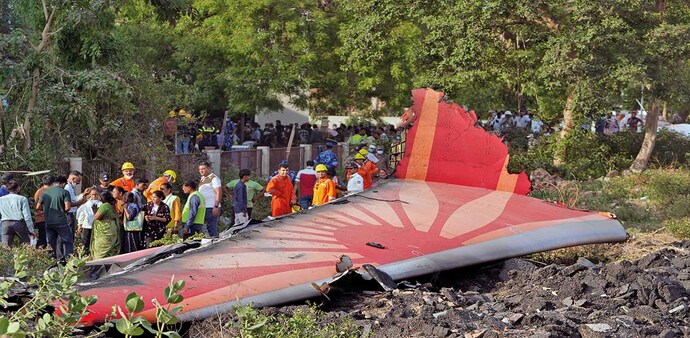
The Boeing 787 Dreamliner crashed seconds after taking off from Ahmedabad on June 12, killing 260 people. The preliminary report by the Aircraft Accident Investigation Bureau (AAIB) released a month later triggered controversy as it had an excerpt of a conversation between the pilots, where one of them could be heard asking the other why they cut off the fuel supply to the engine.
The foundation said that the documents indicate systems failures started the very first day the airplane arrived in India (February 1, 2014).
“Documents further reveal VT-ANB experienced a wide & confusing variety of engineering, manufacturing, quality, and maintenance problems throughout its 11-year life, leading to electrical systems failures to include circuit breakers repeatedly tripping, electronics/avionics/software faults, wire damage, smoke & fumes, short circuits, loss of electrical current, electrical surges, burning, and overheating of power distribution components including a very serious fire,” it said.
Faults
The foundation listed faults with photos of aircraft. It mentions that in January 2022, the airplane had a fire in the P100 Primary Power Panel that resulted in extensive burning around the L2 Bus Tie Breaker (BTB) and surrounding wiring. The damage was so extensive that the entire power panel had to be replaced.
In April 2022, the plane was grounded due to confusing faults involving the landing gear indication system. Air India replaced a proximity sensing data concentrator module, the left Common Core System (CCS) remote data concentrator in the aft electronics bay, and a Remote Power Distribution Unit (RPDU) power module.
The documents also reveal that Air India’s other 787 airplane showed evidence of electrical systems failures. The report added that similar faults were reported in airplane registered in the US, Canada, and Australia, citing around 2,000 failure reports involving the B787.
The final investigation report is expected in the next six months. The AAIB report drew intense scrutiny. It said that aircraft shortly after take-off, the fuel control switches were moved from “run” to “cut-off”, cutting fuel to the engines. “In the cockpit voice recording, one of the pilots is heard asking the other why did he cut-off. The other pilot responded that he did not do so,” said the report.
Electrical systems failures, avionics and software faults, wire damage, smoke and fumes, short circuits, loss of electrical current, burning, and overheating of power distribution components, including a very serious fire. These are some of the faults that the Air India flight that crashed in Ahmedabad last year faced throughout its 11-year life, said the Foundation for Aviation Safety.
The US-based aviation safety group in its Whistleblower Report to the US Senate Permanent Subcommittee on Investigations (PSI) on January 12, said its claims related to the Air India crash were based on internal documents it had obtained.
The Boeing 787 Dreamliner crashed seconds after taking off from Ahmedabad on June 12, killing 260 people. The preliminary report by the Aircraft Accident Investigation Bureau (AAIB) released a month later triggered controversy as it had an excerpt of a conversation between the pilots, where one of them could be heard asking the other why they cut off the fuel supply to the engine.
The foundation said that the documents indicate systems failures started the very first day the airplane arrived in India (February 1, 2014).
“Documents further reveal VT-ANB experienced a wide & confusing variety of engineering, manufacturing, quality, and maintenance problems throughout its 11-year life, leading to electrical systems failures to include circuit breakers repeatedly tripping, electronics/avionics/software faults, wire damage, smoke & fumes, short circuits, loss of electrical current, electrical surges, burning, and overheating of power distribution components including a very serious fire,” it said.
Faults
The foundation listed faults with photos of aircraft. It mentions that in January 2022, the airplane had a fire in the P100 Primary Power Panel that resulted in extensive burning around the L2 Bus Tie Breaker (BTB) and surrounding wiring. The damage was so extensive that the entire power panel had to be replaced.
In April 2022, the plane was grounded due to confusing faults involving the landing gear indication system. Air India replaced a proximity sensing data concentrator module, the left Common Core System (CCS) remote data concentrator in the aft electronics bay, and a Remote Power Distribution Unit (RPDU) power module.
The documents also reveal that Air India’s other 787 airplane showed evidence of electrical systems failures. The report added that similar faults were reported in airplane registered in the US, Canada, and Australia, citing around 2,000 failure reports involving the B787.
The final investigation report is expected in the next six months. The AAIB report drew intense scrutiny. It said that aircraft shortly after take-off, the fuel control switches were moved from “run” to “cut-off”, cutting fuel to the engines. “In the cockpit voice recording, one of the pilots is heard asking the other why did he cut-off. The other pilot responded that he did not do so,” said the report.