
Air India looks to shift more US, Europe flights to Mumbai from Delhi; sees bigger growth opportunity in wide-body operations
Speaking at the Aviation India Summit, Tewolde Gebremariam said the closure of Pakistani airspace had affected Delhi more significantly than Mumbai, prompting the airline to reassess its hub and network strategy.
- Nov 3, 2026,
- Updated Nov 3, 2026 6:06 PM IST
Air India is looking to shift a larger share of its flights to Europe and the US from Delhi to Mumbai as it rebalances its international network amid continued airspace restrictions, the airline's new chief executive said on Tuesday.
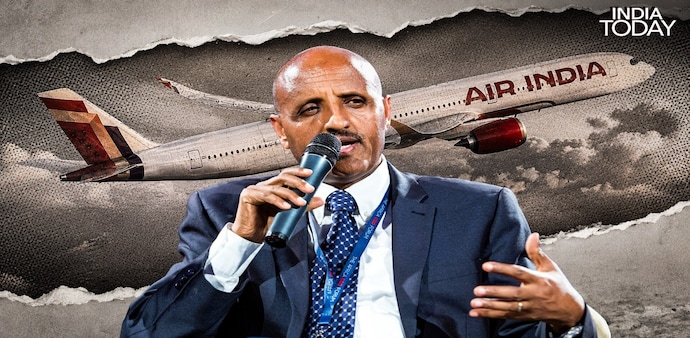
Speaking at the Aviation India Summit, the airline CEO, Tewolde Gebremariam said the closure of Pakistani airspace had affected Delhi more significantly than Mumbai, prompting the airline to reassess its hub and network strategy.
"Most of our network, unfortunately, in Europe and America, have been affected by the airspace closure. Delhi is more affected than Mumbai. So rebalancing the hub means... we still have, we continue to have Europe and America flights from Delhi, but more will be moving to Mumbai," he said.
The airline is also exploring Bengaluru as a potential starting point for some international operations, given India's geographical scale, he added.
MUST READ: India deserves three national carriers, says Adani Airports CEO: Is Adani the answer?
The network realignment comes as Air India looks to improve its financial performance and bring down costs. The CEO said profitability remained an immediate priority, with the airline working to reduce its cost per available seat kilometre (CASK) and improve operational efficiency.
On the airline's growth strategy, he indicated that the larger long-term opportunity lay in its full-service wide-body operations, even as the low-cost carrier Air India Express would continue to expand.
"More growth may come from the full-service wide-body long-term because the opportunity there is much bigger. But again, on the LCC also, on Air India Express, there is growth. We are going to grow that also," he said.
The airline intends to position its two brands to cater to different customer segments, with Air India Express serving the lower end of the market while Air India focuses on full-service domestic, short-haul and long-haul travel. The latter brand would also be progressively premiumised, he said.
In Case You Missed It: Centre says airport operators can own airlines, confirms waiver request received by AAI
The CEO, who previously led Ethiopian Airlines for 11 years, said Air India had already undertaken significant foundational work, including fleet renewal, maintenance infrastructure and training facilities. His immediate focus would be to build on these investments while addressing near-term financial challenges.
He also said Air India would seek to regain its share of traffic between India and the rest of the world, while developing its hub-and-spoke connectivity and domestic-to-international passenger flows.