
'Anything which is imported… will get affected': Karan Adani on West Asia conflict, oil & gas supply risks
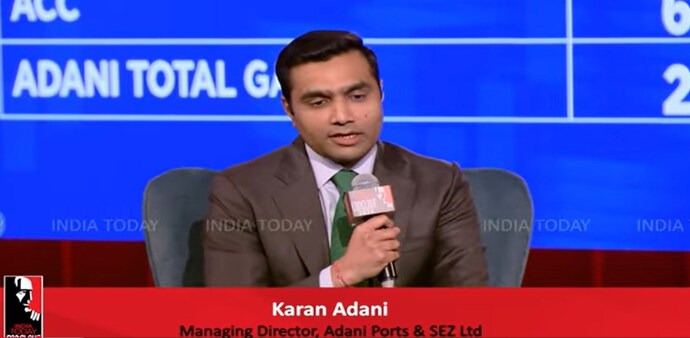
West Asia tensions and supply chain disruptions show why India must reduce import dependence and build stronger energy and trade infrastructure, Karan Adani, Managing Director of Adani Ports & SEZ Ltd, said. He warned that global chokepoints like the Strait of Hormuz can disrupt commodities, energy supply, and trade flows across the world.
- Mar 13, 2026,
- Updated Mar 13, 2026 9:28 PM IST
The ongoing conflict in West Asia and repeated global supply chain disruptions have reinforced the need for India to become more self-reliant in energy and trade infrastructure, Karan Adani, Managing Director of Adani Ports & SEZ Ltd, said on Friday, warning that countries dependent on imports remain exposed to geopolitical shocks.
Speaking at the India Today Conclave 2026, Adani said recent crises — from the Covid-19 pandemic to the Russia-Ukraine war and the current tensions in West Asia — have demonstrated how fragile global supply chains can be when critical trade routes or energy supplies are disrupted.
He said the disruption around the Strait of Hormuz has once again highlighted the risks of import dependence and the need to strengthen domestic capability in energy and resources.
“Anything which is imported, I would say any commodity where the country is reliant from import perspective will get affected… whether it's crude, whether it's gas, whether it's LPG… this kind of event affects all commodities across the board. What we need to look at is how do we make ourselves self-reliant as a country from the energy import perspective,” Adani said.
He added that India must prioritise domestic resources and alternatives wherever possible.
“Do we have an alternative to LPG, do we have an alternative to LNG… India has a lot of resources, whether it is coal, whether it’s even our own production of crude or gas… we have to prioritize what is important, what the country needs and where our strength is,” he said.
Global trade chokepoints raise risks
Adani, whose group operates ports and logistics assets in India and overseas, said global trade depends heavily on a few key maritime chokepoints, making supply chains vulnerable during conflicts.
“If you look at global trade, there are four choke points — Panama Canal, Suez Canal, Strait of Malacca and Strait of Hormuz. If any of these gets affected, the whole supply chain gets impacted and global energy gets affected,” he said.
“These are the four choke points… if somebody decides to close off that lane, your whole supply chain gets affected. These lanes help reduce logistics cost but also come with risk… we have to find a way to derisk from these kind of events,” he added.
He said infrastructure projects such as the Nicobar development could help India reduce such risks.
“When you look at the Strait of Malacca, if that gets affected, Nicobar plays a great role from India’s perspective to ensure reliability of supply chain… once infrastructure is made, trade will find its way,” he said.
Adani also said regionalisation of supply chains has accelerated since 2020, forcing countries to invest more in domestic infrastructure.
“Having your own infrastructure becomes extremely critical for a country to make sure the supply chain is stable and reliable,” he said.
India-Middle East-Europe Economic Corridor
On the proposed India-Middle East-Europe Economic Corridor, Adani said the project faces uncertainty but remains strategically important.
“It’s a big question mark right now… but we should not lose hope. It becomes a critical corridor as a way of derisking from these choke points… it might not replace them but it definitely helps… it is worth pursuing and worth pushing,” he said.
Adani said the group is planning heavy investments in infrastructure, with annual capital expenditure of about ₹2 lakh crore over the next five years, as it expands renewable energy, ports, power and airports while restructuring operations to support faster growth.
Heavy infrastructure push, long-term India bet
Adani said the group plans major investments across energy, ports, power and airports, with annual capital expenditure of about ₹2 lakh crore over the next five years as it expands capacity across businesses.
He said the group remains confident despite criticism and volatility, citing the long-term nature of infrastructure assets.
“So the chairman always believed that two things. If your intentions are clear, if your intentions are clean, no matter what the attacks happen, if your conscience is clear, you should not worry about the noise. Second, we know where our strengths are. We know what we can deliver for the country… these are all hard assets that we are creating… these are hard cash generating assets, not valuation assets,” he said.
India's growth story
Adani said the group’s confidence comes from its belief in India’s long-term growth story and the central role of infrastructure in that journey.
“We strongly believe in India’s story… for India to achieve the dream that has been laid out, infrastructure is the key foundation. If you don’t get your ports right, if you don’t get your roads right, if you don’t get your railway right, none of your manufacturing can happen,” he said.
“We have to work towards building the infrastructure for India, not just for today but for the future.”
Adani said the group’s long-term aspiration is to become globally competitive across infrastructure and energy while building a reputation based on execution rather than controversy. “The aspiration for the group would be that we should be globally the cheapest power generator. Globally we should be the cheapest logistics provider. And third, we want to be one of the most respected groups not just in India but globally,” he said. “Respected is a very general term, but we want to be known for creating infrastructure rather than the noise because of which the group is known. Our focus is on building assets that deliver long-term value.”
The ongoing conflict in West Asia and repeated global supply chain disruptions have reinforced the need for India to become more self-reliant in energy and trade infrastructure, Karan Adani, Managing Director of Adani Ports & SEZ Ltd, said on Friday, warning that countries dependent on imports remain exposed to geopolitical shocks.
Speaking at the India Today Conclave 2026, Adani said recent crises — from the Covid-19 pandemic to the Russia-Ukraine war and the current tensions in West Asia — have demonstrated how fragile global supply chains can be when critical trade routes or energy supplies are disrupted.
He said the disruption around the Strait of Hormuz has once again highlighted the risks of import dependence and the need to strengthen domestic capability in energy and resources.
“Anything which is imported, I would say any commodity where the country is reliant from import perspective will get affected… whether it's crude, whether it's gas, whether it's LPG… this kind of event affects all commodities across the board. What we need to look at is how do we make ourselves self-reliant as a country from the energy import perspective,” Adani said.
He added that India must prioritise domestic resources and alternatives wherever possible.
“Do we have an alternative to LPG, do we have an alternative to LNG… India has a lot of resources, whether it is coal, whether it’s even our own production of crude or gas… we have to prioritize what is important, what the country needs and where our strength is,” he said.
Global trade chokepoints raise risks
Adani, whose group operates ports and logistics assets in India and overseas, said global trade depends heavily on a few key maritime chokepoints, making supply chains vulnerable during conflicts.
“If you look at global trade, there are four choke points — Panama Canal, Suez Canal, Strait of Malacca and Strait of Hormuz. If any of these gets affected, the whole supply chain gets impacted and global energy gets affected,” he said.
“These are the four choke points… if somebody decides to close off that lane, your whole supply chain gets affected. These lanes help reduce logistics cost but also come with risk… we have to find a way to derisk from these kind of events,” he added.
He said infrastructure projects such as the Nicobar development could help India reduce such risks.
“When you look at the Strait of Malacca, if that gets affected, Nicobar plays a great role from India’s perspective to ensure reliability of supply chain… once infrastructure is made, trade will find its way,” he said.
Adani also said regionalisation of supply chains has accelerated since 2020, forcing countries to invest more in domestic infrastructure.
“Having your own infrastructure becomes extremely critical for a country to make sure the supply chain is stable and reliable,” he said.
India-Middle East-Europe Economic Corridor
On the proposed India-Middle East-Europe Economic Corridor, Adani said the project faces uncertainty but remains strategically important.
“It’s a big question mark right now… but we should not lose hope. It becomes a critical corridor as a way of derisking from these choke points… it might not replace them but it definitely helps… it is worth pursuing and worth pushing,” he said.
Adani said the group is planning heavy investments in infrastructure, with annual capital expenditure of about ₹2 lakh crore over the next five years, as it expands renewable energy, ports, power and airports while restructuring operations to support faster growth.
Heavy infrastructure push, long-term India bet
Adani said the group plans major investments across energy, ports, power and airports, with annual capital expenditure of about ₹2 lakh crore over the next five years as it expands capacity across businesses.
He said the group remains confident despite criticism and volatility, citing the long-term nature of infrastructure assets.
“So the chairman always believed that two things. If your intentions are clear, if your intentions are clean, no matter what the attacks happen, if your conscience is clear, you should not worry about the noise. Second, we know where our strengths are. We know what we can deliver for the country… these are all hard assets that we are creating… these are hard cash generating assets, not valuation assets,” he said.
India's growth story
Adani said the group’s confidence comes from its belief in India’s long-term growth story and the central role of infrastructure in that journey.
“We strongly believe in India’s story… for India to achieve the dream that has been laid out, infrastructure is the key foundation. If you don’t get your ports right, if you don’t get your roads right, if you don’t get your railway right, none of your manufacturing can happen,” he said.
“We have to work towards building the infrastructure for India, not just for today but for the future.”
Adani said the group’s long-term aspiration is to become globally competitive across infrastructure and energy while building a reputation based on execution rather than controversy. “The aspiration for the group would be that we should be globally the cheapest power generator. Globally we should be the cheapest logistics provider. And third, we want to be one of the most respected groups not just in India but globally,” he said. “Respected is a very general term, but we want to be known for creating infrastructure rather than the noise because of which the group is known. Our focus is on building assets that deliver long-term value.”