
Dr Reddy’s lines up semaglutide launch, builds biosimilars pipeline
Move comes even as pricing pressure and regulatory complexity continue to weigh on global pharmaceutical markets.
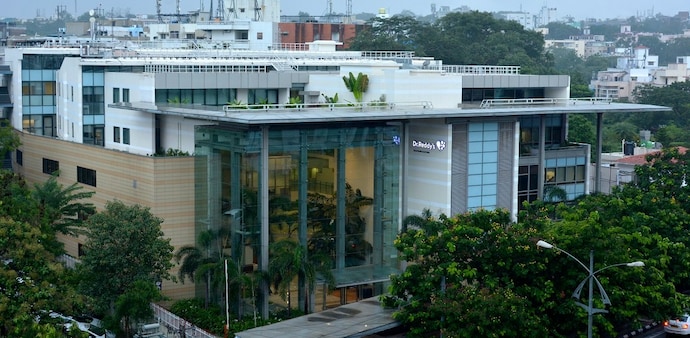
- Jan 22, 2026,
- Updated Jan 24, 2026 7:22 PM IST
Dr Reddy’s Laboratories is building out its biosimilars and GLP-1 pipeline as it looks to counter a slowdown in its US business, even as pricing pressure and regulatory complexity continue to weigh on global pharmaceutical markets.
The Hyderabad-based drugmaker reported a mixed performance for the December quarter, with growth in India, Europe and emerging markets helping cushion the impact of a decline in sales of high-margin oral cancer drug lenalidomide in North America. Management said the quarter played out broadly in line with internal expectations, with continued growth from base business supporting the overall performance.
“The performance has been in line with what we had planned,” MV Ramana, CEO- Branded Markets (India and Emerging Markets) at Dr Reddy’s Laboratories told Business Today. “India, emerging markets, Europe and the nicotine replacement therapy business have all done well. As expected, there has been a slowdown in the US because of lenalidomide, but at a base business level we have delivered double-digit growth.”
For Q3FY26, consolidated revenue rose 4.4% year-on-year to ₹8,727 crore, while profit attributable to equity shareholders declined 14% to ₹1,210 crore. EBITDA fell 11% to ₹2,049 crore, highlighting pricing pressure in generics, an adverse product mix as lenalidomide contribution reduced, and a one-time provision linked to the implementation of India’s new labour codes.
North America remained the most pressured geography. Revenue from the region declined 12% year-on-year to ₹2,964 crore, driven by lower lenalidomide sales and continued price erosion in base generics. The company has indicated that residual lenalidomide contribution, which supported earnings over recent quarters, is nearing its end, increasing the importance of portfolio execution outside the US.
Other geographies continued to deliver growth. Europe revenue rose 20% year-on-year to ₹1,448 crore, aided by new generic launches, integration of the nicotine replacement therapy portfolio and favourable currency movement. Emerging markets recorded 32% year-on-year growth to ₹1,896 crore, with Russia leading the segment on the back of new launches, higher volumes and rouble appreciation.
India provided stability, with domestic revenue growing 19% year-on-year to ₹1,603 crore, supported by volume growth, price increases, new brand launches and contributions from recently acquired brands. According to IQVIA data cited by the company, Dr Reddy’s moved up to the ninth position in the Indian pharmaceutical market in December 2025.
Against this backdrop, the company is prioritising deeper deployment of products across markets where it already has scale, rather than incremental geographic expansion.
“We already have good scale across geographies,” Ramana said. “Beyond the US and Europe, we are present in about 45 emerging markets. That allows us to take every product we develop, whether small molecules or biosimilars, across multiple markets and improve returns on each launch.”
Capital allocation continues to favour India, emerging markets and consumer health, while investments in both generics and biosimilars remain in focus given the volume of patent expiries expected globally over the coming decade.
On the product front, semaglutide and the abatacept biosimilar are determining near-term expectations. Dr Reddy’s has received marketing authorisation for semaglutide in India, with launches planned across India, emerging markets and Canada, subject to regulatory timelines. Abatacept, used to treat autoimmune diseases such as rheumatoid arthritis, is expected to follow in key markets, including the US and Europe.
“In India, we are gaining access to innovative assets beyond the current standard of care,” Ramana said. “Semaglutide across multiple markets is an important focus area, and that will be followed by abatacept in key geographies.”
The company is also building manufacturing and R&D capability around the broader GLP-1 class. “This is not a category limited only to weight loss,” Ramana said. “There is growing evidence across diabetes, obesity, cardiovascular and other indications. It is a class of compounds that will remain relevant.”
Brokerages said the December quarter was largely in line with expectations. Systematix Research noted that while profitability remained under pressure, operating performance was better than feared, supported by growth in India, emerging markets and favourable currency movement. It said weakness in the US business is likely to persist, but geographic diversification is helping cushion earnings volatility.
Equirus Research said the quarter benefited from higher residual lenalidomide sales and strong performance in Russia, but cautioned that lenalidomide contributions are likely to be negligible from the March quarter, marking a reset for the US business. Both brokerages flagged semaglutide and the abatacept biosimilar as key medium-term drivers, while highlighting regulatory and execution risks.
Dr Reddy’s Laboratories is building out its biosimilars and GLP-1 pipeline as it looks to counter a slowdown in its US business, even as pricing pressure and regulatory complexity continue to weigh on global pharmaceutical markets.
The Hyderabad-based drugmaker reported a mixed performance for the December quarter, with growth in India, Europe and emerging markets helping cushion the impact of a decline in sales of high-margin oral cancer drug lenalidomide in North America. Management said the quarter played out broadly in line with internal expectations, with continued growth from base business supporting the overall performance.
“The performance has been in line with what we had planned,” MV Ramana, CEO- Branded Markets (India and Emerging Markets) at Dr Reddy’s Laboratories told Business Today. “India, emerging markets, Europe and the nicotine replacement therapy business have all done well. As expected, there has been a slowdown in the US because of lenalidomide, but at a base business level we have delivered double-digit growth.”
For Q3FY26, consolidated revenue rose 4.4% year-on-year to ₹8,727 crore, while profit attributable to equity shareholders declined 14% to ₹1,210 crore. EBITDA fell 11% to ₹2,049 crore, highlighting pricing pressure in generics, an adverse product mix as lenalidomide contribution reduced, and a one-time provision linked to the implementation of India’s new labour codes.
North America remained the most pressured geography. Revenue from the region declined 12% year-on-year to ₹2,964 crore, driven by lower lenalidomide sales and continued price erosion in base generics. The company has indicated that residual lenalidomide contribution, which supported earnings over recent quarters, is nearing its end, increasing the importance of portfolio execution outside the US.
Other geographies continued to deliver growth. Europe revenue rose 20% year-on-year to ₹1,448 crore, aided by new generic launches, integration of the nicotine replacement therapy portfolio and favourable currency movement. Emerging markets recorded 32% year-on-year growth to ₹1,896 crore, with Russia leading the segment on the back of new launches, higher volumes and rouble appreciation.
India provided stability, with domestic revenue growing 19% year-on-year to ₹1,603 crore, supported by volume growth, price increases, new brand launches and contributions from recently acquired brands. According to IQVIA data cited by the company, Dr Reddy’s moved up to the ninth position in the Indian pharmaceutical market in December 2025.
Against this backdrop, the company is prioritising deeper deployment of products across markets where it already has scale, rather than incremental geographic expansion.
“We already have good scale across geographies,” Ramana said. “Beyond the US and Europe, we are present in about 45 emerging markets. That allows us to take every product we develop, whether small molecules or biosimilars, across multiple markets and improve returns on each launch.”
Capital allocation continues to favour India, emerging markets and consumer health, while investments in both generics and biosimilars remain in focus given the volume of patent expiries expected globally over the coming decade.
On the product front, semaglutide and the abatacept biosimilar are determining near-term expectations. Dr Reddy’s has received marketing authorisation for semaglutide in India, with launches planned across India, emerging markets and Canada, subject to regulatory timelines. Abatacept, used to treat autoimmune diseases such as rheumatoid arthritis, is expected to follow in key markets, including the US and Europe.
“In India, we are gaining access to innovative assets beyond the current standard of care,” Ramana said. “Semaglutide across multiple markets is an important focus area, and that will be followed by abatacept in key geographies.”
The company is also building manufacturing and R&D capability around the broader GLP-1 class. “This is not a category limited only to weight loss,” Ramana said. “There is growing evidence across diabetes, obesity, cardiovascular and other indications. It is a class of compounds that will remain relevant.”
Brokerages said the December quarter was largely in line with expectations. Systematix Research noted that while profitability remained under pressure, operating performance was better than feared, supported by growth in India, emerging markets and favourable currency movement. It said weakness in the US business is likely to persist, but geographic diversification is helping cushion earnings volatility.
Equirus Research said the quarter benefited from higher residual lenalidomide sales and strong performance in Russia, but cautioned that lenalidomide contributions are likely to be negligible from the March quarter, marking a reset for the US business. Both brokerages flagged semaglutide and the abatacept biosimilar as key medium-term drivers, while highlighting regulatory and execution risks.