
Food delivery, quick commerce largely shielded from UPI MDR despite high digital payments
Low average order values could keep food delivery and quick-commerce companies relatively insulated from a potential UPI MDR on transactions above ₹2,000. As per brokerages, the impact at around 0.6% of FY27 EBITDA for Eternal and 0.4% for Swiggy, despite their high digital-payment usage.
- Sep 21, 2026,
- Updated Sep 21, 2026 6:20 AM IST
High UPI usage may not necessarily translate into a significant earnings hit for food delivery and quick-commerce companies if a merchant discount rate (MDR) is introduced on UPI transactions above ₹2,000, according to a report by Elara Securities. The brokerage estimates that low average order values could keep the impact on companies such as Eternal and Swiggy limited.
Elara's analysis assumes a potential 0.4% MDR on UPI transactions above ₹2,000. The report estimates that the impact would be modest for most consumer discretionary and internet companies because average transaction values remain below the threshold.
For food delivery and quick commerce, the ₹2,000 threshold provides a significant cushion. Elara estimates Zomato's food-delivery average net order value (ANOV) at ₹381, while Blinkit's average order value (AOV) is estimated at ₹540. As a result, only a relatively small proportion of transactions would become liable for MDR under the report's assumptions.
Eternal's estimated EBITDA impact at 0.6%
For Eternal, which houses Zomato and Blinkit, Elara estimates an incremental MDR cost of ₹182 million. Of this, ₹63 million is attributed to Zomato's food-delivery business and ₹119 million to Blinkit.
The combined impact is estimated at around 0.6% of Eternal's FY27 EBITDA. For both Zomato and Blinkit, the calculations assume that 5% of transactions exceed ₹2,000, with 70% of those transactions being UPI-based.
The estimates indicate why high digital-payment penetration alone may not result in a large MDR burden. The amount subject to MDR depends on transaction values crossing the ₹2,000 threshold, rather than simply on how frequently customers use UPI.
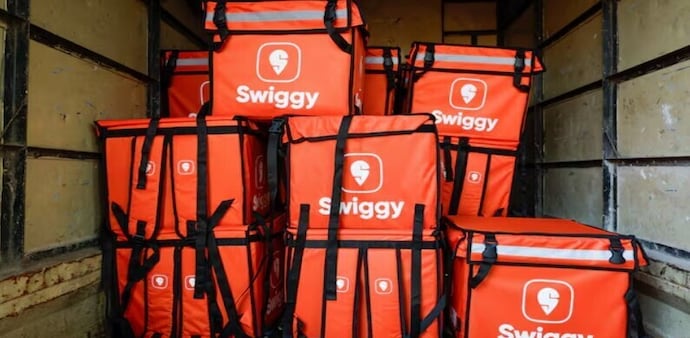
Swiggy's potential impact estimated at 0.4%
Swiggy faces a similarly limited impact. Its food-delivery business has an estimated ANOV of ₹405, while Instamart's is estimated at ₹518.
Elara estimates a combined incremental MDR cost of ₹86 million, comprising ₹47 million from food delivery and ₹39 million from Instamart. At the consolidated level, the brokerage estimates the potential MDR impact on Swiggy at around 0.4%.
The report assumes that only a small portion of transactions cross the ₹2,000 threshold, despite Swiggy's high dependence on digital payments.
MUST READ: UPI MDR row: Government rejects ‘external pressure’ claim, says move will support domestic players
Higher-ticket businesses face greater exposure
The potential impact is higher for companies with larger transaction values. Nykaa and DMart are estimated to face EBITDA impacts of 2.6% and 2.1%, respectively, compared with 0.6% for Eternal and around 0.4% for Swiggy.
Elara estimates Nykaa's incremental MDR cost at around ₹299 million, while DMart could face an estimated ₹1.27 billion cost under the report's assumptions.
Companies could use multiple levers to offset MDR
Elara's estimates assume merchants and platforms initially absorb the MDR. If the cost is eventually passed on to consumers, the actual EBITDA impact could be lower than estimated.
The brokerage also identified potential offsets, including advertising revenue, operational efficiencies, higher platform fees and modest increases in take rates. These measures could help companies manage the additional cost if MDR is introduced.
High UPI usage may not necessarily translate into a significant earnings hit for food delivery and quick-commerce companies if a merchant discount rate (MDR) is introduced on UPI transactions above ₹2,000, according to a report by Elara Securities. The brokerage estimates that low average order values could keep the impact on companies such as Eternal and Swiggy limited.
Elara's analysis assumes a potential 0.4% MDR on UPI transactions above ₹2,000. The report estimates that the impact would be modest for most consumer discretionary and internet companies because average transaction values remain below the threshold.
For food delivery and quick commerce, the ₹2,000 threshold provides a significant cushion. Elara estimates Zomato's food-delivery average net order value (ANOV) at ₹381, while Blinkit's average order value (AOV) is estimated at ₹540. As a result, only a relatively small proportion of transactions would become liable for MDR under the report's assumptions.
Eternal's estimated EBITDA impact at 0.6%
For Eternal, which houses Zomato and Blinkit, Elara estimates an incremental MDR cost of ₹182 million. Of this, ₹63 million is attributed to Zomato's food-delivery business and ₹119 million to Blinkit.
The combined impact is estimated at around 0.6% of Eternal's FY27 EBITDA. For both Zomato and Blinkit, the calculations assume that 5% of transactions exceed ₹2,000, with 70% of those transactions being UPI-based.
The estimates indicate why high digital-payment penetration alone may not result in a large MDR burden. The amount subject to MDR depends on transaction values crossing the ₹2,000 threshold, rather than simply on how frequently customers use UPI.
Swiggy's potential impact estimated at 0.4%
Swiggy faces a similarly limited impact. Its food-delivery business has an estimated ANOV of ₹405, while Instamart's is estimated at ₹518.
Elara estimates a combined incremental MDR cost of ₹86 million, comprising ₹47 million from food delivery and ₹39 million from Instamart. At the consolidated level, the brokerage estimates the potential MDR impact on Swiggy at around 0.4%.
The report assumes that only a small portion of transactions cross the ₹2,000 threshold, despite Swiggy's high dependence on digital payments.
MUST READ: UPI MDR row: Government rejects ‘external pressure’ claim, says move will support domestic players
Higher-ticket businesses face greater exposure
The potential impact is higher for companies with larger transaction values. Nykaa and DMart are estimated to face EBITDA impacts of 2.6% and 2.1%, respectively, compared with 0.6% for Eternal and around 0.4% for Swiggy.
Elara estimates Nykaa's incremental MDR cost at around ₹299 million, while DMart could face an estimated ₹1.27 billion cost under the report's assumptions.
Companies could use multiple levers to offset MDR
Elara's estimates assume merchants and platforms initially absorb the MDR. If the cost is eventually passed on to consumers, the actual EBITDA impact could be lower than estimated.
The brokerage also identified potential offsets, including advertising revenue, operational efficiencies, higher platform fees and modest increases in take rates. These measures could help companies manage the additional cost if MDR is introduced.