
GST Council axes defence taxes, slashes drone GST to 5%, fuels Atmanirbhar Push
Many weapons earlier under the 18 per cent GST slab have now been moved to the Nil GST category. These include military transport aircraft such as the C-130 (procured from the US) and the C-295 medium transport aircraft (jointly manufactured by Airbus and Tata in Vadodara).
- Sep 4, 2025,
- Updated Sep 4, 2025 6:13 PM IST
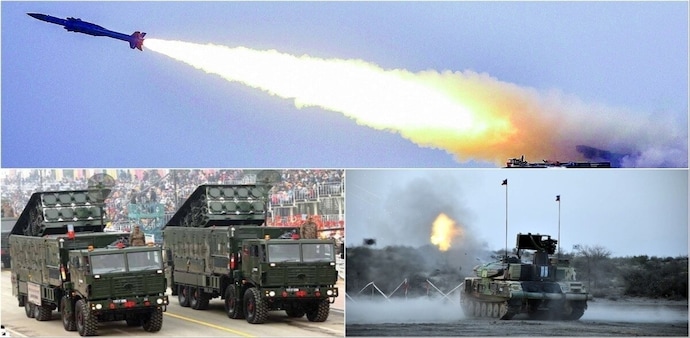
The GST Council meeting chaired by Union Finance Minister Nirmala Sitharaman will have a major impact on the defence sector. The Goods and Services Tax (GST) on several weapons, military aircraft, and defence equipment has been completely abolished. Additionally, the GST on drones has been reduced from 28 per cent to just 5 per cent.
Many weapons earlier under the 18 per cent GST slab have now been moved to the Nil GST category. These include military transport aircraft such as the C-130 (procured from the US) and the C-295 medium transport aircraft (jointly manufactured by Airbus and Tata in Vadodara).
GST has also been removed on missiles launched from Remote Pilot Aircraft (RPAs) used by the armed forces. Similarly, GST has been eliminated on GSAT systems, ship-launched missiles, flight motion simulators, underwater vessels, and fighter jet ejection seats, which allow pilots to exit safely during emergencies.
The government has also scrapped GST on other defence equipment such as 100 mm calibre rockets, deep submergence rescue vessels, spare parts for cannons and rifles, and various testing devices.
In addition, software-powered radio communication devices, earlier taxed at 18–28 per cent GST, will now attract just 5 per cent. Walkie-talkies, tanks, and armoured vehicles will also face a reduced GST rate of 5 per cent, down from 12 per cent earlier.
GST on UAVs has been sharply cut to 5 per cent from 28–18 per cent, reducing entry costs for operators deploying drones in logistics, agriculture, mapping, and military applications.
Flight and target motion simulators—essential for pilot training—are now GST-free, lowering costs for airlines and academies investing in new training systems.
Highlighting the impact of this reform, Bodhisattwa Sanghapriya, Founder and CEO of IG Drones, told India Today: “The GST cut to 5% marks a turning point for India’s drone industry. It makes drones more affordable and accessible while easing compliance for startups and businesses. This will accelerate adoption across defence, surveillance, agriculture, infrastructure, and logistics. For defence, it strengthens Atmanirbhar Bharat by enabling local producers to design and deliver advanced drones tailored to India’s needs. At IG Drones, we see this not just as a tax change but a catalyst for innovation — one that can position India as a global drone hub by 2030, fuel indigenous manufacturing, drive exports, and build a skilled workforce.”
India’s drone industry is rapidly evolving from a sunrise sector into a major enabler of growth across industries. The market, currently valued at around USD 0.47 billion in 2025, is projected to expand at a CAGR of nearly 24% to USD 1.39 billion by 2030. Government projections are even more ambitious, estimating India’s drone sector at INR 120–150 billion (USD 1.5–1.9 billion) by 2026. With strong localisation and manufacturing support, the sector could reach USD 23 billion by 2030, making India a global drone hub.
Experts believe the sharp GST reduction on drones will further accelerate this transformation.
The GST Council meeting chaired by Union Finance Minister Nirmala Sitharaman will have a major impact on the defence sector. The Goods and Services Tax (GST) on several weapons, military aircraft, and defence equipment has been completely abolished. Additionally, the GST on drones has been reduced from 28 per cent to just 5 per cent.
Many weapons earlier under the 18 per cent GST slab have now been moved to the Nil GST category. These include military transport aircraft such as the C-130 (procured from the US) and the C-295 medium transport aircraft (jointly manufactured by Airbus and Tata in Vadodara).
GST has also been removed on missiles launched from Remote Pilot Aircraft (RPAs) used by the armed forces. Similarly, GST has been eliminated on GSAT systems, ship-launched missiles, flight motion simulators, underwater vessels, and fighter jet ejection seats, which allow pilots to exit safely during emergencies.
The government has also scrapped GST on other defence equipment such as 100 mm calibre rockets, deep submergence rescue vessels, spare parts for cannons and rifles, and various testing devices.
In addition, software-powered radio communication devices, earlier taxed at 18–28 per cent GST, will now attract just 5 per cent. Walkie-talkies, tanks, and armoured vehicles will also face a reduced GST rate of 5 per cent, down from 12 per cent earlier.
GST on UAVs has been sharply cut to 5 per cent from 28–18 per cent, reducing entry costs for operators deploying drones in logistics, agriculture, mapping, and military applications.
Flight and target motion simulators—essential for pilot training—are now GST-free, lowering costs for airlines and academies investing in new training systems.
Highlighting the impact of this reform, Bodhisattwa Sanghapriya, Founder and CEO of IG Drones, told India Today: “The GST cut to 5% marks a turning point for India’s drone industry. It makes drones more affordable and accessible while easing compliance for startups and businesses. This will accelerate adoption across defence, surveillance, agriculture, infrastructure, and logistics. For defence, it strengthens Atmanirbhar Bharat by enabling local producers to design and deliver advanced drones tailored to India’s needs. At IG Drones, we see this not just as a tax change but a catalyst for innovation — one that can position India as a global drone hub by 2030, fuel indigenous manufacturing, drive exports, and build a skilled workforce.”
India’s drone industry is rapidly evolving from a sunrise sector into a major enabler of growth across industries. The market, currently valued at around USD 0.47 billion in 2025, is projected to expand at a CAGR of nearly 24% to USD 1.39 billion by 2030. Government projections are even more ambitious, estimating India’s drone sector at INR 120–150 billion (USD 1.5–1.9 billion) by 2026. With strong localisation and manufacturing support, the sector could reach USD 23 billion by 2030, making India a global drone hub.
Experts believe the sharp GST reduction on drones will further accelerate this transformation.