
Health-tech unicorn Innovacer eyes Nasdaq listing; to hire 600 people in India in a year
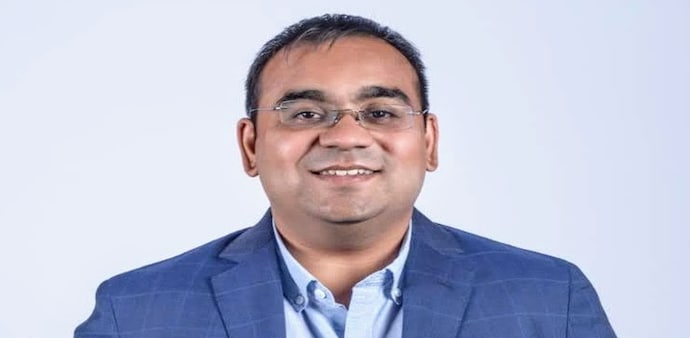
Innovacer President Engineering (India Operations) Ankit Maheshwari says 80% of the company’s R&D unit is in India. It expanded over 55% in hiring this year, and doubled its workforce.
- Nov 9, 2021,
- Updated Nov 9, 2021 10:45 PM IST
The kind of innovation healthcare industry has seen globally during the Covid-19 pandemic is unparalleled, which has pushed the growth momentum for the startups in this vertical. Silicon Valley-based health-tech unicorn, Innovacer, which has 80 per cent workforce in India, has seen a 3x jump in its revenues on year-on-year basis since the pandemic started. It is now eying a Nasdaq listing in next 2-3 years. With 80 per cent workforce operational from India, the company also plans to add 600 people to its workforce from the country within a year.
In an exclusive chat with BusinessToday.In, Ankit Maheshwari, Founding Member and President-Engineering & India Operations, Innovaccer, delves into the company's plans to expand to the markets like UAE and the UK, besides the US, on account of faster adoption of digitised healthcare systems in these countries.
The company entered the unicorn club in 2021 at a $1.3-billion valuation, after raising $105 million from investors led by Tiger Global. The startup also figured amongst the top 50 startups in the US in the list released by professional networking platform, LinkedIn.
Edited Excerpts:
BT: Innovaccer is primarily into the health-tech space, and since the pandemic, we have seen a great traction for the technology adoption in the healthcare industry. How is the business doing compared to pre-Covid levels?
Ankit: The pandemic has been pushing the whole healthcare community towards technology adoption because I think healthcare has always been the industry that has been slowest in adopting technology trends. In fintech, it took a huge amount of time for brands to adopt technology. It was the same with healthcare.
I feel the pandemic has forced the adoption, and as I have been in this phase for more than six years now. I don't see the amount of movement we saw in the last five years compared to what we have seen in the last few months -- around virtual health and around remote vision monitoring. Hence, the pandemic has forced everybody towards that.
We had to build a lot of products in real-time for meeting the needs of the healthcare system during peak Covid time -- monitoring of free beds, monitoring of patients. There was a huge crowd in the US and not just only in India.
We built out many solutions for the healthcare system. Even post-pandemic, we have seen more open acceptance. Even the US government has been pushing a lot of initiatives around “openness and sharing data”. The whole digitisation journey has really accelerated across the spectrums -- be it health systems, insurance providers and life science organisations. In life science organisations, we saw how they can conduct real-time testing, vaccines were developed at the speed of light.
We recently announced our partnership with Roche, which is one of the biggest life sciences firms in the world.
BT: With the market opening up or the impact of Covid slowing down, do you see the digitisation pace in healthcare at the same level?
Ankit: I think it won't go back to the pre-pandemic, obviously. Once there is a dip, earlier if 40 per cent appointments were happening virtually, it will get down to 20-25 per cent. It will not go down to the pre-pandemic rate, hich was 5 per cent or 2 per cent, or in certain cases 0 per cent.
In healthcare, human touch is important. If you have an option of meeting virtually or meeting a doctor face to face, you will feel more comfortable when somebody sees you face to face. It won't be a complete shift over there, which was the case throughout the pandemic. But, it is also not going back to the earlier levels.
BT: The US is your key client geography. How is the revenue or business model doing there?
Ankit: We have been growing like 100 per cent year-on-year for the last three years. Even this year, the growth is around 90-100 per cent or more. We are estimating the same for the next year too. We grew 3x just last year. In January, we entered the unicorn club. What I am talking about is 100 per cent YoY growth on the revenue. There is a definite interest from the investors, especially because we operate in a market like India whose expenditure on healthcare is $4 trillion. There are numerous opportunities to be tapped. We are eyeing an IPO in the US in next 2-3 years.
BT: Are you also foraying into other geographies besides the US?
Ankit: We will focus on markets like the UK and the Gulf countries in 2022. We have seen huge movement there. They are adopting similar healthcare models like the US. So, it is very adjacent to our business, technology, and our platform. Also, our partnership with Roche will take us to a few other countries because Roche is a global entity. We will develop for Roche, not just in the US but all the other countries as well. Any which way, we are building a platform for a more global acceptance. When the need comes, we are ready.
We have already started investing from the sales side, from the GPN motion. We have already started investing from an R&D point of view. We will see things materialising in 2022-23 onwards.
BT: What about India where you have the majority of your workforce?
Ankit: India has always been the heart of all of it; 80% of our R&D unit sits in India. We expanded more than 55 per cent this year in hiring, so we almost doubled up our workforce. Even during the pandemic, when most of the organisations were shutting down or reducing their work strength, we doubled during that time and were hiring aggressively. We have similar plans for next year.
We are expanding into more markets, more categories, even in healthcare. There will be a big focus on building teams. We just opened an office in Bengaluru. We have more than 100 folks over there, and over 800 in Noida. We also opened up a small office in Hyderabad. Now we are even expanding our location across India hiring PAN India right now. We have offices in Noida, Bangalore, Hyderabad, Pune & Chennai. These all came out in the pandemic. Next year, we are planning to add around 600 workforce just in India alone. About 80 per cent workforce sits out of India and 20 per cent workforce.
BT: But what kind of challenge do you see when it comes to acquiring customers in India?
Ankit: The challenge is majorly across the lack of infrastructure, historically, that has been in India. If we talk about hospital systems, how Indian health systems work and how the US works, is different. In India, they will want you to visit as many times as possible, while in the US, it's completely the opposite because it's either the government or the insurance company is paying your bill. It is advised that the patient should pay less or not visit the hospital at all. And if they can be treated at their homes, that is what they invest on.
It is very different how the healthcare economy works in both countries. More insurance players are coming in, and the government is trying to cover everybody under insurance. This behavior will come slowly and steadily in India. It will take at least 5-10 years. India has always been great in adopting new technologies.
In UPI, we always skip one leg of technology evaluation. It comes from the computer directly. Then mobile, and then skipping credit cards, and directly moving to UPI safe payments. I hope in healthcare, too, we will make huge leaps.
BT: You have also featured amongst the top 50 LinkedIn startups in 2021. Any comments?
Ankit: Data and its power are exigent in today's world. Innovaccer recognises the essence of using the same in healthcare. From the start, we have worked on providing the missing link in healthcare technology. We are trying to find ways to resolve issues at the grassroots level, and are helping the industry care as one. As we move further in the direction of connecting healthcare organisations with the Innovaccer Health Cloud, we strive to build on the momentum we achieved in the last many years. Being the first Indian organisation to be named in the top 50 startups in the US by LinkedIn is a nod towards the dedication we have for our work. It provides us the much-welcomed boost to continue moving in this direction.
The kind of innovation healthcare industry has seen globally during the Covid-19 pandemic is unparalleled, which has pushed the growth momentum for the startups in this vertical. Silicon Valley-based health-tech unicorn, Innovacer, which has 80 per cent workforce in India, has seen a 3x jump in its revenues on year-on-year basis since the pandemic started. It is now eying a Nasdaq listing in next 2-3 years. With 80 per cent workforce operational from India, the company also plans to add 600 people to its workforce from the country within a year.
In an exclusive chat with BusinessToday.In, Ankit Maheshwari, Founding Member and President-Engineering & India Operations, Innovaccer, delves into the company's plans to expand to the markets like UAE and the UK, besides the US, on account of faster adoption of digitised healthcare systems in these countries.
The company entered the unicorn club in 2021 at a $1.3-billion valuation, after raising $105 million from investors led by Tiger Global. The startup also figured amongst the top 50 startups in the US in the list released by professional networking platform, LinkedIn.
Edited Excerpts:
BT: Innovaccer is primarily into the health-tech space, and since the pandemic, we have seen a great traction for the technology adoption in the healthcare industry. How is the business doing compared to pre-Covid levels?
Ankit: The pandemic has been pushing the whole healthcare community towards technology adoption because I think healthcare has always been the industry that has been slowest in adopting technology trends. In fintech, it took a huge amount of time for brands to adopt technology. It was the same with healthcare.
I feel the pandemic has forced the adoption, and as I have been in this phase for more than six years now. I don't see the amount of movement we saw in the last five years compared to what we have seen in the last few months -- around virtual health and around remote vision monitoring. Hence, the pandemic has forced everybody towards that.
We had to build a lot of products in real-time for meeting the needs of the healthcare system during peak Covid time -- monitoring of free beds, monitoring of patients. There was a huge crowd in the US and not just only in India.
We built out many solutions for the healthcare system. Even post-pandemic, we have seen more open acceptance. Even the US government has been pushing a lot of initiatives around “openness and sharing data”. The whole digitisation journey has really accelerated across the spectrums -- be it health systems, insurance providers and life science organisations. In life science organisations, we saw how they can conduct real-time testing, vaccines were developed at the speed of light.
We recently announced our partnership with Roche, which is one of the biggest life sciences firms in the world.
BT: With the market opening up or the impact of Covid slowing down, do you see the digitisation pace in healthcare at the same level?
Ankit: I think it won't go back to the pre-pandemic, obviously. Once there is a dip, earlier if 40 per cent appointments were happening virtually, it will get down to 20-25 per cent. It will not go down to the pre-pandemic rate, hich was 5 per cent or 2 per cent, or in certain cases 0 per cent.
In healthcare, human touch is important. If you have an option of meeting virtually or meeting a doctor face to face, you will feel more comfortable when somebody sees you face to face. It won't be a complete shift over there, which was the case throughout the pandemic. But, it is also not going back to the earlier levels.
BT: The US is your key client geography. How is the revenue or business model doing there?
Ankit: We have been growing like 100 per cent year-on-year for the last three years. Even this year, the growth is around 90-100 per cent or more. We are estimating the same for the next year too. We grew 3x just last year. In January, we entered the unicorn club. What I am talking about is 100 per cent YoY growth on the revenue. There is a definite interest from the investors, especially because we operate in a market like India whose expenditure on healthcare is $4 trillion. There are numerous opportunities to be tapped. We are eyeing an IPO in the US in next 2-3 years.
BT: Are you also foraying into other geographies besides the US?
Ankit: We will focus on markets like the UK and the Gulf countries in 2022. We have seen huge movement there. They are adopting similar healthcare models like the US. So, it is very adjacent to our business, technology, and our platform. Also, our partnership with Roche will take us to a few other countries because Roche is a global entity. We will develop for Roche, not just in the US but all the other countries as well. Any which way, we are building a platform for a more global acceptance. When the need comes, we are ready.
We have already started investing from the sales side, from the GPN motion. We have already started investing from an R&D point of view. We will see things materialising in 2022-23 onwards.
BT: What about India where you have the majority of your workforce?
Ankit: India has always been the heart of all of it; 80% of our R&D unit sits in India. We expanded more than 55 per cent this year in hiring, so we almost doubled up our workforce. Even during the pandemic, when most of the organisations were shutting down or reducing their work strength, we doubled during that time and were hiring aggressively. We have similar plans for next year.
We are expanding into more markets, more categories, even in healthcare. There will be a big focus on building teams. We just opened an office in Bengaluru. We have more than 100 folks over there, and over 800 in Noida. We also opened up a small office in Hyderabad. Now we are even expanding our location across India hiring PAN India right now. We have offices in Noida, Bangalore, Hyderabad, Pune & Chennai. These all came out in the pandemic. Next year, we are planning to add around 600 workforce just in India alone. About 80 per cent workforce sits out of India and 20 per cent workforce.
BT: But what kind of challenge do you see when it comes to acquiring customers in India?
Ankit: The challenge is majorly across the lack of infrastructure, historically, that has been in India. If we talk about hospital systems, how Indian health systems work and how the US works, is different. In India, they will want you to visit as many times as possible, while in the US, it's completely the opposite because it's either the government or the insurance company is paying your bill. It is advised that the patient should pay less or not visit the hospital at all. And if they can be treated at their homes, that is what they invest on.
It is very different how the healthcare economy works in both countries. More insurance players are coming in, and the government is trying to cover everybody under insurance. This behavior will come slowly and steadily in India. It will take at least 5-10 years. India has always been great in adopting new technologies.
In UPI, we always skip one leg of technology evaluation. It comes from the computer directly. Then mobile, and then skipping credit cards, and directly moving to UPI safe payments. I hope in healthcare, too, we will make huge leaps.
BT: You have also featured amongst the top 50 LinkedIn startups in 2021. Any comments?
Ankit: Data and its power are exigent in today's world. Innovaccer recognises the essence of using the same in healthcare. From the start, we have worked on providing the missing link in healthcare technology. We are trying to find ways to resolve issues at the grassroots level, and are helping the industry care as one. As we move further in the direction of connecting healthcare organisations with the Innovaccer Health Cloud, we strive to build on the momentum we achieved in the last many years. Being the first Indian organisation to be named in the top 50 startups in the US by LinkedIn is a nod towards the dedication we have for our work. It provides us the much-welcomed boost to continue moving in this direction.