
Immediate challenges to the logistics sector only short-term issue: Mahindra Logistics CEO
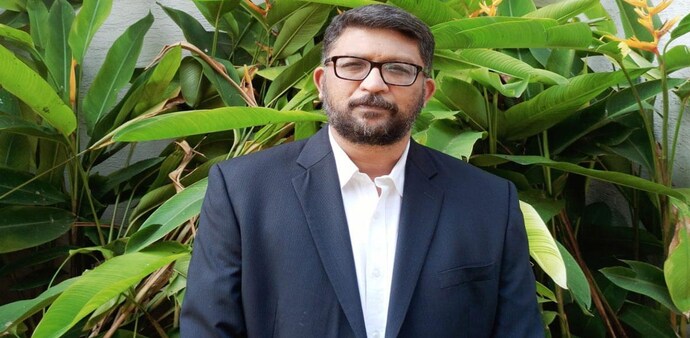
While the first half of the year was going to be muted on the back of adverse macroeconomic indicators, recovery was likely to start from the second half, said CEO of Mahindra Logistics, Rampraveen Swaminathan to BT.
- May 5, 2022,
- Updated May 5, 2022 1:13 PM IST
Amid persisting geopolitical uncertainties and a surprise rate hike by the Reserve Bank to tame inflation, the head of a leading logistics company has said that a softened demand environment, fuel and commodity price increases and a shortage of trained workforce were among the immediate challenges confronting the country’s logistics sector.
“The demand environment is a bit softer, especially from a capacity investment perspective. More and more of our clients have said they wish to sweat assets a lot more,” managing director & CEO of Mahindra Logistics, Rampraveen Swaminathan told Business Today during an exclusive interaction.
For instance, Mahindra Logistics derives over 55 per cent of its revenues from the automotive sector. However, with the industry being hit by severe semiconductor shortages, there were serious concerns around revenues from that segment being impacted. In response, the company had aggressively started pushing for revenue growth from non-automotive segments as well.
“We are pushing for strong growth this year, which will probably not be linear because of the market environment. But our focus on growth continues to remain strong and we will be leveraging technology to create value for customers through sustainable solutions,” he said.
Their December acquisition of a 100 per cent stake in Meru and a 60 per cent stake in the last mile logistics service ZipZap Logistics – operating under the Whizzard brand – were an important part of this strategy. Meru would help them expand in the area of enterprise mobility, while ZipZap Logistics would strengthen their last-mile delivery business in smaller towns and cities.
Similarly, though increases in fuel and commodity prices did not affect them directly – as any upward revision in such costs is always included in contracts inked with clients – it often led customers to rethink an expansion in network capacity. And that is what was happening at this point.
“Therefore, they are becoming a lot more cautious about expanding their capacity. The cost has become a far more central part of the discussion; it’s cost first and productivity second,” informed Swaminathan.
Manpower shortage
The third challenge was being posed by the shortage of skilled workforce. This had happened because a lot of people that had returned to their villages after the first and the second waves of the Covid-19 pandemic, were yet to return to work.
“There are many pockets where the workforce has not returned, especially where the migration was cross-regional. People who were from Latur have come back to Bhiwandi. People who are from Rajahmundry have come back to Hyderabad. But people from places like Jharkhand and the northeast haven’t still come back,” he said.
In most cases, a stronger agriculture sector supported by additional incentives from the government had resulted in more people choosing to stay back in their villages instead of returning to work in cities.
“In the short term, we are seeing that as a challenge because trained manpower is scarce. And as our business is seasonal, our dependency on such manpower is very high,” he said.
Swaminathan was, however, optimistic that those challenges would get resolved over time, which would reflect in the way growth would be panning out in FY2022-23, which he termed “a year of two parts”. While the first half of the year was going to be muted on the back of adverse macroeconomic indicators such as global supply chains, oil prices and the possibility of a fourth wave of Covid-19, recovery would start in the second half.
“The second half may witness a secular uptick across all markets. As issues concerning global shortages start evening out by the second half of the year, supply constraints will be lesser and the demand environment will be a lot more favorable. And, therefore, we believe the second half will see much stronger growth,” he asserted.
He felt that prioritising the resolution of structural challenges would greatly help the Indian logistics sector evolve to the next level in the long-term. These included measures like drafting strong industrial development policies, creating infrastructure to ease cross-border trades, developing multimodal transportation and faster processing of documents.
Also read: India's pharma logistics, warehousing costs 15% higher than other countries: Report
Also read: Mahindra Logistics' April-June revenue grows 113% to Rs 873 cr
Amid persisting geopolitical uncertainties and a surprise rate hike by the Reserve Bank to tame inflation, the head of a leading logistics company has said that a softened demand environment, fuel and commodity price increases and a shortage of trained workforce were among the immediate challenges confronting the country’s logistics sector.
“The demand environment is a bit softer, especially from a capacity investment perspective. More and more of our clients have said they wish to sweat assets a lot more,” managing director & CEO of Mahindra Logistics, Rampraveen Swaminathan told Business Today during an exclusive interaction.
For instance, Mahindra Logistics derives over 55 per cent of its revenues from the automotive sector. However, with the industry being hit by severe semiconductor shortages, there were serious concerns around revenues from that segment being impacted. In response, the company had aggressively started pushing for revenue growth from non-automotive segments as well.
“We are pushing for strong growth this year, which will probably not be linear because of the market environment. But our focus on growth continues to remain strong and we will be leveraging technology to create value for customers through sustainable solutions,” he said.
Their December acquisition of a 100 per cent stake in Meru and a 60 per cent stake in the last mile logistics service ZipZap Logistics – operating under the Whizzard brand – were an important part of this strategy. Meru would help them expand in the area of enterprise mobility, while ZipZap Logistics would strengthen their last-mile delivery business in smaller towns and cities.
Similarly, though increases in fuel and commodity prices did not affect them directly – as any upward revision in such costs is always included in contracts inked with clients – it often led customers to rethink an expansion in network capacity. And that is what was happening at this point.
“Therefore, they are becoming a lot more cautious about expanding their capacity. The cost has become a far more central part of the discussion; it’s cost first and productivity second,” informed Swaminathan.
Manpower shortage
The third challenge was being posed by the shortage of skilled workforce. This had happened because a lot of people that had returned to their villages after the first and the second waves of the Covid-19 pandemic, were yet to return to work.
“There are many pockets where the workforce has not returned, especially where the migration was cross-regional. People who were from Latur have come back to Bhiwandi. People who are from Rajahmundry have come back to Hyderabad. But people from places like Jharkhand and the northeast haven’t still come back,” he said.
In most cases, a stronger agriculture sector supported by additional incentives from the government had resulted in more people choosing to stay back in their villages instead of returning to work in cities.
“In the short term, we are seeing that as a challenge because trained manpower is scarce. And as our business is seasonal, our dependency on such manpower is very high,” he said.
Swaminathan was, however, optimistic that those challenges would get resolved over time, which would reflect in the way growth would be panning out in FY2022-23, which he termed “a year of two parts”. While the first half of the year was going to be muted on the back of adverse macroeconomic indicators such as global supply chains, oil prices and the possibility of a fourth wave of Covid-19, recovery would start in the second half.
“The second half may witness a secular uptick across all markets. As issues concerning global shortages start evening out by the second half of the year, supply constraints will be lesser and the demand environment will be a lot more favorable. And, therefore, we believe the second half will see much stronger growth,” he asserted.
He felt that prioritising the resolution of structural challenges would greatly help the Indian logistics sector evolve to the next level in the long-term. These included measures like drafting strong industrial development policies, creating infrastructure to ease cross-border trades, developing multimodal transportation and faster processing of documents.
Also read: India's pharma logistics, warehousing costs 15% higher than other countries: Report
Also read: Mahindra Logistics' April-June revenue grows 113% to Rs 873 cr