
IndiGo, Air India, AI Express brace for major disruptions as Airbus issues warning for A320 aircraft
The solar radiation warning, tied to potential data corruption in critical flight-control systems of A320 family aircraft, could ground as many as 200–250 planes in India
- Nov 29, 2025,
- Updated Nov 29, 2025 7:42 AM IST
Intense solar radiation has prompted Airbus to issue a global safety alert, forcing IndiGo, Air India and Air India Express to prepare for widespread flight disruptions across the country. The warning, tied to potential data corruption in critical flight-control systems of A320 family aircraft, could ground as many as 200–250 planes in India, according to officials cited by PTI.
The alert stems from an Airbus analysis of a recent A320 incident abroad in which the aircraft “briefly pitched down” due to a suspected malfunction in an Elevator Aileron Computer (ELAC). Soon after, the European Union Aviation Safety Agency (EASA) issued an Emergency Airworthiness Directive, ordering airlines to install serviceable ELAC units before the next flight of any affected aircraft.
India operates roughly 560 A320 family jets, the backbone of its domestic aviation network, meaning nearly half may need software or hardware intervention. Airlines are bracing for schedule disruptions as engineers perform inspections and system resets.
Airlines issue advisories
IndiGo, which flies the country’s largest A320 fleet, said it is coordinating closely with Airbus. “We are working closely with Airbus to ensure implementation as per Airbus notification. While we carry out the necessary inspections, we are making every effort to minimise disruptions,” the airline said.
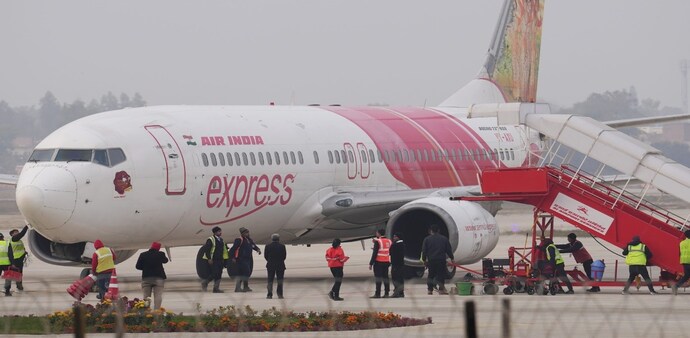
Air India Express said a software update has been initiated across its A320 aircraft. “While a majority of our aircraft are not impacted, the guidance applies to operators worldwide and may result in adjustments to flight operations, including potential delays or cancellations,” it noted. PTI reported that 31 of Air India Express’ A320-family planes are affected.
Air India said on X that a section of its A320 fleet will require multiple system resets. “This will result in a software/hardware realignment on a part of our fleet, leading to longer turnaround time and delays to our scheduled operations.” The airline apologised to passengers for the inconvenience.
Airbus acknowledged the operational fallout but said the intervention is necessary. “Airbus has consequently identified a significant number of A320 family aircraft currently in-service which may be impacted,” the company said.
“We apologise for the inconvenience caused and will work closely with operators, while keeping safety as our number one and overriding priority.”
The manufacturer said it worked with regulators to issue an Alert Operators Transmission (AOT) instructing airlines to immediately implement protective measures—software patches, hardware replacements or both.
EASA has warned that if the issue is left uncorrected, it could trigger uncommanded elevator movements strong enough to exceed an aircraft’s structural limits. With A319s, A320s and A321s forming the spine of domestic aviation, even a short spell of groundings is expected to affect thousands of passengers daily.
Intense solar radiation has prompted Airbus to issue a global safety alert, forcing IndiGo, Air India and Air India Express to prepare for widespread flight disruptions across the country. The warning, tied to potential data corruption in critical flight-control systems of A320 family aircraft, could ground as many as 200–250 planes in India, according to officials cited by PTI.
The alert stems from an Airbus analysis of a recent A320 incident abroad in which the aircraft “briefly pitched down” due to a suspected malfunction in an Elevator Aileron Computer (ELAC). Soon after, the European Union Aviation Safety Agency (EASA) issued an Emergency Airworthiness Directive, ordering airlines to install serviceable ELAC units before the next flight of any affected aircraft.
India operates roughly 560 A320 family jets, the backbone of its domestic aviation network, meaning nearly half may need software or hardware intervention. Airlines are bracing for schedule disruptions as engineers perform inspections and system resets.
Airlines issue advisories
IndiGo, which flies the country’s largest A320 fleet, said it is coordinating closely with Airbus. “We are working closely with Airbus to ensure implementation as per Airbus notification. While we carry out the necessary inspections, we are making every effort to minimise disruptions,” the airline said.
Air India Express said a software update has been initiated across its A320 aircraft. “While a majority of our aircraft are not impacted, the guidance applies to operators worldwide and may result in adjustments to flight operations, including potential delays or cancellations,” it noted. PTI reported that 31 of Air India Express’ A320-family planes are affected.
Air India said on X that a section of its A320 fleet will require multiple system resets. “This will result in a software/hardware realignment on a part of our fleet, leading to longer turnaround time and delays to our scheduled operations.” The airline apologised to passengers for the inconvenience.
Airbus acknowledged the operational fallout but said the intervention is necessary. “Airbus has consequently identified a significant number of A320 family aircraft currently in-service which may be impacted,” the company said.
“We apologise for the inconvenience caused and will work closely with operators, while keeping safety as our number one and overriding priority.”
The manufacturer said it worked with regulators to issue an Alert Operators Transmission (AOT) instructing airlines to immediately implement protective measures—software patches, hardware replacements or both.
EASA has warned that if the issue is left uncorrected, it could trigger uncommanded elevator movements strong enough to exceed an aircraft’s structural limits. With A319s, A320s and A321s forming the spine of domestic aviation, even a short spell of groundings is expected to affect thousands of passengers daily.