
Max Healthcare plans 10,000 beds by FY30, ₹6,000 crore capex
Company to reinvest free cash flows and maintain 2.5x debt-to-EBITDA ratio ceiling as it scales across metros and Tier II cities
- Apr 16, 2026,
- Updated Apr 16, 2026 5:37 PM IST
Max Healthcare plans to expand its bed capacity from around 6,500 to over 10,000 in the next three to four years, as it steps up investments in hospital infrastructure amid a widening demand-supply gap in tertiary care.
Planned expansion includes brownfield additions in Delhi and Mumbai, a new 500–600 bed hospital in Gurugram, Sector 56, around 200 beds in Lucknow with another 500-bed facility to follow, 400 beds at Pitampura, 400 more in Zirakpur (near Chandigarh), and the recent acquisition of Kalinga Hospital in Bhubaneswar.
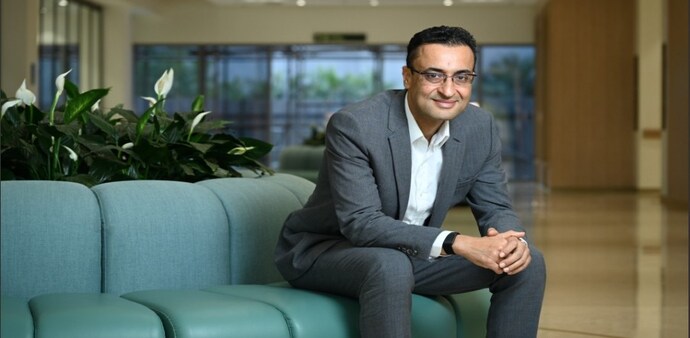
“We will be reinvesting all our free cash flows in the future in order to establish this infrastructure, as well as taking leverage up to 2.5 times debt-to-EBITDA,” Abhay Soi, Chairman and Managing Director of Max Healthcare, told Business Today. “The reason we kept it at 2.5 times is because we are fairly conservative.”
The company had earlier outlined plans to invest around ₹6,000 crore to add capacity over the medium term. The Bhubaneswar acquisition marks Max Healthcare’s entry into eastern India, though Soi does not view it as a regional strategy. “India is India,” he said. “There are about 20-odd cities across the country where we see opportunity. These are places where at least two of our peers have proven viability.” Cities he identified include Patna, Guwahati, Kanpur, Bengaluru, Chennai and Kolkata.
The company continues to follow a cluster-led approach in key markets. “Synergies allow you to share resources between hospitals, and your understanding of the micro-market increases, so it makes more sense to expand within the same geography rather than enter a new one,” Soi said.
Tier-2 cities remain a focus area, with facilities in Mohali, Bathinda, Dehradun, Nagpur and Lucknow delivering strong performance. “When you go to Tier II, your level of penetration is even less,” Soi said.
Soi said the case for expansion is underpinned by a structural shortage of hospital beds. In the National Capital Region, there are roughly 5,000 to 6,000 tertiary care private beds for a population of 45 million. Max Healthcare’s Network hospitals operate at 77–78% midnight occupancy, rising to over 120% during the day when emergency admissions are included.
“I honestly don’t see how these 6,000 or 8,000 beds we have in the National Capital Region are going to be enough,” he said. On acquisitions, Soi said the company remains selective. “A strategy can’t be made on acquisitions. Acquisition is a tactic you do when it is available. But you can’t hang your hat on it year on year. I can build every year.”
Max Healthcare on Wednesday launched a 400-bed tower at Max Smart Super Speciality Hospital, Saket, raising the complex's total capacity to over 1,160 beds. Soi said the new facility is expected to significantly enhance the hospital’s capacity to meet rising healthcare demand in Delhi-NCR while also supporting India’s growing international medical value travel sector in line with the government’s ‘Heal in India’ vision.
Medical tourism contributes 9–10% of revenue, with patients coming from 145 countries. Max has set up 23 overseas offices to build direct referral pipelines. Among specialties, oncology contributes 24–25% of revenue and is growing at over 20% annually. Robotics-led procedures are growing at 30–40%, with the number of surgical robots rising to nearly 30 from one or two a few years ago. The diagnostics arm, Max Lab, is growing at 20–25%.
Max has also installed a cyclotron machine at its Vaishali facility for precision and molecular oncology.
On Al adoption, Soi said the company remains measured. “We have 40,000 healthcare workers. What we need is technology which is established. There’s no point adopting a particular form of technology which is still evolving. Unlike other sectors, in healthcare, if you impart the wrong sort of solution to somebody, you have a different sort of a problem.”
Cardiology contributes 10–12% of revenue, while solid organ transplants, including liver, account for 5–7%, with over 2,000 transplants performed annually. For investors, Soi pointed to capacity addition as the key metric. “We increased capacity by 30% last year. The current financial year will be another 25%, and in another six to seven months we should see 500 beds of Gurugram come in.”
Max Healthcare plans to expand its bed capacity from around 6,500 to over 10,000 in the next three to four years, as it steps up investments in hospital infrastructure amid a widening demand-supply gap in tertiary care.
Planned expansion includes brownfield additions in Delhi and Mumbai, a new 500–600 bed hospital in Gurugram, Sector 56, around 200 beds in Lucknow with another 500-bed facility to follow, 400 beds at Pitampura, 400 more in Zirakpur (near Chandigarh), and the recent acquisition of Kalinga Hospital in Bhubaneswar.
“We will be reinvesting all our free cash flows in the future in order to establish this infrastructure, as well as taking leverage up to 2.5 times debt-to-EBITDA,” Abhay Soi, Chairman and Managing Director of Max Healthcare, told Business Today. “The reason we kept it at 2.5 times is because we are fairly conservative.”
The company had earlier outlined plans to invest around ₹6,000 crore to add capacity over the medium term. The Bhubaneswar acquisition marks Max Healthcare’s entry into eastern India, though Soi does not view it as a regional strategy. “India is India,” he said. “There are about 20-odd cities across the country where we see opportunity. These are places where at least two of our peers have proven viability.” Cities he identified include Patna, Guwahati, Kanpur, Bengaluru, Chennai and Kolkata.
The company continues to follow a cluster-led approach in key markets. “Synergies allow you to share resources between hospitals, and your understanding of the micro-market increases, so it makes more sense to expand within the same geography rather than enter a new one,” Soi said.
Tier-2 cities remain a focus area, with facilities in Mohali, Bathinda, Dehradun, Nagpur and Lucknow delivering strong performance. “When you go to Tier II, your level of penetration is even less,” Soi said.
Soi said the case for expansion is underpinned by a structural shortage of hospital beds. In the National Capital Region, there are roughly 5,000 to 6,000 tertiary care private beds for a population of 45 million. Max Healthcare’s Network hospitals operate at 77–78% midnight occupancy, rising to over 120% during the day when emergency admissions are included.
“I honestly don’t see how these 6,000 or 8,000 beds we have in the National Capital Region are going to be enough,” he said. On acquisitions, Soi said the company remains selective. “A strategy can’t be made on acquisitions. Acquisition is a tactic you do when it is available. But you can’t hang your hat on it year on year. I can build every year.”
Max Healthcare on Wednesday launched a 400-bed tower at Max Smart Super Speciality Hospital, Saket, raising the complex's total capacity to over 1,160 beds. Soi said the new facility is expected to significantly enhance the hospital’s capacity to meet rising healthcare demand in Delhi-NCR while also supporting India’s growing international medical value travel sector in line with the government’s ‘Heal in India’ vision.
Medical tourism contributes 9–10% of revenue, with patients coming from 145 countries. Max has set up 23 overseas offices to build direct referral pipelines. Among specialties, oncology contributes 24–25% of revenue and is growing at over 20% annually. Robotics-led procedures are growing at 30–40%, with the number of surgical robots rising to nearly 30 from one or two a few years ago. The diagnostics arm, Max Lab, is growing at 20–25%.
Max has also installed a cyclotron machine at its Vaishali facility for precision and molecular oncology.
On Al adoption, Soi said the company remains measured. “We have 40,000 healthcare workers. What we need is technology which is established. There’s no point adopting a particular form of technology which is still evolving. Unlike other sectors, in healthcare, if you impart the wrong sort of solution to somebody, you have a different sort of a problem.”
Cardiology contributes 10–12% of revenue, while solid organ transplants, including liver, account for 5–7%, with over 2,000 transplants performed annually. For investors, Soi pointed to capacity addition as the key metric. “We increased capacity by 30% last year. The current financial year will be another 25%, and in another six to seven months we should see 500 beds of Gurugram come in.”