
N Chandrasekaran reappointed for 5 yrs as Tata Sons Chairman; board approves public listing
The development comes almost a month after Chandrasekaran announced that he was not up for a third term at the salt-to-software conglomerate.
- Sep 17, 2026,
- Updated Sep 17, 2026 3:55 PM IST
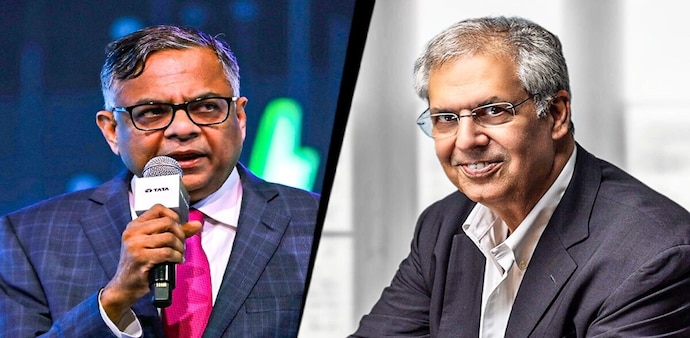
In a huge development, N Chandrasekaran has been reappointed as the Tata Sons chairman for a period of 5 years. As a consequence of Thursday's vote, the chairman-selection process already initiated by the Sir Dorabji Tata Trust would be paused or discontinued, PTI reported, citing people aware of the deliberations.
Chandra's reappointment comes a week after the Reserve Bank of India (RBI) rejected Tata Sons' application to surrender its registration as a non-banking financial company (NBFC), a decision that revives the prospect of a stock listing the company had spent more than a year trying to avoid, including by repaying more than ₹21,000 crore in debt.
Thus, the board reasoned that leadership continuity would reassure prospective investors ahead of any listing process, as per sources. The directors also asked Chandra to reconsider the decision to quit as he announced in August.
DO CHECKOUT | From TCS intern to Tata Sons chairman: Take a look at N Chandrasekaran’s journey
Will Tata Sons be the largest IPO in India's history?
An eventual public listing could be one of the largest IPOs in Indian history. Even a 1% stake sale has been estimated at ₹15,000-20,000 crore, implying an overall valuation near ₹20 lakh crore (around $230 billion) for the conglomerate.
Tata Sons has consistently faced a mandatory listing push from the Reserve Bank of India (RBI), leading to tighter regulatory oversight. Business Today was unable to verify the development independently.
Tata Trusts vs SP Group on Tata Sons' public listing
For Tata Trusts, which holds 66% of Tata Sons, listing implies lowered control and weakening the board's ability to ward off hostile takeovers. Previously, the RBI rejected Tata Sons' plea for an exemption from IPO. The RBI also filed a caveat in the Bombay High Court to ensure that its position is at least heard before an order is passed in case Tata Sons seeks legal relief.
Back in September 2022, the central bank classified Tata Sons as an "upper layer" non-banking financial company (NBFC) under its regulatory framework, a designation which requires listing within 3 years.
Minority stakeholder Shapoorji Pallonji, on the other hand, has long advocated for a listing, saying the move would help it monetise its stake and reduce costly debt. SP Group holds 18.4% stake in the conglomerate.
The development comes almost a month after Chandrasekaran announced that he was not up for a third term at the salt-to-software conglomerate. While announcing his decision to not seek a reappointment, Chandra said that one Tata Sons board member didn't support the extension of his 5-year tenure during the February board meeting.
The Sir Dorabji Tata Trust and Sir Ratan Tata Trust unanimously recommended the extension before the board meeting. He noted that roughly 6 months passed without any resolution, while stating there was a need for leadership clarity at a time when strategic projects are in a critical stage.
DON'T MISS | From ₹55 crore to ₹158.66 crore: How N Chandrasekaran's salary increased in a decade
Why Chandra announced exit from Tata Sons earlier?
Noel Tata, the chairman of Tata Trusts, reportedly sought a commitment from Chandrasekaran that Tata Sons would not list on the bourses despite intensifying regulatory scrutiny around the holding company. He also flagged concerns around the group's debt position.
At the centre of the power struggle that led to Chandra quitting is Tata Trusts, which owns around 66% of Tata Sons and exercises enormous influence over the group. Many leaders who were associated with Ratan Tata, including Vijay Singh and Mehli Mistry, have quit amid the ongoing leadership uncertainty.
Amidst all this, Tata Sons' AGM has been stuck in a limbo because of the lack of quorum on account due to Sir Ratan Tata Trusts' inability to nominate a representative for the meeting. The issue relates to SRTT’s board composition and, more specifically, the proportion of permanent trustees.
A valid quorum at the meeting mandatorily requires the attendance of at least five members and must include a representative jointly nominated by two trusts – Sir Dorabji Tata Trust (SDTT) and SRTT – that together hold a 52% stake in Tata Sons.
Ever since Chandra's exit, Tata Sons explored his successors, with reports naming Tata Steel chief executive TV Narendran, Tata Sons group chief financial officer Saurabh Agrawal, and National Stock Exchange chief executive Ashish Chauhan as contendors.
In a huge development, N Chandrasekaran has been reappointed as the Tata Sons chairman for a period of 5 years. As a consequence of Thursday's vote, the chairman-selection process already initiated by the Sir Dorabji Tata Trust would be paused or discontinued, PTI reported, citing people aware of the deliberations.
Chandra's reappointment comes a week after the Reserve Bank of India (RBI) rejected Tata Sons' application to surrender its registration as a non-banking financial company (NBFC), a decision that revives the prospect of a stock listing the company had spent more than a year trying to avoid, including by repaying more than ₹21,000 crore in debt.
Thus, the board reasoned that leadership continuity would reassure prospective investors ahead of any listing process, as per sources. The directors also asked Chandra to reconsider the decision to quit as he announced in August.
DO CHECKOUT | From TCS intern to Tata Sons chairman: Take a look at N Chandrasekaran’s journey
Will Tata Sons be the largest IPO in India's history?
An eventual public listing could be one of the largest IPOs in Indian history. Even a 1% stake sale has been estimated at ₹15,000-20,000 crore, implying an overall valuation near ₹20 lakh crore (around $230 billion) for the conglomerate.
Tata Sons has consistently faced a mandatory listing push from the Reserve Bank of India (RBI), leading to tighter regulatory oversight. Business Today was unable to verify the development independently.
Tata Trusts vs SP Group on Tata Sons' public listing
For Tata Trusts, which holds 66% of Tata Sons, listing implies lowered control and weakening the board's ability to ward off hostile takeovers. Previously, the RBI rejected Tata Sons' plea for an exemption from IPO. The RBI also filed a caveat in the Bombay High Court to ensure that its position is at least heard before an order is passed in case Tata Sons seeks legal relief.
Back in September 2022, the central bank classified Tata Sons as an "upper layer" non-banking financial company (NBFC) under its regulatory framework, a designation which requires listing within 3 years.
Minority stakeholder Shapoorji Pallonji, on the other hand, has long advocated for a listing, saying the move would help it monetise its stake and reduce costly debt. SP Group holds 18.4% stake in the conglomerate.
The development comes almost a month after Chandrasekaran announced that he was not up for a third term at the salt-to-software conglomerate. While announcing his decision to not seek a reappointment, Chandra said that one Tata Sons board member didn't support the extension of his 5-year tenure during the February board meeting.
The Sir Dorabji Tata Trust and Sir Ratan Tata Trust unanimously recommended the extension before the board meeting. He noted that roughly 6 months passed without any resolution, while stating there was a need for leadership clarity at a time when strategic projects are in a critical stage.
DON'T MISS | From ₹55 crore to ₹158.66 crore: How N Chandrasekaran's salary increased in a decade
Why Chandra announced exit from Tata Sons earlier?
Noel Tata, the chairman of Tata Trusts, reportedly sought a commitment from Chandrasekaran that Tata Sons would not list on the bourses despite intensifying regulatory scrutiny around the holding company. He also flagged concerns around the group's debt position.
At the centre of the power struggle that led to Chandra quitting is Tata Trusts, which owns around 66% of Tata Sons and exercises enormous influence over the group. Many leaders who were associated with Ratan Tata, including Vijay Singh and Mehli Mistry, have quit amid the ongoing leadership uncertainty.
Amidst all this, Tata Sons' AGM has been stuck in a limbo because of the lack of quorum on account due to Sir Ratan Tata Trusts' inability to nominate a representative for the meeting. The issue relates to SRTT’s board composition and, more specifically, the proportion of permanent trustees.
A valid quorum at the meeting mandatorily requires the attendance of at least five members and must include a representative jointly nominated by two trusts – Sir Dorabji Tata Trust (SDTT) and SRTT – that together hold a 52% stake in Tata Sons.
Ever since Chandra's exit, Tata Sons explored his successors, with reports naming Tata Steel chief executive TV Narendran, Tata Sons group chief financial officer Saurabh Agrawal, and National Stock Exchange chief executive Ashish Chauhan as contendors.