
Premiumisation moves beyond metros as tier-2, 3 consumers drive demand for new-age brands
New-age brands are seeing stronger demand from smaller cities as digital access, social media and rising aspirations reshape how consumers discover and buy products.
- Sep 30, 2026,
- Updated Sep 30, 2026 9:27 PM IST
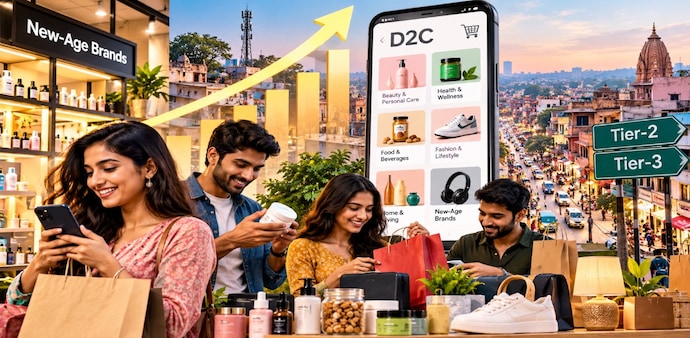
India's consumer-brand market is seeing premiumization move beyond the country's largest cities, with Tier-2 and Tier-3 consumers increasingly driving demand for new-age and digital-first brands.
Founders from consumer brands including Plum, Kapiva and Open Secret said at a Flipkart media roundtable that consumers in smaller cities are showing a growing appetite for differentiated products, while digital commerce and social media are reducing the information and distribution gaps that once separated metro and non-metro markets.
The shift is also changing the way brands think about pricing. Rather than simply seeking the cheapest product, consumers are increasingly willing to pay a premium when they can understand the value proposition, whether through product quality, ingredients, evidence or brand differentiation.
For digital-first brands, this is expanding the addressable market beyond the traditional urban early adopter. Ahana Gautam, Founder & CEO, Open Secret said that 60% of its sales now come from tier-2 and tier-3 markets, while Plum Goodness founder Shankar Prasad highlighted that more than two-thirds of its business comes from outside the top eight cities.
Anuj Sharma, co-founder of Kapiva, meanwhile said that two-thirds of its growth began coming from tier-3 cities after the brand expanded its marketplace presence, a trend the company said initially surprised it.
The change is being aided by greater access to information. “The Gen Z segment is someone who is very aware, is very well informed; they get a lot of information from their social network,” said Nishant Dalal, Vice President, Consumables, FMCG and Healthcare, Flipkart.
For platforms, the opportunity is not only to widen product selection but also to make higher-value products more accessible. Dalal said Flipkart was using financing options to help consumers spread payments for products they aspire to buy.
“So we have concepts like pay later, credit card EMIs,” Dalal said. “Pay in three is a concept where you just pay one-third, and two-thirds will come later, and there is no additional charge.”
The emergence of smaller-city demand is also changing product innovation. Brands said marketplace search and transaction data is increasingly helping them identify unmet consumer needs and develop products accordingly, reducing some of the uncertainty involved in launching new products.
For D2C brands, the implication is significant: the growth opportunity is no longer limited to building a premium consumer base in metros. E-commerce is increasingly allowing brands to take differentiated products to consumers across the country, while giving smaller-city shoppers access to a wider range of brands.
India's consumer-brand market is seeing premiumization move beyond the country's largest cities, with Tier-2 and Tier-3 consumers increasingly driving demand for new-age and digital-first brands.
Founders from consumer brands including Plum, Kapiva and Open Secret said at a Flipkart media roundtable that consumers in smaller cities are showing a growing appetite for differentiated products, while digital commerce and social media are reducing the information and distribution gaps that once separated metro and non-metro markets.
The shift is also changing the way brands think about pricing. Rather than simply seeking the cheapest product, consumers are increasingly willing to pay a premium when they can understand the value proposition, whether through product quality, ingredients, evidence or brand differentiation.
For digital-first brands, this is expanding the addressable market beyond the traditional urban early adopter. Ahana Gautam, Founder & CEO, Open Secret said that 60% of its sales now come from tier-2 and tier-3 markets, while Plum Goodness founder Shankar Prasad highlighted that more than two-thirds of its business comes from outside the top eight cities.
Anuj Sharma, co-founder of Kapiva, meanwhile said that two-thirds of its growth began coming from tier-3 cities after the brand expanded its marketplace presence, a trend the company said initially surprised it.
The change is being aided by greater access to information. “The Gen Z segment is someone who is very aware, is very well informed; they get a lot of information from their social network,” said Nishant Dalal, Vice President, Consumables, FMCG and Healthcare, Flipkart.
For platforms, the opportunity is not only to widen product selection but also to make higher-value products more accessible. Dalal said Flipkart was using financing options to help consumers spread payments for products they aspire to buy.
“So we have concepts like pay later, credit card EMIs,” Dalal said. “Pay in three is a concept where you just pay one-third, and two-thirds will come later, and there is no additional charge.”
The emergence of smaller-city demand is also changing product innovation. Brands said marketplace search and transaction data is increasingly helping them identify unmet consumer needs and develop products accordingly, reducing some of the uncertainty involved in launching new products.
For D2C brands, the implication is significant: the growth opportunity is no longer limited to building a premium consumer base in metros. E-commerce is increasingly allowing brands to take differentiated products to consumers across the country, while giving smaller-city shoppers access to a wider range of brands.