
RBI orders BNPL startup Simpl to halt payment operations over regulatory breach
The central bank has said Simpl was operating as a payment system operator without the mandatory Certificate of Authorisation. The order requires the company to cease activities involving payment, clearing, and settlement functions with immediate effect.
- Sep 26, 2025,
- Updated Sep 26, 2025 1:21 PM IST
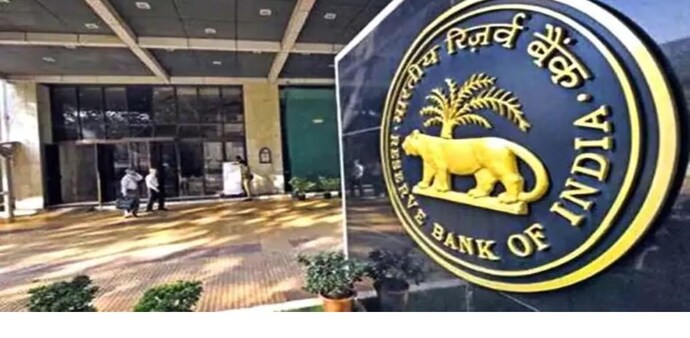
The Reserve Bank of India (RBI) has directed Bengaluru-based buy-now-pay-later (BNPL) startup Simpl to immediately stop all payment-related operations, citing lack of authorisation under the Payment and Settlement Systems (PSS) Act, 2007.
According to a letter dated September 25, 2025, the central bank said Simpl was operating as a payment system operator without the mandatory Certificate of Authorisation. The order requires the company to cease activities involving payment, clearing, and settlement functions with immediate effect.
The RBI stressed that such operations without approval violate provisions of the PSS Act. The law empowers the central bank to regulate and supervise payment systems in India, with Section 4 explicitly prohibiting any entity from running such systems without prior authorisation.
The development was initially reported by The Economic Times.
The regulatory action against Simpl comes just months after the Enforcement Directorate (ED) launched a probe into the company. In July, the agency filed a case under the Foreign Exchange Management Act (FEMA), 1999, against Simpl and its founder-director, Nitya Sharma, over alleged forex violations worth ₹913.75 crore.
According to the ED, Simpl, incorporated as One Sigma Technologies Pvt Ltd, received foreign investment earmarked for technology services. However, investigators allege the startup diverted these funds into financial services without obtaining the necessary clearances, thereby breaching India’s foreign direct investment (FDI) regulations.
Founded in 2015 by Sharma, a former Goldman Sachs vice president, and entrepreneur Chaitra Chidanand, Simpl positioned itself as a frictionless payments utility rather than a regulated lender. The company’s model allowed customers to make purchases instantly and settle payments later—usually within 15 days at zero interest. Its merchant network spans more than 26,000 partners, including Zomato, BigBasket, Rapido, and Box8.
Over the years, Simpl attracted significant venture capital backing, raising about $83 million from global investors such as DIA Investments, Hard Yaka, FJ Labs, and Valar Ventures. Despite rapid growth, the company avoided pursuing a non-banking financial company (NBFC) license, unlike many BNPL rivals that tie up with regulated institutions to operate compliantly. Its founders frequently likened Simpl’s approach to a modern version of a traditional khata (ledger) system.
However, regulators appear unconvinced by this positioning. The RBI’s order suggests that Simpl’s operations—facilitating payment, clearing, and settlement between consumers and merchants—squarely fall within the scope of activities requiring central bank authorisation.
Under the PSS Act, the RBI can issue directions, impose restrictions, or revoke permissions if a system provider is found to be non-compliant. The central bank’s directive signals heightened scrutiny of fintechs operating in regulatory grey zones.
For Simpl, the twin challenges of the RBI’s suspension order and the ED’s ongoing probe threaten to upend its business model, raising questions about the future of unlicensed BNPL players in India’s fast-evolving digital payments ecosystem.
The Reserve Bank of India (RBI) has directed Bengaluru-based buy-now-pay-later (BNPL) startup Simpl to immediately stop all payment-related operations, citing lack of authorisation under the Payment and Settlement Systems (PSS) Act, 2007.
According to a letter dated September 25, 2025, the central bank said Simpl was operating as a payment system operator without the mandatory Certificate of Authorisation. The order requires the company to cease activities involving payment, clearing, and settlement functions with immediate effect.
The RBI stressed that such operations without approval violate provisions of the PSS Act. The law empowers the central bank to regulate and supervise payment systems in India, with Section 4 explicitly prohibiting any entity from running such systems without prior authorisation.
The development was initially reported by The Economic Times.
The regulatory action against Simpl comes just months after the Enforcement Directorate (ED) launched a probe into the company. In July, the agency filed a case under the Foreign Exchange Management Act (FEMA), 1999, against Simpl and its founder-director, Nitya Sharma, over alleged forex violations worth ₹913.75 crore.
According to the ED, Simpl, incorporated as One Sigma Technologies Pvt Ltd, received foreign investment earmarked for technology services. However, investigators allege the startup diverted these funds into financial services without obtaining the necessary clearances, thereby breaching India’s foreign direct investment (FDI) regulations.
Founded in 2015 by Sharma, a former Goldman Sachs vice president, and entrepreneur Chaitra Chidanand, Simpl positioned itself as a frictionless payments utility rather than a regulated lender. The company’s model allowed customers to make purchases instantly and settle payments later—usually within 15 days at zero interest. Its merchant network spans more than 26,000 partners, including Zomato, BigBasket, Rapido, and Box8.
Over the years, Simpl attracted significant venture capital backing, raising about $83 million from global investors such as DIA Investments, Hard Yaka, FJ Labs, and Valar Ventures. Despite rapid growth, the company avoided pursuing a non-banking financial company (NBFC) license, unlike many BNPL rivals that tie up with regulated institutions to operate compliantly. Its founders frequently likened Simpl’s approach to a modern version of a traditional khata (ledger) system.
However, regulators appear unconvinced by this positioning. The RBI’s order suggests that Simpl’s operations—facilitating payment, clearing, and settlement between consumers and merchants—squarely fall within the scope of activities requiring central bank authorisation.
Under the PSS Act, the RBI can issue directions, impose restrictions, or revoke permissions if a system provider is found to be non-compliant. The central bank’s directive signals heightened scrutiny of fintechs operating in regulatory grey zones.
For Simpl, the twin challenges of the RBI’s suspension order and the ED’s ongoing probe threaten to upend its business model, raising questions about the future of unlicensed BNPL players in India’s fast-evolving digital payments ecosystem.