
RCB, Rajasthan Royals deals: What they mean for IPL valuations
The IPL ecosystem was valued at $8.8 billion in or Rs 76,100 crore in 2025, making it the third most valued cricket league in the world.
Jyotindra Dubey
- Mar 25, 2026,
- Updated Mar 25, 2026 4:51 PM IST
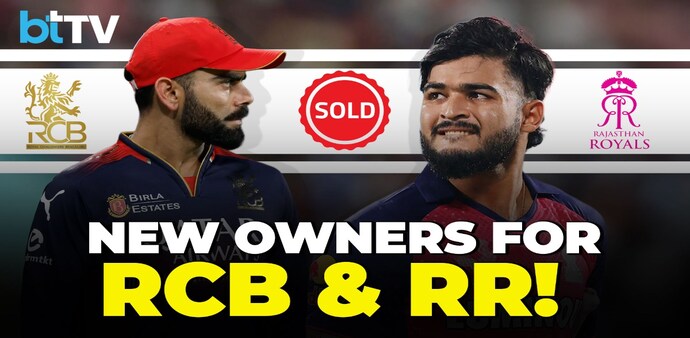
Something shifted in the India Premier League (IPL) on 24th March. In a single day, two separate franchise transactions quietly landed in the same ballpark. Rajasthan Royals were pegged at around ₹16,000 crore after a US-based consortium led by tech entrepreneur and existing minority investor Kal Somani acquired 100% ownership.
Advertisement
The Royal Challengers Bengaluru deal went a step further, touching roughly ₹16,660 crore when as it got sold to a consortium led by Aditya Birla Group, Times of India Group, Bolt Ventures, and Blackstone. Earlier, Gujarat Titans—a relatively new entrant—also commanded a hefty valuation of around ₹7,500 crore when the Torrent Group acquired a 67% majority stake from CVC Capital.
For the longest time, IPL franchise valuations existed in a kind of grey zone. Everyone knew these were valuable assets, but there was no consistent benchmark. Teams rarely changed hands and the valuations often depended on narratives—brand value, fan following, trophy counts.
But the recent deals have cut through that ambiguity and clarifies how valuable IPL franchises are. According to a D&P Advisory report, the IPL ecosystem was valued at $8.8 billion in or ₹76,100 crore in 2025, witnessing a dip for two consecutive years from its peak valuation of $11.2 billion ₹92,500 crore in 2023.
Advertisement
According to the report, the first decline came in 2024, when the Disney StarViacom merger created JioStar, consolidating television and digital rights under one roof. This eliminated the fierce two-horse race that had driven the price of media in prior cycles.
Secondly, more structural hit came from the exit of real-money gaming (RMG) companies. Fantasy and gaming platforms had emerged as the IPL’s most aggressive advertisers, contributing an estimated ₹1,500–₹2,000 crore annually across league, franchise, and broadcaster deals. With the Promotion Regulation of Online Gaming Act banning money-game advertising and sponsorship, this entire revenue stream has vanished, the report said.
Advertisement
Why franchise valuations are on the rise
Despite these headwinds, franchise valuations are on the rise. One key reason is the entry barrier. There are only ten teams, and there is no steady pipeline of new franchises. With limited supply, any influx of institutional capital intensifies competition for existing assets—pushing valuations higher.
Take for instance Gujarat Titans. It isn’t a legacy franchise. It doesn’t carry the vantage of early IPL teams or decades of fan-building. And yet, it’s being valued at around Rs 7,500 crore. At the time, no other teams were on the block, suggesting that what investors were pricing was not just the team’s brand, but the league’s underlying economics.
Also over the years, IPL franchises have built a stronger balance sheets too.
When IPL was launched in 2007, critics were sceptical about the economic viability of running a team as a business with revenue streams limited to share in broadcasting rights, merchandise sales, and sponsorships with the league cricket calendar limited to about a month.
That model has since evolved.
For many IPL franchise owners now end of IPL doesn’t mark end of business. Many of them now own teams in multiple global leagues that have replicated the IPL forma t— from England and South Africa to the recently launched Major League Cricket in the United States.
Advertisement
Back home, the league has expanded its footprint with the launch of the Women’s Premier League (WPL) in 2023, where several IPL franchise owners also hold stakes. This diversification has turned franchises into year-round sporting businesses rather than a seasonal business.
Something shifted in the India Premier League (IPL) on 24th March. In a single day, two separate franchise transactions quietly landed in the same ballpark. Rajasthan Royals were pegged at around ₹16,000 crore after a US-based consortium led by tech entrepreneur and existing minority investor Kal Somani acquired 100% ownership.
Advertisement
The Royal Challengers Bengaluru deal went a step further, touching roughly ₹16,660 crore when as it got sold to a consortium led by Aditya Birla Group, Times of India Group, Bolt Ventures, and Blackstone. Earlier, Gujarat Titans—a relatively new entrant—also commanded a hefty valuation of around ₹7,500 crore when the Torrent Group acquired a 67% majority stake from CVC Capital.
For the longest time, IPL franchise valuations existed in a kind of grey zone. Everyone knew these were valuable assets, but there was no consistent benchmark. Teams rarely changed hands and the valuations often depended on narratives—brand value, fan following, trophy counts.
But the recent deals have cut through that ambiguity and clarifies how valuable IPL franchises are. According to a D&P Advisory report, the IPL ecosystem was valued at $8.8 billion in or ₹76,100 crore in 2025, witnessing a dip for two consecutive years from its peak valuation of $11.2 billion ₹92,500 crore in 2023.
Advertisement
According to the report, the first decline came in 2024, when the Disney StarViacom merger created JioStar, consolidating television and digital rights under one roof. This eliminated the fierce two-horse race that had driven the price of media in prior cycles.
Secondly, more structural hit came from the exit of real-money gaming (RMG) companies. Fantasy and gaming platforms had emerged as the IPL’s most aggressive advertisers, contributing an estimated ₹1,500–₹2,000 crore annually across league, franchise, and broadcaster deals. With the Promotion Regulation of Online Gaming Act banning money-game advertising and sponsorship, this entire revenue stream has vanished, the report said.
Advertisement
Why franchise valuations are on the rise
Despite these headwinds, franchise valuations are on the rise. One key reason is the entry barrier. There are only ten teams, and there is no steady pipeline of new franchises. With limited supply, any influx of institutional capital intensifies competition for existing assets—pushing valuations higher.
Take for instance Gujarat Titans. It isn’t a legacy franchise. It doesn’t carry the vantage of early IPL teams or decades of fan-building. And yet, it’s being valued at around Rs 7,500 crore. At the time, no other teams were on the block, suggesting that what investors were pricing was not just the team’s brand, but the league’s underlying economics.
Also over the years, IPL franchises have built a stronger balance sheets too.
When IPL was launched in 2007, critics were sceptical about the economic viability of running a team as a business with revenue streams limited to share in broadcasting rights, merchandise sales, and sponsorships with the league cricket calendar limited to about a month.
That model has since evolved.
For many IPL franchise owners now end of IPL doesn’t mark end of business. Many of them now own teams in multiple global leagues that have replicated the IPL forma t— from England and South Africa to the recently launched Major League Cricket in the United States.
Advertisement
Back home, the league has expanded its footprint with the launch of the Women’s Premier League (WPL) in 2023, where several IPL franchise owners also hold stakes. This diversification has turned franchises into year-round sporting businesses rather than a seasonal business.
Read more!