
Tata Capital eyes doubling loan book in three years
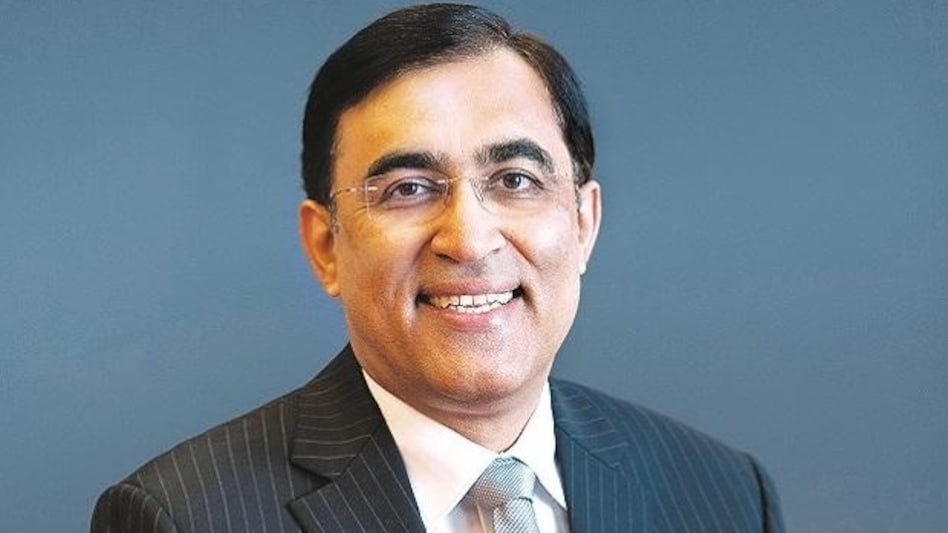
Rajiv Sabharwal, Managing Director and CEO of Tata Capital also says that the company aims to keep its credit costs below 1%, backed by strong underwriting and technology-led risk management.
- Oct 13, 2025,
- Updated Oct 13, 2025 5:20 PM IST
Tata Capital is targeting double-digit loan book growth over the next three years says Rajiv Sabharwal, Managing Director and CEO of Tata Capital, expressing optimism about India’s macroeconomic environment and the government’s focus on housing-for-all and financial inclusion. Currently, the loan book exceeds Rs 2.2 lakh crore and FY25 profits cross Rs 3,655 crore.
Confident of maintaining industry-leading growth, he added that the company aims to keep its credit costs below 1%, backed by strong underwriting and technology-led risk management. “Our customer selection process is robust. We use scorecards and business rule engines, integrating information to make better decisions. Our balanced portfolio between fixed and floating-rate assets and liabilities ensures margin sustainability even if interest rates move,” he added.
Sabharwal also said Tata Capital’s strategy will continue to rest on balanced credit expansion, disciplined asset quality and a deepening focus on retail and SME segments, while leveraging digital and AI-led efficiencies to drive inclusion, improve turnaround times, and strengthen governance.
The IPO proceeds, Sabharwal said, will be used to fund growth and strengthen Tier I capital, taking the capital adequacy ratio above 22% sufficient for the next two to three years of expansion. Tata Capital has a network of around 1,500 branches, with over 85% of recent expansion in Tier II cities and beyond. “Our growth is driven by multiple factors, a strong brand that helps us raise funds at low cost, a wide product portfolio and deeper geographic reach,” he added.
Retail lending remains the backbone of Tata Capital, accounting for about 62-63% of its total book, split evenly between housing and consumer businesses. Sabharwal emphasised that the company’s strength lies in its broad-based diversification across products and customer segments, ensuring no concentration risk. “Whether it is passenger vehicle, two-wheeler, personal, or business loans, we are present in all. Similarly, in housing, we have prime, affordable, and micro-housing portfolios. We believe our consumer and housing portfolio will always be the largest and continue to grow over 25% plus,” he said.
Small and medium enterprises (SMEs) make up about 26-27% of Tata Capital’s portfolio. Despite broader concerns about stress in MSME assets, Sabharwal said the company’s SME book remains healthy and resilient. “SMEs are the backbone of the Indian economy, not only for innovation but also for employment. We are not seeing any stress in our SME portfolio, even on the unsecured side,” he noted.
Sabharwal credited digitisation for improving access and efficiency in the SME segment. “Over 90% of drawdowns in our supply chain business now happen digitally, a big change from the past. Technology has allowed us to serve small businesses faster and more efficiently,” he said, adding that digital lending will continue to be a key differentiator for the company.
He added that operating efficiency has improved markedly due to digitization. “Our housing finance arm’s cost-to-income ratio has improved from 40% three years ago to 31% now, driven by digital adoption and the use of AI,” he pointed out. Digital transformation and GenAI investments are major parts of Tata Capital’s operating model.
The company uses AI not only to boost efficiency but also to enhance transparency and customer convenience. “We use GenAI to make credit processes more robust and to reduce turnaround time. On the service side, we are using it for near real-time customer response. The focus is to use technology to make access easier and improve operating efficiency,” Sabharwal explained.
While Tata Capital partners with fintechs to improve process efficiency, Sabharwal clarified that business origination remains largely organic. “Ninety-nine percent of our book is organic, and we intend to continue that way. We know our business well and want to maintain control over quality,” he said.
Post listing, Tata Capital’s priorities are governance excellence, customer-centricity and sustained shareholder value creation. “We will continue to keep customers at the centre of everything we do, ensure high governance standards, and use technology to simplify access. We want to retain customers for life,” Sabharwal added.
Tata Capital is targeting double-digit loan book growth over the next three years says Rajiv Sabharwal, Managing Director and CEO of Tata Capital, expressing optimism about India’s macroeconomic environment and the government’s focus on housing-for-all and financial inclusion. Currently, the loan book exceeds Rs 2.2 lakh crore and FY25 profits cross Rs 3,655 crore.
Confident of maintaining industry-leading growth, he added that the company aims to keep its credit costs below 1%, backed by strong underwriting and technology-led risk management. “Our customer selection process is robust. We use scorecards and business rule engines, integrating information to make better decisions. Our balanced portfolio between fixed and floating-rate assets and liabilities ensures margin sustainability even if interest rates move,” he added.
Sabharwal also said Tata Capital’s strategy will continue to rest on balanced credit expansion, disciplined asset quality and a deepening focus on retail and SME segments, while leveraging digital and AI-led efficiencies to drive inclusion, improve turnaround times, and strengthen governance.
The IPO proceeds, Sabharwal said, will be used to fund growth and strengthen Tier I capital, taking the capital adequacy ratio above 22% sufficient for the next two to three years of expansion. Tata Capital has a network of around 1,500 branches, with over 85% of recent expansion in Tier II cities and beyond. “Our growth is driven by multiple factors, a strong brand that helps us raise funds at low cost, a wide product portfolio and deeper geographic reach,” he added.
Retail lending remains the backbone of Tata Capital, accounting for about 62-63% of its total book, split evenly between housing and consumer businesses. Sabharwal emphasised that the company’s strength lies in its broad-based diversification across products and customer segments, ensuring no concentration risk. “Whether it is passenger vehicle, two-wheeler, personal, or business loans, we are present in all. Similarly, in housing, we have prime, affordable, and micro-housing portfolios. We believe our consumer and housing portfolio will always be the largest and continue to grow over 25% plus,” he said.
Small and medium enterprises (SMEs) make up about 26-27% of Tata Capital’s portfolio. Despite broader concerns about stress in MSME assets, Sabharwal said the company’s SME book remains healthy and resilient. “SMEs are the backbone of the Indian economy, not only for innovation but also for employment. We are not seeing any stress in our SME portfolio, even on the unsecured side,” he noted.
Sabharwal credited digitisation for improving access and efficiency in the SME segment. “Over 90% of drawdowns in our supply chain business now happen digitally, a big change from the past. Technology has allowed us to serve small businesses faster and more efficiently,” he said, adding that digital lending will continue to be a key differentiator for the company.
He added that operating efficiency has improved markedly due to digitization. “Our housing finance arm’s cost-to-income ratio has improved from 40% three years ago to 31% now, driven by digital adoption and the use of AI,” he pointed out. Digital transformation and GenAI investments are major parts of Tata Capital’s operating model.
The company uses AI not only to boost efficiency but also to enhance transparency and customer convenience. “We use GenAI to make credit processes more robust and to reduce turnaround time. On the service side, we are using it for near real-time customer response. The focus is to use technology to make access easier and improve operating efficiency,” Sabharwal explained.
While Tata Capital partners with fintechs to improve process efficiency, Sabharwal clarified that business origination remains largely organic. “Ninety-nine percent of our book is organic, and we intend to continue that way. We know our business well and want to maintain control over quality,” he said.
Post listing, Tata Capital’s priorities are governance excellence, customer-centricity and sustained shareholder value creation. “We will continue to keep customers at the centre of everything we do, ensure high governance standards, and use technology to simplify access. We want to retain customers for life,” Sabharwal added.