
The journey of N Chandrasekaran - From humble beginnings to Ratan Tata's most trusted lieutenant
Now, after years at the top, Chandrasekaran has stepped down as Tata Sons chairman. His exit comes months after Tata Sons deferred a decision on his reappointment.
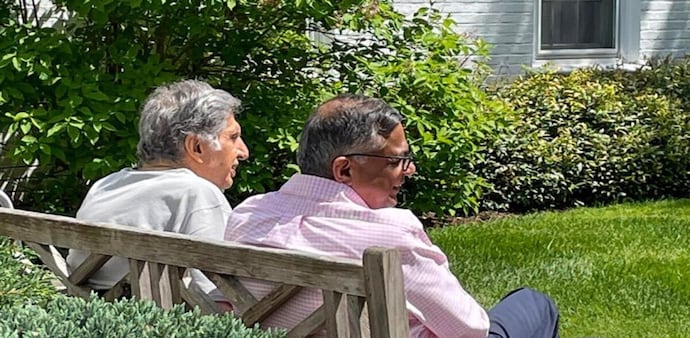
- Aug 12, 2026,
- Updated Aug 12, 2026 1:00 PM IST
From a small-town Tamil Nadu boy to the man at the helm of India’s biggest business group, Natarajan Chandrasekaran’s journey has been anything but ordinary. Fondly known as ‘Chandra’, the Tata group veteran rose through the ranks in Tata Consultancy Services (TCS) before becoming the first non-Parsi professional to lead the Tata Group. Now, after years at the top, Chandrasekaran has stepped down as Tata Sons chairman. His exit comes months after Tata Sons deferred a decision on his reappointment.
Humble beginnings
Natarajan Chandrasekaran was born into a Tamil farmer family in Mohanur on June 2, 1963. He is the youngest of 6 children, having 2 brothers and 3 sisters. Along with his siblings, he walked 3 kms daily to attend a local Tamil-medium government school before moving away for higher education.
His brother, N Srinivasan, serves as a group finance director at Murugappa Group and the other brother, N Ganapathy Subramaniam, was appointed as the chairman of Tata Communications in 2025.
He received his bachelor's degree in Applied Sciences from the Coimbatore Institute of Technology and later went on to earn his Master's in Computer Applications (MCA) from the National Institute of Technology, Tiruchirappalli (previously known as Regional Engineering College, Tiruchirappalli) in 1986. He began his journey with TCS in 1987 as an intern.
MUST READ | TCS share price: Why IT stock tanked 5% within minutes; Chandrasekaran resignation & more
The calm amid the Tata vs Mistry storm
In February 2017, N Chandrasekaran became the first non-Parsi professional executive to lead the Tata Group, following Cyrus Mistry’s controversial ouster after a public clash with Ratan Tata over capital allocation and corporate governance. Ratan Tata backed Chandrasekaran as the professional leader who could restore stability, with TCS emerging as the group’s key cash generator under his leadership.
Unlike Mistry, Chandrasekaran spent his entire career within the Tata Group, joining TCS as an intern in 1987 and rising to become its CEO in 2009.
Chandrasekaran’s tenure also coincided with the legal battle between Tata Sons and Mistry. In March 2021, after four years of hearings, the Supreme Court ruled in favour of Tata Sons, dismissing allegations of oppression and mismanagement and setting aside the NCLAT order seeking Chandrasekaran’s removal and Mistry’s reinstatement.
Following Chandrasekaran’s leadership during the turbulent period, the Tata Sons board sought his reappointment as Executive Director for another term in February 2022.
Chandra's notable achievements
Among his most notable achievements was the return of Air India to the Tata Group in 2022. Over 69 years after its nationalisation, the airline returned to the conglomerate on January 27, 2022, in an almost circle-of-life moment.
Tata Sons won the winning bid of ₹18,000 crore to acquire the airline from the Indian government, taking over ₹15,300 crore of its debt. The airline's ownership was transferred to Talace Private Limited, a subsidiary of Tata Sons.
He also initiated and managed the complex merger and integration of Air India, Vistara and AirAsia India. He orchestrated the creation of Tata Consumer Products by merging the consumer product segments of Tata Tea and Tata Chemicals.
Besides this, Chandrasekaran spearheaded the conglomerate's aggressive push into high-tech infrastructure, including semiconductor manufacturing and battery cell gigafactories.
From a small-town Tamil Nadu boy to the man at the helm of India’s biggest business group, Natarajan Chandrasekaran’s journey has been anything but ordinary. Fondly known as ‘Chandra’, the Tata group veteran rose through the ranks in Tata Consultancy Services (TCS) before becoming the first non-Parsi professional to lead the Tata Group. Now, after years at the top, Chandrasekaran has stepped down as Tata Sons chairman. His exit comes months after Tata Sons deferred a decision on his reappointment.
Humble beginnings
Natarajan Chandrasekaran was born into a Tamil farmer family in Mohanur on June 2, 1963. He is the youngest of 6 children, having 2 brothers and 3 sisters. Along with his siblings, he walked 3 kms daily to attend a local Tamil-medium government school before moving away for higher education.
His brother, N Srinivasan, serves as a group finance director at Murugappa Group and the other brother, N Ganapathy Subramaniam, was appointed as the chairman of Tata Communications in 2025.
He received his bachelor's degree in Applied Sciences from the Coimbatore Institute of Technology and later went on to earn his Master's in Computer Applications (MCA) from the National Institute of Technology, Tiruchirappalli (previously known as Regional Engineering College, Tiruchirappalli) in 1986. He began his journey with TCS in 1987 as an intern.
MUST READ | TCS share price: Why IT stock tanked 5% within minutes; Chandrasekaran resignation & more
The calm amid the Tata vs Mistry storm
In February 2017, N Chandrasekaran became the first non-Parsi professional executive to lead the Tata Group, following Cyrus Mistry’s controversial ouster after a public clash with Ratan Tata over capital allocation and corporate governance. Ratan Tata backed Chandrasekaran as the professional leader who could restore stability, with TCS emerging as the group’s key cash generator under his leadership.
Unlike Mistry, Chandrasekaran spent his entire career within the Tata Group, joining TCS as an intern in 1987 and rising to become its CEO in 2009.
Chandrasekaran’s tenure also coincided with the legal battle between Tata Sons and Mistry. In March 2021, after four years of hearings, the Supreme Court ruled in favour of Tata Sons, dismissing allegations of oppression and mismanagement and setting aside the NCLAT order seeking Chandrasekaran’s removal and Mistry’s reinstatement.
Following Chandrasekaran’s leadership during the turbulent period, the Tata Sons board sought his reappointment as Executive Director for another term in February 2022.
Chandra's notable achievements
Among his most notable achievements was the return of Air India to the Tata Group in 2022. Over 69 years after its nationalisation, the airline returned to the conglomerate on January 27, 2022, in an almost circle-of-life moment.
Tata Sons won the winning bid of ₹18,000 crore to acquire the airline from the Indian government, taking over ₹15,300 crore of its debt. The airline's ownership was transferred to Talace Private Limited, a subsidiary of Tata Sons.
He also initiated and managed the complex merger and integration of Air India, Vistara and AirAsia India. He orchestrated the creation of Tata Consumer Products by merging the consumer product segments of Tata Tea and Tata Chemicals.
Besides this, Chandrasekaran spearheaded the conglomerate's aggressive push into high-tech infrastructure, including semiconductor manufacturing and battery cell gigafactories.