
The leadership ladder: The career lessons no one teaches women
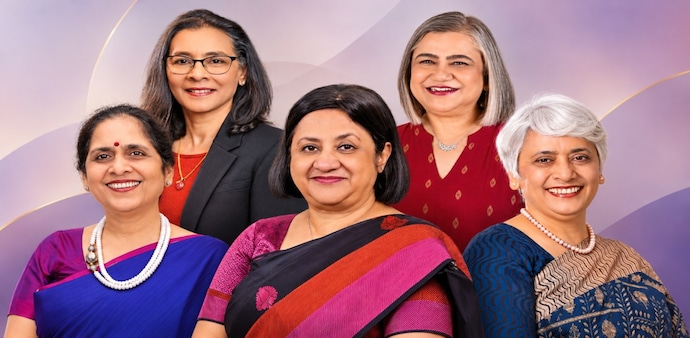
From overcoming self-doubt and speaking up to taking risks, navigating workplace expectations and building influence, five women leaders share the lessons that shaped their careers and what they want the next generation to know
- Nov 16, 2026,
- Updated Nov 16, 2026 5:33 PM IST
A woman takes a firm position in a meeting. Is she decisive, or is she being difficult? She questions a colleague’s recommendation. Is she exercising sound judgement, or is she being aggressive? She puts herself forward for a bigger role. Is she demonstrating ambition, or getting ahead of herself?
The same behaviour can be interpreted differently depending on who displays it. And while organisations increasingly talk about diversity, leadership development and equal opportunity, some of the most important lessons women learn in their careers rarely feature in formal leadership programmes.
Stop waiting to be ready
One of the biggest barriers to career progression can be the belief that one needs to be completely prepared before accepting a bigger responsibility. Women sometimes hesitate to put themselves forward because they feel they do not yet have all the experience required.
Roopa Kudva, former Managing Director and CEO of CRISIL, believes women must learn to seize opportunities rather than wait for someone else to validate their readiness. Some of the biggest breaks in her career came from taking the initiative. She walked into CRISIL without an appointment to ask for a job. Almost a decade later, she put herself forward for the role of Chief Rating Officer, making a presentation on why she was the right person for it.
“Women sometimes hesitate to see themselves as ready for top jobs. Part of this comes from social conditioning and part from the way behaviour is interpreted differently across genders. A man with a strong point of view may be seen as decisive, while a woman displaying the same conviction may be described as aggressive.”
“It’s very important for women not to wait for somebody else to decide that they are ready,” she adds.
Read More: The women leaders building India’s next-generation businesses
Dr Raju Mistry, former Global CHRO at Grasim, Jubilant and Cipla, who has since become an entrepreneur, experienced a similar hesitation earlier in her career. She initially resisted moving beyond specialist roles because she believed she lacked the critical experience required to take on generalist responsibilities. “Today we'd call that imposter syndrome.” It was her mentors and bosses who pushed her to explore unfamiliar roles, broadening her career in ways she had not imagined.
“Not everyone is good at everything, but there is a time and place to learn everything. If learning agility is part of your DNA, the sky is the limit. Don't wait until you feel fully ready, because readiness often comes only after you've taken the role,” she says.
Be firm without being defensive
Women leaders can find themselves negotiating the pressure to be competent, fair, approachable and likeable, all at the same time. In trying to meet these expectations, they can become overly conscious of how their decisions will be received.
Ritu Anand, former Chief Leadership and Diversity Officer and Senior Vice President HR at TCS, believes this can come at a cost. “Women in leadership can spend far too much energy trying to be competent, fair, likeable and acceptable all at once. At some point, you have to accept that doing consequential work will sometimes make people uncomfortable,” she says.
Looking back, she says she would worry less about being understood by everyone. She would also have taken a few more risks earlier in her career not reckless ones, but the kind where one does not have all the answers before saying yes.
“I don't regret having ambition. If anything, I wish I had been less apologetic about it,” she says.
Mistry recalls a male peer challenging her decision not to shortlist a candidate because of concerns about the person's leadership and behavioural fit. What followed was a heated email exchange. Mistry says she kept to the logic of the argument even as her colleague became increasingly emotional and offensive. She did not raise her voice or retaliate, but neither did she defer to his responses.
“The lesson I took from it: you can be firm without being harsh, and respectful without being submissive. When the facts are on your side, composure is your strongest weapon. It is also the best answer to the stereotype that a woman who holds her position is "difficult."
Must Read: Can women reshape India’s male-dominated logistics sector?
Build influence, not just authority
For Aruna Jayanthi, former Capgemini executive and Member of the Supervisory Board of Michelin Group, authenticity was central to building credibility. It helped her be seen as trustworthy, someone with strong values who would do what was right for the company. “Being authentic by itself is not enough, has to be combined with competence.”
Communication was one of her early learning areas. It was not her biggest strength initially, and candid feedback from her team, peers and even family helped her recognise the need to improve.
“I learnt not to assume that people will understand decisions taken, learnt to put myself in other’s shoes, understand perspectives and articulate the ‘why’ and ‘how’ better,” she says.
"This helped her build buy-in and address challenges collaboratively. She also learnt that influence in large organisations comes from bringing good ideas to the table and finding common ground, not simply relying on authority."
Ambition Need Not Come with an Apology
Career decisions are rarely made in isolation. Family responsibilities and personal priorities influence the choices people make. But women can carry an additional burden: feeling that their ambition needs to be justified.
“I was ambitious. I wanted to do significant work. I wanted responsibility and I wanted to be good at what I did. I don't apologise for that,” Anand says.
She does not claim to have made perfect choices. Rather, she made decisions that made sense at different stages of her life. While ambition sometimes competed with family priorities, she believes women should not automatically view every career decision through the lens of sacrifice.
Jayanthi, too, cautions against treating a temporary slowdown as a setback. In a career spanning 20 or 30 years, she says, a six-month break is relatively insignificant. It can provide an opportunity to recharge, reassess priorities or even consider a career shift. Her advice is to focus less on how hard one is working and more on the outcomes one creates for oneself, the organisation and the wider community.
For Mistry, the ability to pursue ambition also depends on the support systems women build at home and at work. Family responsibilities, she argues, should not automatically fall on women. If a child is unwell and an important work commitment needs attention, a spouse can take the day off.
“Running a home is a shared responsibility, and the sooner that is accepted, the more freely you can pursue your ambitions,” she says.
She recalls travelling overseas for an important assignment while her husband took leave to accompany her and look after their daughter. Her parents-in-law also helped with childcare, allowing her to focus on work.
For Arundhati Bhattacharya, Chairman and CEO of Salesforce India and former Chairperson of State Bank of India, navigating family responsibilities sometimes meant looking beyond conventional solutions.
When she was posted to Lucknow, she worried about finding a suitable school for her daughter and the possibility of being separated from her husband, who could not relocate. A senior colleague advised her to explore alternatives before giving up the assignment.
That advice proved useful again when she moved from Bengaluru to Mumbai and could not find a suitable school for her daughter. Her former school in Bengaluru agreed to keep her on its rolls, send study material and question papers, and allow her to return for examinations. Tutors in Mumbai helped her continue her studies.
Bhattacharya also stresses the importance of having mentors to turn to during difficult decisions. “You need someone with whom you can talk things through. That person may not have the time to speak to you regularly, but even being able to connect once in a while can make a difference,” she says.
She describes mentorship as having someone who can “hold your rudder for a while as you try to manage the sails”. A person who has navigated similar situations can help women recognise options they might otherwise overlook.
But she draws a distinction between a sacrifice freely chosen and one made out of obligation. “When you make a sacrifice, make sure it is of your own free will and not because you feel compelled to make it,” she says. Sacrifices made under pressure, she cautions, can eventually leave a person feeling bitter.
Never stop learning
A career can become defined by the function or specialisation in which a professional has built expertise. But senior leadership often requires people to move beyond familiar territory, learn new areas and adapt to changing circumstances.
Mistry's transition from specialist roles to generalist responsibilities illustrates this. When she became Global CHRO in a manufacturing set-up, Employee Relations and Rewards were two areas where she lacked on-the-job experience. She had to stretch herself and learn wherever she could.
“I eventually realised that continuous learning, application of common sense and strengthening your fundamentals help you navigate through any function even if you have not done it before,” she says. She also advises leaders not to be particular about whom they learn from. She has had reverse mentors at several stages of her career, including younger colleagues who taught her a great deal.
"Bhattacharya, too, believes leaders must remain curious and open to learning, particularly when moving into unfamiliar industries. Seniority, she cautions, should not make leaders assume they have nothing left to learn from younger colleagues."
“When we were in our earlier jobs, we focused on mentoring. In this role, I have experienced reverse mentoring on a scale I would never have imagined,” she says. “I now firmly believe that reverse mentoring is necessary.”