
UPI needs greater investment, resilience as ecosystem costs rise: NPCI CEO Dilip Asbe
NPCI MD and CEO Dilip Asbe has called for greater investment and resilience in the UPI ecosystem as operating costs and cybersecurity risks rise. Speaking at the SBI Conclave on September 24, Asbe also explained the rationale behind introducing MDR on select UPI transactions after six years of zero charges.
- Sep 24, 2026,
- Updated Sep 24, 2026 6:37 PM IST
NPCI Managing Director and CEO Dilip Asbe has called for greater investment and resilience in the Unified Payments Interface (UPI) ecosystem as the cost of operating the payments infrastructure rises. Speaking at the SBI Conclave on September 24, Asbe also explained the rationale behind the recently introduced merchant discount rate (MDR) on select UPI transactions.
“UPI was charged till 2020 and for six years it’s been free,” Asbe said, acknowledging that reinstating charges after a prolonged period of zero MDR is “very difficult and painful”.
The government had made UPI MDR zero during the Covid period, which Asbe said “really helped the merchants”. However, he said the priority now is to ensure that the ecosystem remains resilient as transaction volumes and infrastructure requirements expand.
“For UPI to survive and thrive in coming years we need resiliency,” Asbe said, adding that leading banks and acquirers “must invest ahead of time” as operating costs increase.
Why NPCI introduced MDR
Asbe said NPCI had spent the past six months working on the new MDR structure. The total cost of running UPI stood at ₹21,000 crore when NPCI submitted the data to the Reserve Bank of India last year, he said.
NPCI considered three factors while designing the charges: recovering at least a reasonable portion of ecosystem costs, excluding most transactions from MDR, and identifying businesses that could bear the charges.
MUST READ: UPI processed 23.2 billion transactions in May: What India’s payments scale means for the world
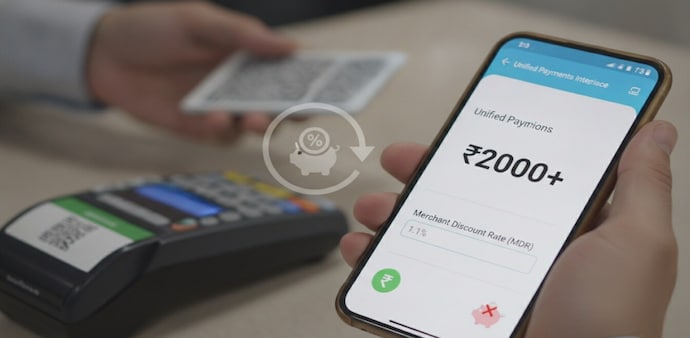
According to Asbe, 96% of UPI transactions by value remain outside the charges, while 75% of merchants have not recorded even a single transaction above ₹2,000.
The MDR will apply to businesses with annual turnover above ₹1,000 crore. Asbe said these businesses already use credit cards and have generally not passed those charges on to customers.
Cybersecurity becomes a priority
Asbe also highlighted cybersecurity risks as UPI expands. He said the tools available to hackers are becoming “very powerful” and argued that AI should be used to strengthen payment security despite its cost.
“we must use it to secure systems to prevent any incidents in the future,” he said.
ALSO READ: Food delivery, quick commerce largely shielded from UPI MDR despite high digital payments
₹3,000 crore UPI fund
Asbe said the proposed UPI fund could reach around ₹3,000 crore, about three times the size of the Payment Infrastructure Development Fund (PIDF).
UPI currently has around 60 million active merchants, of which 35–40 million use only paper-based QR codes. The fund could potentially support the provision of soundboxes to merchants and expand UPI adoption.
One billion Indians on UPI
Asbe said NPCI’s “north star” remains taking UPI to every Indian. He said the broader objective is to bring one billion Indians onto UPI while building infrastructure that can facilitate wider access to credit and insurance.
He also pointed to Brazil, which adopted mobile payments later than India but has crossed 90% mobile-payment penetration, as an example of the potential ahead.
Asbe said slower UPI growth has been driven predominantly by slower investment in the ecosystem, making continued infrastructure spending central to its next phase.
DO READ: UPI MDR impact on small merchants: Retailers flag cost concerns ahead of festive season
NPCI Managing Director and CEO Dilip Asbe has called for greater investment and resilience in the Unified Payments Interface (UPI) ecosystem as the cost of operating the payments infrastructure rises. Speaking at the SBI Conclave on September 24, Asbe also explained the rationale behind the recently introduced merchant discount rate (MDR) on select UPI transactions.
“UPI was charged till 2020 and for six years it’s been free,” Asbe said, acknowledging that reinstating charges after a prolonged period of zero MDR is “very difficult and painful”.
The government had made UPI MDR zero during the Covid period, which Asbe said “really helped the merchants”. However, he said the priority now is to ensure that the ecosystem remains resilient as transaction volumes and infrastructure requirements expand.
“For UPI to survive and thrive in coming years we need resiliency,” Asbe said, adding that leading banks and acquirers “must invest ahead of time” as operating costs increase.
Why NPCI introduced MDR
Asbe said NPCI had spent the past six months working on the new MDR structure. The total cost of running UPI stood at ₹21,000 crore when NPCI submitted the data to the Reserve Bank of India last year, he said.
NPCI considered three factors while designing the charges: recovering at least a reasonable portion of ecosystem costs, excluding most transactions from MDR, and identifying businesses that could bear the charges.
MUST READ: UPI processed 23.2 billion transactions in May: What India’s payments scale means for the world
According to Asbe, 96% of UPI transactions by value remain outside the charges, while 75% of merchants have not recorded even a single transaction above ₹2,000.
The MDR will apply to businesses with annual turnover above ₹1,000 crore. Asbe said these businesses already use credit cards and have generally not passed those charges on to customers.
Cybersecurity becomes a priority
Asbe also highlighted cybersecurity risks as UPI expands. He said the tools available to hackers are becoming “very powerful” and argued that AI should be used to strengthen payment security despite its cost.
“we must use it to secure systems to prevent any incidents in the future,” he said.
ALSO READ: Food delivery, quick commerce largely shielded from UPI MDR despite high digital payments
₹3,000 crore UPI fund
Asbe said the proposed UPI fund could reach around ₹3,000 crore, about three times the size of the Payment Infrastructure Development Fund (PIDF).
UPI currently has around 60 million active merchants, of which 35–40 million use only paper-based QR codes. The fund could potentially support the provision of soundboxes to merchants and expand UPI adoption.
One billion Indians on UPI
Asbe said NPCI’s “north star” remains taking UPI to every Indian. He said the broader objective is to bring one billion Indians onto UPI while building infrastructure that can facilitate wider access to credit and insurance.
He also pointed to Brazil, which adopted mobile payments later than India but has crossed 90% mobile-payment penetration, as an example of the potential ahead.
Asbe said slower UPI growth has been driven predominantly by slower investment in the ecosystem, making continued infrastructure spending central to its next phase.
DO READ: UPI MDR impact on small merchants: Retailers flag cost concerns ahead of festive season