
'We wanted to build an Indian computer': HCL co-founder reminisces early days on its 50th anniversary
In a post on X, he said that all of them had quit their jobs in 1976 when startups weren't a thing in India, and venture capital didn't exist.
- Aug 12, 2026,
- Updated Aug 12, 2026 10:19 AM IST
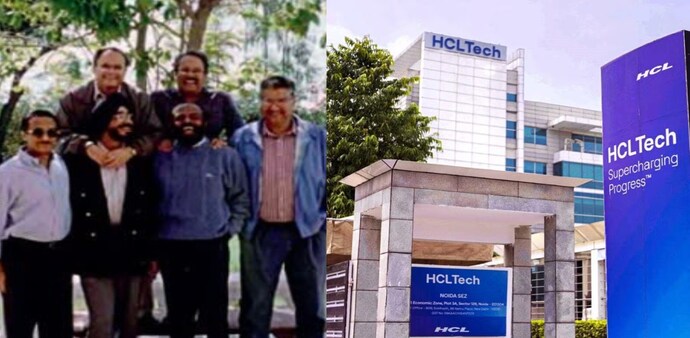
Ajai Chowdhry, one of the co-founders of tech giant HCL, reminisced about how a group of 6, including Shiv Nadar, set out to build the Indian computer. In a post on X, he said that all of them had quit their jobs in 1976 when startups weren't a thing in India, and venture capital didn't exist.
"We quit our jobs. There were six of us — Shiv Nadar, Arjun Malhotra, Yogesh Vaidya, Subhash Arora, DS Puri and me. It was 1976. Startups were not really a thing in India. Venture capital did not exist. Banks were not exactly lining up to lend money to six young men with an idea and no collateral," he wrote.
DO CHECKOUT | HCLTech CEO's salary hiked 67% on-year; here's how much he drew in FY26
How six men raised ₹1.87 lakh to start HCL
Chowdhry said that although people had barely heard of computers at the time, they believed the microprocessor would change the world. He said that they arranged ₹1.87 lakh at the time and one of them even sold a car.
"So, we took the plunge. Between the six of us, we managed to put together ₹1.87 lakh. We borrowed, pooled our savings and, in one case, even sold a car. Our first office was a small barsati in Golf Links, Delhi. We called ourselves Microcomp. We wanted to build an Indian computer," Chowdhry noted.
Why did HCL partner with UP Electronics Corporation?
He further said that the company didn't have a manufacturing licence, eventually prompting them to collaborate with UP Electronics Corporation. "They had the licence. We had the technology. And that partnership gave birth to Hindustan Computers Limited — HCL."
MUST READ | HCLTech features in TIME's World's Most Sustainable Companies 2026 list for second straight year
He said that the "most audacious part of the story" was when the company started selling a computer that was still being designed. All they had was a brochure and a mock-up of the machine.
Who placed HCL's first orders?
Furthermore, the HCL co-founder revealed where the first orders came from and what was the more challenging part. "Our sales teams went across India, knocking on doors and convincing businesses to buy into a technology they had never used before. The first orders came from IIT Kharagpur and IIT Madras. Then came the harder part — convincing businesses."
How one Coimbatore order brought five more
Chowdhry recalled HCL competing against the much larger DCM DP for an order from Premier Mills in Coimbatore. Despite going second, HCL won the deal. According to Chowdhry, that single order led to five more, followed by ten.
From a Delhi barsati to a global technology company
Chowdhry said HCL's early employees were chosen for their "cowboy" spirit and believed technology should be useful and accessible rather than intimidating. Within four years, HCL had expanded to Singapore and eventually grew into a global technology company.
"When I look back at 50 years, I think about six people sitting together in 1976, wondering if this crazy idea could actually work. I think about a barsati. A brochure for a computer that did not yet exist. And the courage to knock on the next door. That, to me, is the real HCL story. 50 years later, the technology has changed beyond anything we could have imagined. But the spirit remains the same: Dream big. Take the risk. And above all, Just Aspire. Happy 50th, HCL. What a journey it has been," he said towards the end of his post.
Ajai Chowdhry, one of the co-founders of tech giant HCL, reminisced about how a group of 6, including Shiv Nadar, set out to build the Indian computer. In a post on X, he said that all of them had quit their jobs in 1976 when startups weren't a thing in India, and venture capital didn't exist.
"We quit our jobs. There were six of us — Shiv Nadar, Arjun Malhotra, Yogesh Vaidya, Subhash Arora, DS Puri and me. It was 1976. Startups were not really a thing in India. Venture capital did not exist. Banks were not exactly lining up to lend money to six young men with an idea and no collateral," he wrote.
DO CHECKOUT | HCLTech CEO's salary hiked 67% on-year; here's how much he drew in FY26
How six men raised ₹1.87 lakh to start HCL
Chowdhry said that although people had barely heard of computers at the time, they believed the microprocessor would change the world. He said that they arranged ₹1.87 lakh at the time and one of them even sold a car.
"So, we took the plunge. Between the six of us, we managed to put together ₹1.87 lakh. We borrowed, pooled our savings and, in one case, even sold a car. Our first office was a small barsati in Golf Links, Delhi. We called ourselves Microcomp. We wanted to build an Indian computer," Chowdhry noted.
Why did HCL partner with UP Electronics Corporation?
He further said that the company didn't have a manufacturing licence, eventually prompting them to collaborate with UP Electronics Corporation. "They had the licence. We had the technology. And that partnership gave birth to Hindustan Computers Limited — HCL."
MUST READ | HCLTech features in TIME's World's Most Sustainable Companies 2026 list for second straight year
He said that the "most audacious part of the story" was when the company started selling a computer that was still being designed. All they had was a brochure and a mock-up of the machine.
Who placed HCL's first orders?
Furthermore, the HCL co-founder revealed where the first orders came from and what was the more challenging part. "Our sales teams went across India, knocking on doors and convincing businesses to buy into a technology they had never used before. The first orders came from IIT Kharagpur and IIT Madras. Then came the harder part — convincing businesses."
How one Coimbatore order brought five more
Chowdhry recalled HCL competing against the much larger DCM DP for an order from Premier Mills in Coimbatore. Despite going second, HCL won the deal. According to Chowdhry, that single order led to five more, followed by ten.
From a Delhi barsati to a global technology company
Chowdhry said HCL's early employees were chosen for their "cowboy" spirit and believed technology should be useful and accessible rather than intimidating. Within four years, HCL had expanded to Singapore and eventually grew into a global technology company.
"When I look back at 50 years, I think about six people sitting together in 1976, wondering if this crazy idea could actually work. I think about a barsati. A brochure for a computer that did not yet exist. And the courage to knock on the next door. That, to me, is the real HCL story. 50 years later, the technology has changed beyond anything we could have imagined. But the spirit remains the same: Dream big. Take the risk. And above all, Just Aspire. Happy 50th, HCL. What a journey it has been," he said towards the end of his post.