
Why multinational companies are choosing India over China - WEF report reveals
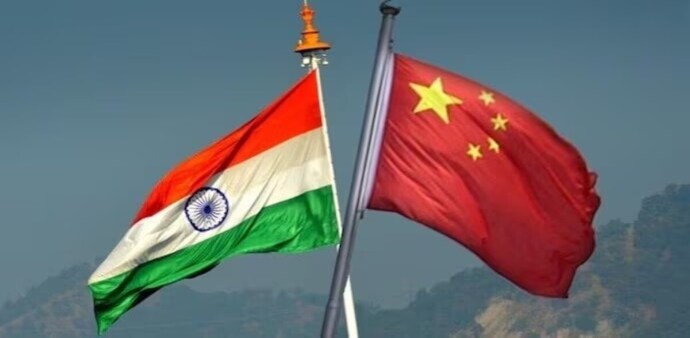
India is increasingly emerging as a preferred destination for multinational corporations looking to diversify operations beyond China. Strong economic growth, policy support and efforts to build resilient supply chains are making the country an attractive investment hub despite global uncertainty.
- Jun 25, 2026,
- Updated Jun 25, 2026 8:35 AM IST
As global companies reassess their manufacturing and investment strategies amid geopolitical tensions and supply-chain disruptions, India is rapidly positioning itself as a leading alternative to China. According to the World Economic Forum's latest Chief Economists' Outlook, India stands out as one of the most attractive destinations for multinational businesses, supported by strong economic growth prospects, policy incentives and a large domestic market.
The trend reflects a broader shift in global business strategy. Rather than relying heavily on a single manufacturing base, companies are increasingly adopting a "China Plus One" approach, diversifying production and sourcing across multiple countries to reduce risks. India has emerged as one of the biggest beneficiaries of this transition.
India's growth advantage
One of India's biggest strengths is its growth outlook. The WEF survey found that India has the strongest economic prospects among major economies, with a majority of chief economists expecting strong or very strong growth over the next year.
While several advanced economies face slowing growth, high inflation and geopolitical uncertainty, India's economy continues to be driven by domestic consumption, infrastructure spending, digitalisation and investment-led expansion. For multinational corporations, this offers access to one of the world's fastest-growing large consumer markets.
MUST READ: Why the world's clean energy transition is slowing despite gains in India & China
The country's young workforce and rising middle class are also creating long-term demand across sectors such as consumer goods, financial services, automobiles, healthcare and technology.
Supply-chain diversification
The pandemic, trade disputes and recent geopolitical conflicts have exposed vulnerabilities in highly concentrated supply chains. As a result, global manufacturers are seeking alternative production locations to reduce dependence on China.
India's government has actively sought to capitalise on this opportunity through initiatives such as the Production-Linked Incentive (PLI) schemes, which provide incentives for domestic manufacturing across sectors including electronics, semiconductors, pharmaceuticals, batteries and renewable energy equipment.
Improved logistics infrastructure, industrial corridors and digital public infrastructure have further enhanced India's attractiveness as a manufacturing and export base.
Several multinational firms have expanded production in India in recent years, particularly in electronics, smartphones, automotive components and renewable energy equipment.
MUST READ: Can India's energy transition story be written without China reliance?
Is China losing some ground?
China remains a critical part of global manufacturing and continues to attract investment, particularly in advanced technology sectors. However, rising labour costs, increasing competition, geopolitical tensions and trade-related uncertainties have prompted many companies to diversify their exposure.
Businesses are increasingly prioritising resilience over efficiency alone. Instead of concentrating operations in one country, firms are creating regional supply chains spread across multiple markets.
This strategic shift has worked in India's favour, especially as companies seek large markets that can support both manufacturing and consumption.
MUST READ: India to monitor steel imports for two months before deciding on fresh curbs
Long-term potential
Experts believe India's appeal extends beyond the current supply-chain realignment cycle. Continued investment in infrastructure, manufacturing capabilities and technology ecosystems is strengthening the country's position in global value chains.
While challenges remain, including regulatory complexity, skill development and inflation risks, multinational companies increasingly view India not merely as an alternative to China but as a critical growth market in its own right.
As global supply chains evolve and businesses seek new engines of growth, India appears well placed to attract a growing share of international investment over the coming decade.
MUST READ: How Reliance's focus on battery storage, solar manufacturing can cut Chinese dependence?
As global companies reassess their manufacturing and investment strategies amid geopolitical tensions and supply-chain disruptions, India is rapidly positioning itself as a leading alternative to China. According to the World Economic Forum's latest Chief Economists' Outlook, India stands out as one of the most attractive destinations for multinational businesses, supported by strong economic growth prospects, policy incentives and a large domestic market.
The trend reflects a broader shift in global business strategy. Rather than relying heavily on a single manufacturing base, companies are increasingly adopting a "China Plus One" approach, diversifying production and sourcing across multiple countries to reduce risks. India has emerged as one of the biggest beneficiaries of this transition.
India's growth advantage
One of India's biggest strengths is its growth outlook. The WEF survey found that India has the strongest economic prospects among major economies, with a majority of chief economists expecting strong or very strong growth over the next year.
While several advanced economies face slowing growth, high inflation and geopolitical uncertainty, India's economy continues to be driven by domestic consumption, infrastructure spending, digitalisation and investment-led expansion. For multinational corporations, this offers access to one of the world's fastest-growing large consumer markets.
MUST READ: Why the world's clean energy transition is slowing despite gains in India & China
The country's young workforce and rising middle class are also creating long-term demand across sectors such as consumer goods, financial services, automobiles, healthcare and technology.
Supply-chain diversification
The pandemic, trade disputes and recent geopolitical conflicts have exposed vulnerabilities in highly concentrated supply chains. As a result, global manufacturers are seeking alternative production locations to reduce dependence on China.
India's government has actively sought to capitalise on this opportunity through initiatives such as the Production-Linked Incentive (PLI) schemes, which provide incentives for domestic manufacturing across sectors including electronics, semiconductors, pharmaceuticals, batteries and renewable energy equipment.
Improved logistics infrastructure, industrial corridors and digital public infrastructure have further enhanced India's attractiveness as a manufacturing and export base.
Several multinational firms have expanded production in India in recent years, particularly in electronics, smartphones, automotive components and renewable energy equipment.
MUST READ: Can India's energy transition story be written without China reliance?
Is China losing some ground?
China remains a critical part of global manufacturing and continues to attract investment, particularly in advanced technology sectors. However, rising labour costs, increasing competition, geopolitical tensions and trade-related uncertainties have prompted many companies to diversify their exposure.
Businesses are increasingly prioritising resilience over efficiency alone. Instead of concentrating operations in one country, firms are creating regional supply chains spread across multiple markets.
This strategic shift has worked in India's favour, especially as companies seek large markets that can support both manufacturing and consumption.
MUST READ: India to monitor steel imports for two months before deciding on fresh curbs
Long-term potential
Experts believe India's appeal extends beyond the current supply-chain realignment cycle. Continued investment in infrastructure, manufacturing capabilities and technology ecosystems is strengthening the country's position in global value chains.
While challenges remain, including regulatory complexity, skill development and inflation risks, multinational companies increasingly view India not merely as an alternative to China but as a critical growth market in its own right.
As global supply chains evolve and businesses seek new engines of growth, India appears well placed to attract a growing share of international investment over the coming decade.
MUST READ: How Reliance's focus on battery storage, solar manufacturing can cut Chinese dependence?