
Chickens in India are dosed with antibiotics meant for critically ill patients, says study
The drug is used in animals to help them remain free of diseases and gain weight.
- Feb 2, 2018,
- Updated Feb 2, 2018 8:00 PM IST
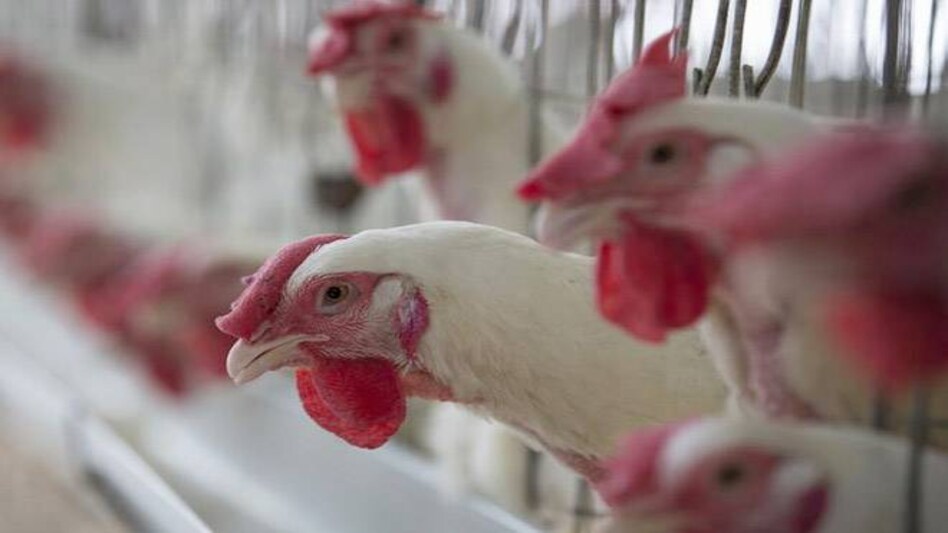
Chickens in India are pumped with one of the strongest antibiotics used for treatment of critically ill patients, a study has revealed. The study was conducted by a non-profit news organisation, known as The Bureau of Investigative Journalism. The study, citing an example of a poultry farm in Rangareddy district near Hyderabad, revealed that chickens are dosed with Colistin, an antibiotic used as the last resort to treat the critically ill with infections that are resistant to most drugs. The drug is used in animals to help them remain free of diseases and gain weight.
The study said that India, along with Vietnam, Russia and South Korea imported thousands of tonnes of Colistin in 2016. Along with two companies manufacturing the drug in India, the country also imports 150 tonnes of Colistin every year.
Although, the World Health Organisation calls this drug "critically important to human medicine", it also restricts its use in animals and bans it as a growth promoter. In India itself, there are at least five pharmaceutical companies that openly advertise products with Colistin as growth promoter.
The study quotes Professor Timothy Walsh, an adviser to the UN on antimicrobial resistance, who says, "Colistin should only be used on very sick patients. Under any other circumstances it should be thought of and treated as an environmental toxin. It should be labelled as such. It should not be exported all over the world to be used in chicken feed."
"Colistin-resistant bacteria will spread on the chicken farms, in the air surrounding them, contaminate the meat, spread to the farm workers, and through their faeces flies will spread it over large distances," Prof Walsh further added.
The study mentions that use of Colistin in farming increases the risk of bacteria developing resistance to the drug, subsequently making it useless for patients. The study also mentions that drug-resistant bacteria kill 7,00,000 people across the globe every year. If no action is taken then there are chances that the count might rise to a crore a year by 2050, with almost half of those deaths occurring in Asia.
Chickens in India are pumped with one of the strongest antibiotics used for treatment of critically ill patients, a study has revealed. The study was conducted by a non-profit news organisation, known as The Bureau of Investigative Journalism. The study, citing an example of a poultry farm in Rangareddy district near Hyderabad, revealed that chickens are dosed with Colistin, an antibiotic used as the last resort to treat the critically ill with infections that are resistant to most drugs. The drug is used in animals to help them remain free of diseases and gain weight.
The study said that India, along with Vietnam, Russia and South Korea imported thousands of tonnes of Colistin in 2016. Along with two companies manufacturing the drug in India, the country also imports 150 tonnes of Colistin every year.
Although, the World Health Organisation calls this drug "critically important to human medicine", it also restricts its use in animals and bans it as a growth promoter. In India itself, there are at least five pharmaceutical companies that openly advertise products with Colistin as growth promoter.
The study quotes Professor Timothy Walsh, an adviser to the UN on antimicrobial resistance, who says, "Colistin should only be used on very sick patients. Under any other circumstances it should be thought of and treated as an environmental toxin. It should be labelled as such. It should not be exported all over the world to be used in chicken feed."
"Colistin-resistant bacteria will spread on the chicken farms, in the air surrounding them, contaminate the meat, spread to the farm workers, and through their faeces flies will spread it over large distances," Prof Walsh further added.
The study mentions that use of Colistin in farming increases the risk of bacteria developing resistance to the drug, subsequently making it useless for patients. The study also mentions that drug-resistant bacteria kill 7,00,000 people across the globe every year. If no action is taken then there are chances that the count might rise to a crore a year by 2050, with almost half of those deaths occurring in Asia.