
GST Council slashes rates for 27 items; sops for exporters, small businesses
The Goods and Service Tax (GST) Council meet has concluded in the national capital. GST Council has approved quarterly filing of returns for businesses with turnover upto 1.5 crore.
- Oct 6, 2017,
- Updated Oct 7, 2017 10:37 AM IST
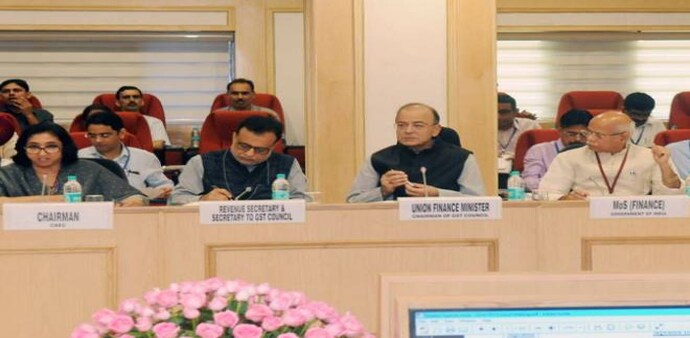
The Goods and Service Tax (GST) Council meet that was held in the national capital on Friday saw several decisions to ease tax compliance for small taxpayers along with tax rates slashed for a total of 27 items. The concerns about delayed tax refunds raised by exporters were also taken up during the meeting and remedies, both short-term and long-terms have been devised. This was the 22nd meeting of the all-powerful GST Council.
"After receiving GST return for July and August, we have come to know of the experiences and transitions faced by traders of various kinds. Traders and states have expressed their concerns to us. Small scale enterprises and exports were two major concerns among them, Arun Jaitley said at the press briefing after the GST Council meet," said Finance Minister Arun Jaitley.
Prime Minister Narendra Modi had earlier said that the government has taken feedback regarding GST. "We have directed the GST Council to resolve the bottlenecks in GST implementation. All the concerns of businesses will be addressed by this government," PM Modi said on difficulties being faced by traders and businesses after GST implementation. PM further added that 19 lakh new taxpayers came into the tax net after GST implementation and at least 1 lakh youth have been received training in the nuances of the indirect tax regime.
GST rate cuts
Several items had disguised excise attached to them during the VAT regime which led these items getting placed in higher tax slabs under GST on the basis of equivalence, said Finance Minister Arun Jaitley while addressing a press briefing after the GST Council meet.
The goods which saw a decline in GST rates include sliced dried mangoes (5%), khakra and plan chapati (5%), ICDS food packets (5%), unbranded namkeen (5%), unbrabded ayurvedic medicines (5%), plastic waste (5%), rubber waste (5%), paper waste (5%), manmade yarn (12%), flooring stones expect marble and granite (18%), stationary items (18%), clips (18%), diesel engine parts (18%), pumps parts (18%), and e-waste (5%).
Moreover, job works related to zari embroidery, imitation jewellery, food items, printing, and government contracts involving high element of labour will all attract GST at the rate of 5 per cent.
GST made easy for small businesses
The GST Council also approved raising the threshold for composition scheme from Rs 75 lakh to Rs 1 crore, along with allowing quarterly filing of returns for businesses with turnover upto 1.5 crore . These decisions are expected to lessen tax compliance burden on small and medium taxpayers.
Under the composition scheme, businesses pay a fixed rate to avoid GST paperwork. It is believed that the higher thresholds will ease the compliance burden and also reduce the filing load on the system. In composition scheme, taxpayers are classified under three categories based on the GST rates they pay - traders pay 1 per cent GST, manufacturers 2 per cent and restaurants are charged 5 per cent GST.
Moreover, taxpayers which are exempt from composition scheme but annual turnover up to Rs 1.5 crore will file their GST returns on quarterly basis istead of every month.
"The system of quarterly retruns will be operationalied from October 1, and GST returns for the same will have to be filed in January. However, the return for the month of July that is to be filed till October 10 has not been relented. So small taxpayers should not think that they do not have to file any taxes this month. We will inform about the necessary details regarding August in due time," said Hasmukh Adhia, Secretary to GST Counil.
"Bulk of tax revenue which comes from big players will be encouraged, whereas medium and small taxpayers will be kept in the tax net with minimum tax burden to enhance the tax base," said the Finance Minister.
GST rate cut for AC restaurants
GST Council meet today also recommended setting up Group of Ministers to examine key rate cut issues regarding AC restaurants. The committee will come up with mechanism to reduce GST on AC restaurants in ten days. GST Council has also discussed bringing down tax rate on AC restaurants with no ITC from 18 per cent to 12 per cent.
Relief to exporters
The GST Council also devised methods to ensure faster tax refund to xporters in response to representations about their working capital being held up in the form of delayed refunds. Now, exporters will receive cheque of their refunds by Ocrober 10 for the returns filed in July and October 18 for the returns filed in August. But, this would be an interim solution, said Jaitley.
He further added, "As a long-term solution, an e-wallet will be created for every exporter in which a notional amount would be credited as advance refund and they can pay their IGST or GST paid through this. The credited amount will be offset from their actual refund. This arrangement will be developed by an appropriate technology company by April 1, 2018".
e-Way Bill round the corner
Finance Minister Jaitley said that e-way bill software has been made functional in the state of Karnataka on pilot basis with pleasant experiences. Nation-wide roll put will begin from the month of January next year, he added.
The govenment intends to completely implement e-way bill software across India by April 2018.
The Goods and Service Tax (GST) Council meet that was held in the national capital on Friday saw several decisions to ease tax compliance for small taxpayers along with tax rates slashed for a total of 27 items. The concerns about delayed tax refunds raised by exporters were also taken up during the meeting and remedies, both short-term and long-terms have been devised. This was the 22nd meeting of the all-powerful GST Council.
"After receiving GST return for July and August, we have come to know of the experiences and transitions faced by traders of various kinds. Traders and states have expressed their concerns to us. Small scale enterprises and exports were two major concerns among them, Arun Jaitley said at the press briefing after the GST Council meet," said Finance Minister Arun Jaitley.
Prime Minister Narendra Modi had earlier said that the government has taken feedback regarding GST. "We have directed the GST Council to resolve the bottlenecks in GST implementation. All the concerns of businesses will be addressed by this government," PM Modi said on difficulties being faced by traders and businesses after GST implementation. PM further added that 19 lakh new taxpayers came into the tax net after GST implementation and at least 1 lakh youth have been received training in the nuances of the indirect tax regime.
GST rate cuts
Several items had disguised excise attached to them during the VAT regime which led these items getting placed in higher tax slabs under GST on the basis of equivalence, said Finance Minister Arun Jaitley while addressing a press briefing after the GST Council meet.
The goods which saw a decline in GST rates include sliced dried mangoes (5%), khakra and plan chapati (5%), ICDS food packets (5%), unbranded namkeen (5%), unbrabded ayurvedic medicines (5%), plastic waste (5%), rubber waste (5%), paper waste (5%), manmade yarn (12%), flooring stones expect marble and granite (18%), stationary items (18%), clips (18%), diesel engine parts (18%), pumps parts (18%), and e-waste (5%).
Moreover, job works related to zari embroidery, imitation jewellery, food items, printing, and government contracts involving high element of labour will all attract GST at the rate of 5 per cent.
GST made easy for small businesses
The GST Council also approved raising the threshold for composition scheme from Rs 75 lakh to Rs 1 crore, along with allowing quarterly filing of returns for businesses with turnover upto 1.5 crore . These decisions are expected to lessen tax compliance burden on small and medium taxpayers.
Under the composition scheme, businesses pay a fixed rate to avoid GST paperwork. It is believed that the higher thresholds will ease the compliance burden and also reduce the filing load on the system. In composition scheme, taxpayers are classified under three categories based on the GST rates they pay - traders pay 1 per cent GST, manufacturers 2 per cent and restaurants are charged 5 per cent GST.
Moreover, taxpayers which are exempt from composition scheme but annual turnover up to Rs 1.5 crore will file their GST returns on quarterly basis istead of every month.
"The system of quarterly retruns will be operationalied from October 1, and GST returns for the same will have to be filed in January. However, the return for the month of July that is to be filed till October 10 has not been relented. So small taxpayers should not think that they do not have to file any taxes this month. We will inform about the necessary details regarding August in due time," said Hasmukh Adhia, Secretary to GST Counil.
"Bulk of tax revenue which comes from big players will be encouraged, whereas medium and small taxpayers will be kept in the tax net with minimum tax burden to enhance the tax base," said the Finance Minister.
GST rate cut for AC restaurants
GST Council meet today also recommended setting up Group of Ministers to examine key rate cut issues regarding AC restaurants. The committee will come up with mechanism to reduce GST on AC restaurants in ten days. GST Council has also discussed bringing down tax rate on AC restaurants with no ITC from 18 per cent to 12 per cent.
Relief to exporters
The GST Council also devised methods to ensure faster tax refund to xporters in response to representations about their working capital being held up in the form of delayed refunds. Now, exporters will receive cheque of their refunds by Ocrober 10 for the returns filed in July and October 18 for the returns filed in August. But, this would be an interim solution, said Jaitley.
He further added, "As a long-term solution, an e-wallet will be created for every exporter in which a notional amount would be credited as advance refund and they can pay their IGST or GST paid through this. The credited amount will be offset from their actual refund. This arrangement will be developed by an appropriate technology company by April 1, 2018".
e-Way Bill round the corner
Finance Minister Jaitley said that e-way bill software has been made functional in the state of Karnataka on pilot basis with pleasant experiences. Nation-wide roll put will begin from the month of January next year, he added.
The govenment intends to completely implement e-way bill software across India by April 2018.