
GST effect: How GST will impact your restaurant bill starting tomorrow
GST will help a lot in getting smaller restaurant bills, writes Raman Chona, Director of Chonas restaurant.
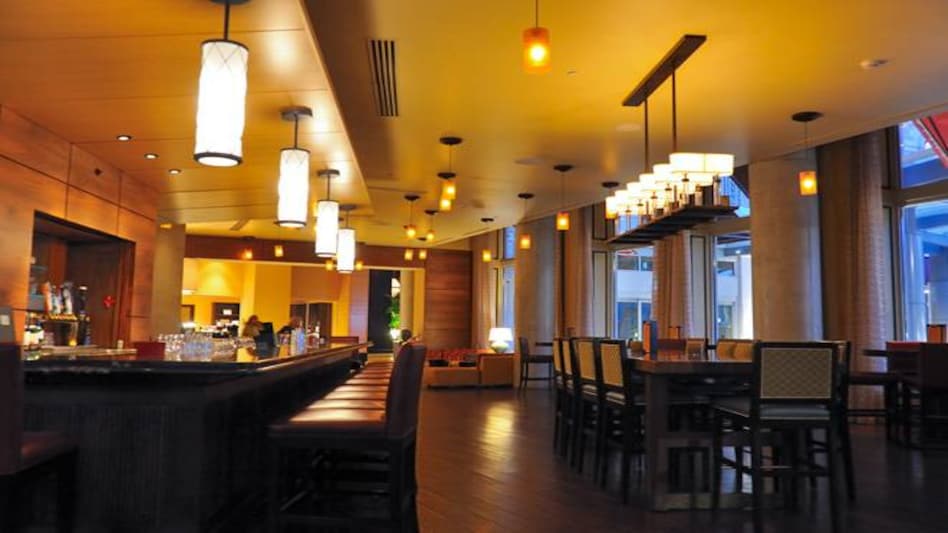
- Jun 30, 2017,
- Updated Jul 6, 2017 4:33 PM IST
The Indian government has come up with a plethora of reforms, in a move to eradicate corruption from the market and add transparency to its operations. No reform in the recent past has generated as much buzz as the Goods and Services Tax (GST).
Its implementation is set to single-handedly abolish all the unnecessary money-charging schemes, earlier adopted by retailers to make easy money. The reform will noticeably reduce the compliance cost for taxpayers, harmonise the tax structure, while transforming operations into a uniform entity across states. Especially for food and beverages, its implications remain progressive. As per the current system of taxation, the restaurant sector is burdened with multiple high-costing taxes, charges and cesses. On each and every food and beverages bill, the diner pays additional VAT as well as service tax and service charge, not to forget the cesses. The range of VAT rate is generally between 12.5-14.5 per cent as per the individual State VAT laws and abatement rate on service tax on restaurant services is 6%. Thus, the effective tax rate comes to somewhere around 18.5-20.5 per cent that varies for different states.
With the execution of GST, all taxes will form under a single bracket, adding uniformity to a market plagued by unnecessary additional taxes. In context to restaurants, while they are paying tax, a total of VAT at (12.5 per cent)+ Service Tax (6 per cent) + Service Charge (10 per cent) is applied on it.
Under the new system, the restaurants are broadly divided into two areas: non-AC and AC restaurants. Dining out in air conditioned restaurants will attract tax of 18 per cent as against 10.6 per cent charged (including VAT and service tax) now. For low-cost restaurants, the tax rate would be 12 per cent as against 6 per cent now. Non-AC restaurants will charge 12 per cent GST on food bill. 5-star hotels will be even more expensive as the GST rate will be 28 per cent.
Restaurants with Rs 50 lakh or below turnover will go under the 5 per cent composition. Moreover, it will also make it easy for the restaurants to take credit of input goods and services consumed while providing restaurant services. It is expected that GST will marginally lower the overall tax rate however, till the time the final GST rates are announced for this particular sector, no conclusion can be derived out of it.
(The writer is Director at Chonas)
Also watch:
The Indian government has come up with a plethora of reforms, in a move to eradicate corruption from the market and add transparency to its operations. No reform in the recent past has generated as much buzz as the Goods and Services Tax (GST).
Its implementation is set to single-handedly abolish all the unnecessary money-charging schemes, earlier adopted by retailers to make easy money. The reform will noticeably reduce the compliance cost for taxpayers, harmonise the tax structure, while transforming operations into a uniform entity across states. Especially for food and beverages, its implications remain progressive. As per the current system of taxation, the restaurant sector is burdened with multiple high-costing taxes, charges and cesses. On each and every food and beverages bill, the diner pays additional VAT as well as service tax and service charge, not to forget the cesses. The range of VAT rate is generally between 12.5-14.5 per cent as per the individual State VAT laws and abatement rate on service tax on restaurant services is 6%. Thus, the effective tax rate comes to somewhere around 18.5-20.5 per cent that varies for different states.
With the execution of GST, all taxes will form under a single bracket, adding uniformity to a market plagued by unnecessary additional taxes. In context to restaurants, while they are paying tax, a total of VAT at (12.5 per cent)+ Service Tax (6 per cent) + Service Charge (10 per cent) is applied on it.
Under the new system, the restaurants are broadly divided into two areas: non-AC and AC restaurants. Dining out in air conditioned restaurants will attract tax of 18 per cent as against 10.6 per cent charged (including VAT and service tax) now. For low-cost restaurants, the tax rate would be 12 per cent as against 6 per cent now. Non-AC restaurants will charge 12 per cent GST on food bill. 5-star hotels will be even more expensive as the GST rate will be 28 per cent.
Restaurants with Rs 50 lakh or below turnover will go under the 5 per cent composition. Moreover, it will also make it easy for the restaurants to take credit of input goods and services consumed while providing restaurant services. It is expected that GST will marginally lower the overall tax rate however, till the time the final GST rates are announced for this particular sector, no conclusion can be derived out of it.
(The writer is Director at Chonas)
Also watch: