
Passive euthanasia is now legal: Supreme Court permits 'living will' for terminally ill patients
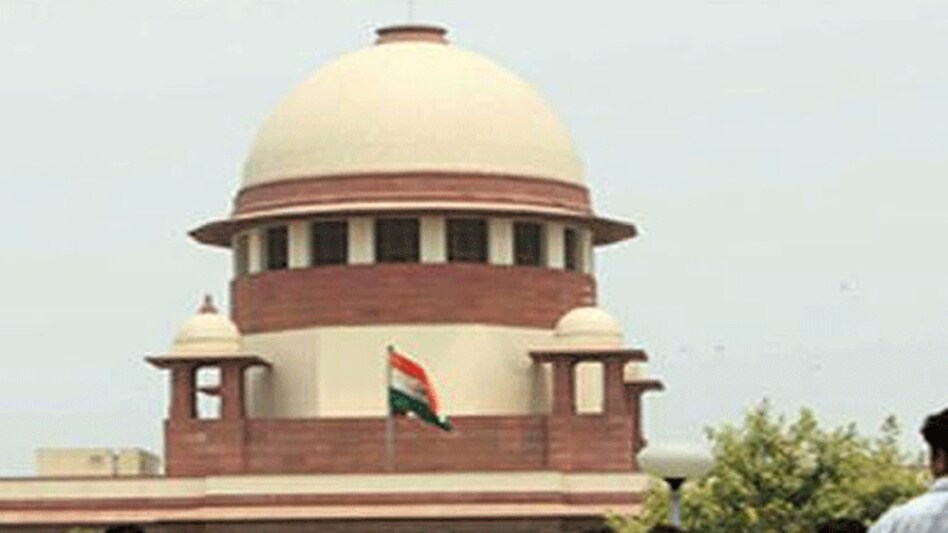
In a decision that will have far reaching implications to both hospitals and terminally ill patients and their relatives, the Supreme Court today permitted an individual to draft a living will specifying that the she or he will not be put on life support if they slip into an incurable coma.
- Mar 9, 2018,
- Updated Mar 9, 2018 6:20 PM IST
In a decision that will have far reaching implications to both hospitals and terminally ill patients and their relatives, the Supreme Court today permitted an individual to draft a living will specifying that she or he will not be put on life support if they slip into an incurable coma.
Private hospitals that are increasingly at the receiving end of allegations of inflated medical bills through extended ICU admissions of terminally ill and clinically dead patients will now get a reprieve if the person has signed such a 'living will'.
The order was passed by a five-judge Constitution bench of Chief Justice (CJI) Dipak Misra and Justices A K Sikri, A M Khanwilkar, D Y Chandrachud and Ashok Bhushan.
Though the judges gave four separate opinions, all of them were unanimous in permitting a 'living will' as they felt that an individual should not be allowed to continue suffering in a vegetative state when they don't wish to continue living, when they are fully aware that they will not revive.
The living will gives a general sense of the patient's wishes, and can be modified by the patient to include specific interventions such as cardiopulmonary resuscitation, ventilatory support, or enteral feeding.
Commenting on the development Dr KK Aggarwal, President Heart Care Foundation of India and former national president of Indian Medical Association (IMA) said that the medical profession has been demanding such a provision for a long time.
In fact, there is a provision where advance directives (ADs) can be prepared by a person while still in possession of decisional capacity about how treatment decisions should be made on her or his behalf in the event she or he loses the capacity to make such decisions. Dr Aggarwal said that such ADs can also be revoked orally or in writing by the patient at any time so long as he or she has maintained decisional capacity.
According to Dr Aggarwal, the disparity between ADs and clinical decision-making was illustrated in a survey of physicians using six hypothetical clinical scenarios. "Cases contained an explicit AD with a potential conflict between the directive and prognosis, wishes of family or friends, or quality of life. Physicians' choices differed from the patients' stated ADs in 65 percent of cases, suggesting that they viewed the AD as only part of the information needed to make treatment decisions", he said.
While 'living will' will make the patient's position very clear, the hospital's medical board will still have to take a call as to whether she or he is in a hopeless condition or not.
In a decision that will have far reaching implications to both hospitals and terminally ill patients and their relatives, the Supreme Court today permitted an individual to draft a living will specifying that she or he will not be put on life support if they slip into an incurable coma.
Private hospitals that are increasingly at the receiving end of allegations of inflated medical bills through extended ICU admissions of terminally ill and clinically dead patients will now get a reprieve if the person has signed such a 'living will'.
The order was passed by a five-judge Constitution bench of Chief Justice (CJI) Dipak Misra and Justices A K Sikri, A M Khanwilkar, D Y Chandrachud and Ashok Bhushan.
Though the judges gave four separate opinions, all of them were unanimous in permitting a 'living will' as they felt that an individual should not be allowed to continue suffering in a vegetative state when they don't wish to continue living, when they are fully aware that they will not revive.
The living will gives a general sense of the patient's wishes, and can be modified by the patient to include specific interventions such as cardiopulmonary resuscitation, ventilatory support, or enteral feeding.
Commenting on the development Dr KK Aggarwal, President Heart Care Foundation of India and former national president of Indian Medical Association (IMA) said that the medical profession has been demanding such a provision for a long time.
In fact, there is a provision where advance directives (ADs) can be prepared by a person while still in possession of decisional capacity about how treatment decisions should be made on her or his behalf in the event she or he loses the capacity to make such decisions. Dr Aggarwal said that such ADs can also be revoked orally or in writing by the patient at any time so long as he or she has maintained decisional capacity.
According to Dr Aggarwal, the disparity between ADs and clinical decision-making was illustrated in a survey of physicians using six hypothetical clinical scenarios. "Cases contained an explicit AD with a potential conflict between the directive and prognosis, wishes of family or friends, or quality of life. Physicians' choices differed from the patients' stated ADs in 65 percent of cases, suggesting that they viewed the AD as only part of the information needed to make treatment decisions", he said.
While 'living will' will make the patient's position very clear, the hospital's medical board will still have to take a call as to whether she or he is in a hopeless condition or not.