
UP elections: PM Modi's 5 economic policies that will give the BJP an edge in 2019
Despite fewer job creation in last few years, the Prime Minister was still able to garner unprecedented support from the masses in recently concluded Assembly elections.
- Mar 14, 2017,
- Updated Mar 15, 2017 11:05 AM IST
Prime Minister Narendra Modi is at the half-way point of his5 years tenure. In the last two years, Prime Minister Modi unleashed number ofeconomic policies to help the most marginalized. Social welfare schemes likeAffordable Housing to all by 2022, free LPG connections for the BPL familiesand bank accounts for all are some of the major policy decisions undertaken bythe Prime Minister in recent past.
However, job creation is one such area where Prime MinisterModi finds himself in a tight spot despite his multiple initiatives likeStart-up India, Stand-up India, Skill India and Make in India.
Despite fewerjob creation in last few years, the Prime Minister was still able to garnerunprecedented support from the masses in recently concluded Assembly elections.The BJP swept the UP election with 312 seats in a house of 403. It was historicas no other party had achieved such results since the emergency.
So, what are these people-centric policies that helped PrimeMinister Narendra Modi clinch India's most crucial - political - state electionand in all likelihood will also boost his chances in 2019 General Elections:
PM Ujjwala Yojana
Last year on May 1, Prime Minister Narendra Modi launched anambitious social welfare scheme - Pradhan Mantri Ujjwala Yojana - with the aimof providing 5 crore LPG connections to women below the poverty line across thecountry.
However, the place BJP chose to launch the scheme was Ballia, adistrict in eastern part of Uttar Pradesh. It seemed to be a strategic decisionand Modi's master stroke to reach out to women in a state that was approachingthe Assembly elections.
As on 20 December 2016, the government released more than1.22 crore new LPG connections to BPL women under Pradhan Mantri UjjwalaYojana. The scheme was aimed at replacing the unclean cooking fuelsmostly used in the rural India with the clean and more efficient LPG Gas.
Affordable Housing
Prime Minister Narendra Modi launched another flagshiphousing scheme 'Pradhan Mantri Gramin Awas Yojna' last year in November. Thescheme was designed entirely for the rural masses. But, what is moreinteresting is that once again Prime Minister Modi chose Uttar Pradesh tolaunch the scheme.
The affordable housing scheme was launched in Agra. Theambitious scheme aimed to provide affordable houses to 4 crore people livingbelow the poverty line by the year 2022.
Prime Minister Narendra Modi used his flagship programmes toget electorate support in assembly elections. Launching a scathing attack onUttar Pradesh's chief Minister Akhilesh Yadav, the Prime Minister said thestate government was not willing to help the central government with a list ofpeople who could benefit from the affordable housing scheme.
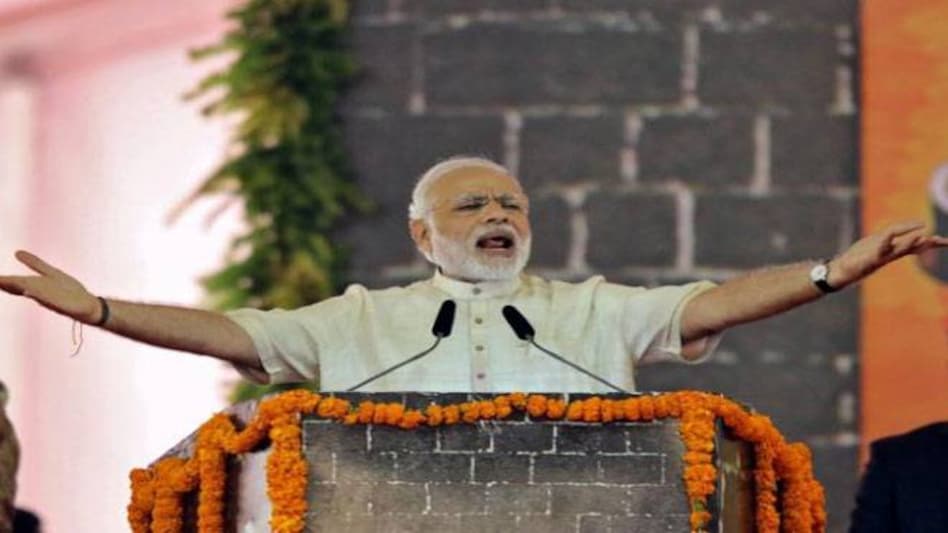
"1.5 crore people in UP don't havehouses. Our government wanted the list of homeless people from the UPgovernment but didn't get the list," the Prime Minister had said whileaddressing a rally in Uttar Pradesh.
Under the new rural housing scheme, the central government provides a financial assistance of Rs 120000/- for constructing the home.It also gives an additional assistance of Rs 12000 to construct toiletsin households. Modi government aims to replace all temporary houses from Indianvillages by 2017.
Pradhan Mantri Mudra Yojana
Prime Minister's another flagship programme was aimed tohelp small scale enterprises. In 2015, Modi government set up a Micro UnitDevelopment and Refinance Agency (MUDRA) bank to fund micro financeinstitutions in the country. Mudra bank was set up to provide loans to smallbusiness sectors.
Through this programme, the government tries to fundfruits/vegetable sellers, hair cutting saloon, beauty parlours, transporters,truck operators, hawkers, co-operatives or body of individuals, food serviceunits, repair shops, machine operators, small industries, artisans, foodprocessors, self help groups, professionals and service providers etc.
Under the scheme, an entrepreneur can avail up to Rs 10lakh. So far, the MUDRA Yojna has benefitted more than 58 million smallbusiness owners in the country.
Jan Dhan AccountsSoon after taking over the highest chair in the country,Prime Minister Narendra Modi launched India's biggest ever financial inclusiondrive. Modi launched his first flagship programme called Pradhan MantriJan-Dhan Yojana which was country's National Mission for financial inclusion toensure access to financial services, namely savings accounts, remittance,credit, insurance, pension in an affordable manner.
Prime Minister's move wasto provide access to formal banking services to more than 15 per cent of theunbanked population in the country.
It helped Prime Minister Modi re-establish his image as theleader of poor masses. Jan Dhan Yojna was not just about banking but also aboutseveral other benefits that the Prime Minister Modi offered with the accounts.
Under the scheme, if a person holds an account for more thansix months s/he is allowed an overdraft of up to Rs 5,000. According to ETreport in 2016, over 19 lakh account holders availed an overdraft amounting toRs 256 crore. Jan Dhan accounts holders are also able to claim accidental insurancecover of Rs 1 lakh. The scheme alsoprovides life cover of Rs. 30,000 payable on death of the beneficiary.
This was another way of reaching out to people who werenever taken into India's formal banking system. Prime Minister Modi tappedcountry's over 15 per cent population with just one economic policy. So far,over 27.84 crore accounts have been opened under Jan Dhan Yojna.
Deen Dayal Upadhyaya Gram Jyoti Yojana
Gram Jyoti Yojana was launched with the aim of ensuringround the clock electricity supply to farmers and rural households. The schemewas launched by the Prime Minister on 25 July 2015. The scheme was expected toinitiate much awaited reforms in the rural areas.
During his Independence Day speech in 2015, the PrimeMinister had announced that all of the country's villages would be electrifiedin 1,000 days and that by December 2018, all Indian citizens would have accessto electricity.
Electricity was a big issue in recently concluded electionsin Uttar Pradesh. While addressing a rally in Varanasi, the Prime Ministerasked the audience: "Yeh batayein ki Kashi mein 24 ghanten bijli miltihain ki nahin? (Tell me, is Kashi getting 24 hours electricity?)". Thecrowd responded: "No". Contrary to Akhlish Yadav's claim about 24 hours power supply.
Prime Minister Narendra Modi is at the half-way point of his5 years tenure. In the last two years, Prime Minister Modi unleashed number ofeconomic policies to help the most marginalized. Social welfare schemes likeAffordable Housing to all by 2022, free LPG connections for the BPL familiesand bank accounts for all are some of the major policy decisions undertaken bythe Prime Minister in recent past.
However, job creation is one such area where Prime MinisterModi finds himself in a tight spot despite his multiple initiatives likeStart-up India, Stand-up India, Skill India and Make in India.
Despite fewerjob creation in last few years, the Prime Minister was still able to garnerunprecedented support from the masses in recently concluded Assembly elections.The BJP swept the UP election with 312 seats in a house of 403. It was historicas no other party had achieved such results since the emergency.
So, what are these people-centric policies that helped PrimeMinister Narendra Modi clinch India's most crucial - political - state electionand in all likelihood will also boost his chances in 2019 General Elections:
PM Ujjwala Yojana
Last year on May 1, Prime Minister Narendra Modi launched anambitious social welfare scheme - Pradhan Mantri Ujjwala Yojana - with the aimof providing 5 crore LPG connections to women below the poverty line across thecountry.
However, the place BJP chose to launch the scheme was Ballia, adistrict in eastern part of Uttar Pradesh. It seemed to be a strategic decisionand Modi's master stroke to reach out to women in a state that was approachingthe Assembly elections.
As on 20 December 2016, the government released more than1.22 crore new LPG connections to BPL women under Pradhan Mantri UjjwalaYojana. The scheme was aimed at replacing the unclean cooking fuelsmostly used in the rural India with the clean and more efficient LPG Gas.
Affordable Housing
Prime Minister Narendra Modi launched another flagshiphousing scheme 'Pradhan Mantri Gramin Awas Yojna' last year in November. Thescheme was designed entirely for the rural masses. But, what is moreinteresting is that once again Prime Minister Modi chose Uttar Pradesh tolaunch the scheme.
The affordable housing scheme was launched in Agra. Theambitious scheme aimed to provide affordable houses to 4 crore people livingbelow the poverty line by the year 2022.
Prime Minister Narendra Modi used his flagship programmes toget electorate support in assembly elections. Launching a scathing attack onUttar Pradesh's chief Minister Akhilesh Yadav, the Prime Minister said thestate government was not willing to help the central government with a list ofpeople who could benefit from the affordable housing scheme.
"1.5 crore people in UP don't havehouses. Our government wanted the list of homeless people from the UPgovernment but didn't get the list," the Prime Minister had said whileaddressing a rally in Uttar Pradesh.
Under the new rural housing scheme, the central government provides a financial assistance of Rs 120000/- for constructing the home.It also gives an additional assistance of Rs 12000 to construct toiletsin households. Modi government aims to replace all temporary houses from Indianvillages by 2017.
Pradhan Mantri Mudra Yojana
Prime Minister's another flagship programme was aimed tohelp small scale enterprises. In 2015, Modi government set up a Micro UnitDevelopment and Refinance Agency (MUDRA) bank to fund micro financeinstitutions in the country. Mudra bank was set up to provide loans to smallbusiness sectors.
Through this programme, the government tries to fundfruits/vegetable sellers, hair cutting saloon, beauty parlours, transporters,truck operators, hawkers, co-operatives or body of individuals, food serviceunits, repair shops, machine operators, small industries, artisans, foodprocessors, self help groups, professionals and service providers etc.
Under the scheme, an entrepreneur can avail up to Rs 10lakh. So far, the MUDRA Yojna has benefitted more than 58 million smallbusiness owners in the country.
Jan Dhan AccountsSoon after taking over the highest chair in the country,Prime Minister Narendra Modi launched India's biggest ever financial inclusiondrive. Modi launched his first flagship programme called Pradhan MantriJan-Dhan Yojana which was country's National Mission for financial inclusion toensure access to financial services, namely savings accounts, remittance,credit, insurance, pension in an affordable manner.
Prime Minister's move wasto provide access to formal banking services to more than 15 per cent of theunbanked population in the country.
It helped Prime Minister Modi re-establish his image as theleader of poor masses. Jan Dhan Yojna was not just about banking but also aboutseveral other benefits that the Prime Minister Modi offered with the accounts.
Under the scheme, if a person holds an account for more thansix months s/he is allowed an overdraft of up to Rs 5,000. According to ETreport in 2016, over 19 lakh account holders availed an overdraft amounting toRs 256 crore. Jan Dhan accounts holders are also able to claim accidental insurancecover of Rs 1 lakh. The scheme alsoprovides life cover of Rs. 30,000 payable on death of the beneficiary.
This was another way of reaching out to people who werenever taken into India's formal banking system. Prime Minister Modi tappedcountry's over 15 per cent population with just one economic policy. So far,over 27.84 crore accounts have been opened under Jan Dhan Yojna.
Deen Dayal Upadhyaya Gram Jyoti Yojana
Gram Jyoti Yojana was launched with the aim of ensuringround the clock electricity supply to farmers and rural households. The schemewas launched by the Prime Minister on 25 July 2015. The scheme was expected toinitiate much awaited reforms in the rural areas.
During his Independence Day speech in 2015, the PrimeMinister had announced that all of the country's villages would be electrifiedin 1,000 days and that by December 2018, all Indian citizens would have accessto electricity.
Electricity was a big issue in recently concluded electionsin Uttar Pradesh. While addressing a rally in Varanasi, the Prime Ministerasked the audience: "Yeh batayein ki Kashi mein 24 ghanten bijli miltihain ki nahin? (Tell me, is Kashi getting 24 hours electricity?)". Thecrowd responded: "No". Contrary to Akhlish Yadav's claim about 24 hours power supply.