
Why duty-free shops at Indian airports may not offer the cheapest rates in future
Authority for Advance Ruling (AAR) threatened to ruin the party when it recently ruled that GST would be applicable on duty-free shops.
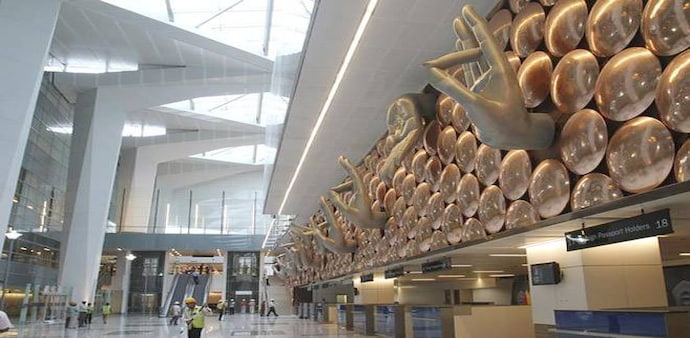
- Apr 30, 2018,
- Updated Apr 30, 2018 1:23 PM IST
Admit it. A big part of the charm of international airports is duty-free shopping. It's possibly the only thing that makes airport waiting times more bearable.
In fact, the Centre for Asia-Pacific Aviation sees duty-free spend at Indian airports hitting USD 1.6 billion by 2021 - or Rs 10,600 crore - which is an eight-fold increase in three years. Of the 17 international airports boasting duty-free outlets, New Delhi's Indira Gandhi International Airport (IGIA), pretty much ruled the roost since it housed the country's largest duty-free retail space.
But the Authority for Advance Ruling (AAR) threatened to ruin the party when it recently ruled that GST would be applicable on duty-free shops. "Flyers purchase liquor, confectionery, perfumes and tobacco at duty-free shops as they get international brands at prices that are 30-40% lower than the market. If the AAR decision is implemented, the price of these goods other than liquor could go up by 9-14%. This will take away the sheen from duty-free shops," a representative of Flemingo, the largest operator of duty-free shops in India, told the Times of India.
The good news, according to the daily, is that prices of products in the duty-free shops won't sky-rocket in the immediate future. A state GST official said he was yet to get any circular from either the authority or GST council. Allaying fears of international fliers, tax experts added that the AAR pronouncement will be challenged as the very existence of duty-free shops is at stake.
In the pre-GST era, duty-free shops were exempt from the levy of central sales tax (CST) and value added tax (VAT) as sale from such shops were considered as exports and supplies were taking place beyond the customs frontiers of India.
So what changed with GST's arrival? According to the New Delhi bench of the AAR, while the supply of goods from duty-free shops may be taking place beyond the customs frontiers of India under Integrated GST Act, the said shops are located within the territory of India under the Central GST Act. "...hence the applicant is not taking goods out of India and hence their supply cannot be called export under Section 2(5) of the IGST Act, 2017, or zero rated supply under Section 2(23) and Section 16(1) of the IGST Act, 2017. Accordingly, the applicant is required to pay GST at the applicable rates," said the bench. The ruling was given by the AAR based on an application filed by Rod Retail Pvt Ltd, which runs a retail outlet at IGIA's Terminal 3 (International Departure).
"A narrow interpretation [of the word export] as above would entail increased prices and related uncompetitiveness for duty free shops- who are foreign exchange earners for India," said EY Partner Abhishek Jain.
According to RedSeer Consulting, confectionary is one of the most wanted product categories in India, accounting for 10% of the sales at duty-free outlets, while tobacco, perfumes, cosmetics et al account for another 10 per cent. Given that the GST rate on chocolates and perfumes is 18% and 28% on tobacco - apart from an additional surcharge and cess - the report cited a representative of a duty-free operator saying that if the AAR ruling was upheld, duty-free shops would become uncompetitive. Without the bait of lower prices footfalls would obviously go down. This would "eliminating the incentive for such shops to operate beyond the custom stations after paying plump rentals," explained MRG & Associates Partner Rajat Mohan.
However, if you only hit duty-free shops to buy liquor - alcohol accounts for 80% of duty-free store sales in India - you have nothing to fear. Alcohol for human consumption has, so far, been kept outside the purview of GST.
(With PTI inputs)
Admit it. A big part of the charm of international airports is duty-free shopping. It's possibly the only thing that makes airport waiting times more bearable.
In fact, the Centre for Asia-Pacific Aviation sees duty-free spend at Indian airports hitting USD 1.6 billion by 2021 - or Rs 10,600 crore - which is an eight-fold increase in three years. Of the 17 international airports boasting duty-free outlets, New Delhi's Indira Gandhi International Airport (IGIA), pretty much ruled the roost since it housed the country's largest duty-free retail space.
But the Authority for Advance Ruling (AAR) threatened to ruin the party when it recently ruled that GST would be applicable on duty-free shops. "Flyers purchase liquor, confectionery, perfumes and tobacco at duty-free shops as they get international brands at prices that are 30-40% lower than the market. If the AAR decision is implemented, the price of these goods other than liquor could go up by 9-14%. This will take away the sheen from duty-free shops," a representative of Flemingo, the largest operator of duty-free shops in India, told the Times of India.
The good news, according to the daily, is that prices of products in the duty-free shops won't sky-rocket in the immediate future. A state GST official said he was yet to get any circular from either the authority or GST council. Allaying fears of international fliers, tax experts added that the AAR pronouncement will be challenged as the very existence of duty-free shops is at stake.
In the pre-GST era, duty-free shops were exempt from the levy of central sales tax (CST) and value added tax (VAT) as sale from such shops were considered as exports and supplies were taking place beyond the customs frontiers of India.
So what changed with GST's arrival? According to the New Delhi bench of the AAR, while the supply of goods from duty-free shops may be taking place beyond the customs frontiers of India under Integrated GST Act, the said shops are located within the territory of India under the Central GST Act. "...hence the applicant is not taking goods out of India and hence their supply cannot be called export under Section 2(5) of the IGST Act, 2017, or zero rated supply under Section 2(23) and Section 16(1) of the IGST Act, 2017. Accordingly, the applicant is required to pay GST at the applicable rates," said the bench. The ruling was given by the AAR based on an application filed by Rod Retail Pvt Ltd, which runs a retail outlet at IGIA's Terminal 3 (International Departure).
"A narrow interpretation [of the word export] as above would entail increased prices and related uncompetitiveness for duty free shops- who are foreign exchange earners for India," said EY Partner Abhishek Jain.
According to RedSeer Consulting, confectionary is one of the most wanted product categories in India, accounting for 10% of the sales at duty-free outlets, while tobacco, perfumes, cosmetics et al account for another 10 per cent. Given that the GST rate on chocolates and perfumes is 18% and 28% on tobacco - apart from an additional surcharge and cess - the report cited a representative of a duty-free operator saying that if the AAR ruling was upheld, duty-free shops would become uncompetitive. Without the bait of lower prices footfalls would obviously go down. This would "eliminating the incentive for such shops to operate beyond the custom stations after paying plump rentals," explained MRG & Associates Partner Rajat Mohan.
However, if you only hit duty-free shops to buy liquor - alcohol accounts for 80% of duty-free store sales in India - you have nothing to fear. Alcohol for human consumption has, so far, been kept outside the purview of GST.
(With PTI inputs)