
'$150 oil could trigger global recession': BlackRock's Larry Fink warns amid Iran war
Rising energy prices are a very regressive tax. It affects the poor more than the wealthy, says Larry Fink
- Mar 26, 2026,
- Updated Mar 26, 2026 7:36 PM IST
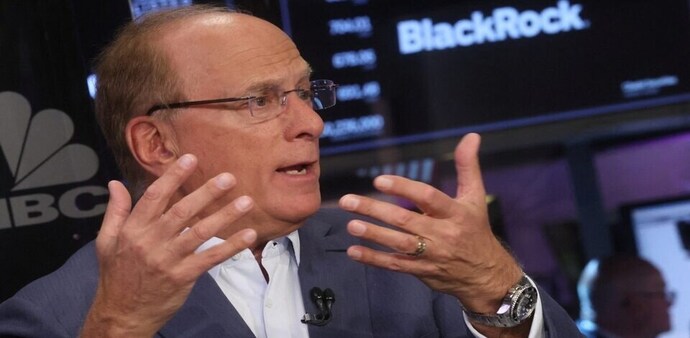
BlackRock CEO Larry Fink has warned that a sharp rise in oil prices driven by the Iran conflict could push the global economy into recession.
In an interview with the BBC, Fink said oil prices approaching $150 a barrel would have significant economic consequences. If the conflict fails to stabilise, he said, there could be "years of above $100 or closer to $150 oil, which has profound implications in the economy".
Must read: ‘Definitely has all markings...’: Economist warns West Asia war may push world to recession
"If there is a cessation of war, and yet Iran remains a threat, a threat to trade, a threat to the Strait of Hormuz, a threat to this peaceful coexistence of the GCC region, then I would argue that we could have years of above $100 closer to $150 oil which has profound implications in the economy," Fink told BBC's Big Boss Interview.
"We will have a global recession," he said when asked if oil stays at $150 a barrel.
Fink, who leads BlackRock, which manages about $14 trillion in assets, said it was still too early to determine how the war between the U.S., Israel, and Iran would unfold. He outlined two possible trajectories for oil markets depending on how the conflict evolves.
In one scenario, a resolution that brings Iran back into broader acceptance in the international system could push oil prices lower than pre-war levels. In the other, prolonged disruption could sustain elevated prices, with far-reaching economic effects.
Oil markets have remained volatile since the conflict began, with prices rising sharply amid fears of supply disruption. The war has effectively halted shipments of oil and liquefied natural gas through the Strait of Hormuz, a key route that typically carries about one-fifth of global supply.
Prices, however, showed signs of easing on Wednesday, falling about 4% after reports that the United States had sent Iran a 15-point proposal aimed at ending the conflict, raising the possibility of a ceasefire.
Fink said higher energy costs would weigh disproportionately on lower-income households. "Rising energy prices are a very regressive tax. It affects the poor more than the wealthy."
He also argued that countries should adopt a balanced approach to energy policy, combining existing resources with investments in alternatives. If oil prices were to remain at elevated levels for several years, he said, "you would have so many countries moving so rapidly towards solar and maybe even wind".
At the same time, he cautioned against reliance on a single source of energy. "Use what you have unquestionably, but also aggressively move towards alternative sources too."
BlackRock CEO Larry Fink has warned that a sharp rise in oil prices driven by the Iran conflict could push the global economy into recession.
In an interview with the BBC, Fink said oil prices approaching $150 a barrel would have significant economic consequences. If the conflict fails to stabilise, he said, there could be "years of above $100 or closer to $150 oil, which has profound implications in the economy".
Must read: ‘Definitely has all markings...’: Economist warns West Asia war may push world to recession
"If there is a cessation of war, and yet Iran remains a threat, a threat to trade, a threat to the Strait of Hormuz, a threat to this peaceful coexistence of the GCC region, then I would argue that we could have years of above $100 closer to $150 oil which has profound implications in the economy," Fink told BBC's Big Boss Interview.
"We will have a global recession," he said when asked if oil stays at $150 a barrel.
Fink, who leads BlackRock, which manages about $14 trillion in assets, said it was still too early to determine how the war between the U.S., Israel, and Iran would unfold. He outlined two possible trajectories for oil markets depending on how the conflict evolves.
In one scenario, a resolution that brings Iran back into broader acceptance in the international system could push oil prices lower than pre-war levels. In the other, prolonged disruption could sustain elevated prices, with far-reaching economic effects.
Oil markets have remained volatile since the conflict began, with prices rising sharply amid fears of supply disruption. The war has effectively halted shipments of oil and liquefied natural gas through the Strait of Hormuz, a key route that typically carries about one-fifth of global supply.
Prices, however, showed signs of easing on Wednesday, falling about 4% after reports that the United States had sent Iran a 15-point proposal aimed at ending the conflict, raising the possibility of a ceasefire.
Fink said higher energy costs would weigh disproportionately on lower-income households. "Rising energy prices are a very regressive tax. It affects the poor more than the wealthy."
He also argued that countries should adopt a balanced approach to energy policy, combining existing resources with investments in alternatives. If oil prices were to remain at elevated levels for several years, he said, "you would have so many countries moving so rapidly towards solar and maybe even wind".
At the same time, he cautioned against reliance on a single source of energy. "Use what you have unquestionably, but also aggressively move towards alternative sources too."