
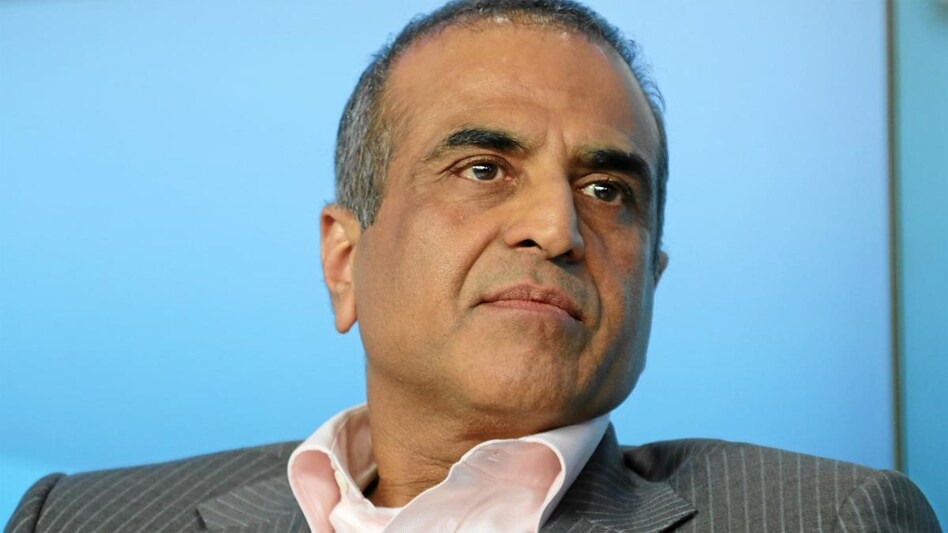
$425 bn required in nine years for complete Internet coverage: Sunil Bharti Mittal
World Economic Forum’s Davos Agenda: “Billions of people still have no Internet. And why not? Of course, partly because they don't have the coverage. Many don't have affordability," said Mittal.
- Jan 18, 2022,
- Updated Jan 18, 2022 11:24 AM IST
Businesses, societies and individuals have never been more dependent on technology than ever before and the pandemic has only accelerated this reliance. Technology has been used in innovative ways, from responding to the pandemic to tech-enabled vaccine distribution. The world depended on technology for the livelihoods during the pandemic, and also for connecting with families and communities. Yet, a large number of people are still not on the internet.
Speaking at the World Economic Forum’s Davos Agenda, Sunil Bharti Mittal, Chairman, Bharti Enterprises said, “Billions of people still have no Internet. And why are they not on the internet? Of course, partly because they don't have the coverage. Many people have coverage, but not affordability. If a country like India can provide very high quality, large dollops of data per month at $3, there's no reason why we can't carry this through into Africa and marginalised parts of the world where affordability is an issue.” As there is no other way but to serve society in a very strong digital infrastructure that needs to be provided across the entire globe.
The fourth industrial revolution, which came upon us in the last few years, has truly now shown itself in these last two and a half years to be the only possible way to take away the poverty of the world, and to support all the SDG goals that the UN set up by 2030, expressed Mittal.
“Whatever we may do as an industry – be it Verizon or Airtel or many hundreds of other operators and mobile broadband providers and fixed providers, we will still not be able to reach the last billion. They are in places which are almost impossible to cover by fiber, even with very large amounts of investments. We can't cover them through radio networks. And to do all that, about $425 billion will be required in the next nine years. So that we have ubiquitous coverage for every citizen of this world,” added Mittal.
This concern can be addressed through satellite Internet. A lot of action is going in the satellite internet space globally, with companies like Elon Musk’s Starlink, Bharti Airtel’s OneWeb, Telesat Lightspeed and Amazon’s Kuiper building their network of low Earth orbit (LEO) satellites in space. Satellite Internet will be a boon for areas where connectivity isn’t available but satellite communication is expensive. “It requires expensive ground and use of the terminal. This is where again, some of the players in the digital ecosystem and the government will have to all come together to provide affordability to those who may otherwise never get connected,” added Mittal. With the advent of Leo based constellations of satellites, the technology will be the saviour for the last 1 billion, covering every square inch of the world recovered.
Also read: WEF Davos agenda: Sunil Mittal on why billions of people are still not on the Internet
Businesses, societies and individuals have never been more dependent on technology than ever before and the pandemic has only accelerated this reliance. Technology has been used in innovative ways, from responding to the pandemic to tech-enabled vaccine distribution. The world depended on technology for the livelihoods during the pandemic, and also for connecting with families and communities. Yet, a large number of people are still not on the internet.
Speaking at the World Economic Forum’s Davos Agenda, Sunil Bharti Mittal, Chairman, Bharti Enterprises said, “Billions of people still have no Internet. And why are they not on the internet? Of course, partly because they don't have the coverage. Many people have coverage, but not affordability. If a country like India can provide very high quality, large dollops of data per month at $3, there's no reason why we can't carry this through into Africa and marginalised parts of the world where affordability is an issue.” As there is no other way but to serve society in a very strong digital infrastructure that needs to be provided across the entire globe.
The fourth industrial revolution, which came upon us in the last few years, has truly now shown itself in these last two and a half years to be the only possible way to take away the poverty of the world, and to support all the SDG goals that the UN set up by 2030, expressed Mittal.
“Whatever we may do as an industry – be it Verizon or Airtel or many hundreds of other operators and mobile broadband providers and fixed providers, we will still not be able to reach the last billion. They are in places which are almost impossible to cover by fiber, even with very large amounts of investments. We can't cover them through radio networks. And to do all that, about $425 billion will be required in the next nine years. So that we have ubiquitous coverage for every citizen of this world,” added Mittal.
This concern can be addressed through satellite Internet. A lot of action is going in the satellite internet space globally, with companies like Elon Musk’s Starlink, Bharti Airtel’s OneWeb, Telesat Lightspeed and Amazon’s Kuiper building their network of low Earth orbit (LEO) satellites in space. Satellite Internet will be a boon for areas where connectivity isn’t available but satellite communication is expensive. “It requires expensive ground and use of the terminal. This is where again, some of the players in the digital ecosystem and the government will have to all come together to provide affordability to those who may otherwise never get connected,” added Mittal. With the advent of Leo based constellations of satellites, the technology will be the saviour for the last 1 billion, covering every square inch of the world recovered.
Also read: WEF Davos agenda: Sunil Mittal on why billions of people are still not on the Internet