
A decade-old idea returns: Arvind Panagariya backs electric cooking as LPG tightens
LPG supplies to India have been affected by tensions in the Gulf, where the Strait of Hormuz serves as a key transit route for energy shipments
- Mar 17, 2026,
- Updated Mar 17, 2026 9:36 PM IST
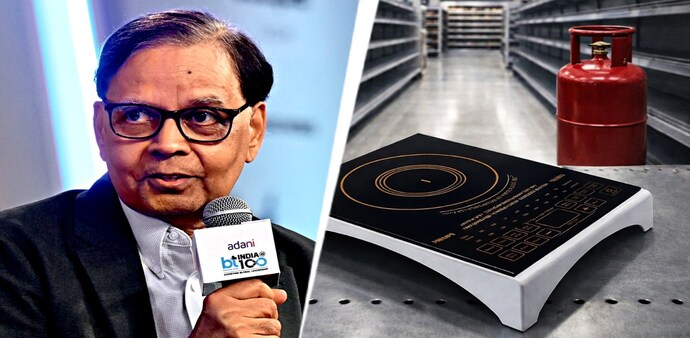
Amid disruptions to energy supplies following the closure of the Strait of Hormuz, 16th Finance Commission chairman Arvind Panagariya on Tuesday revisited a decade-old proposal advocating electric cooking as part of India’s energy strategy, citing renewed concerns over import dependence.
Also read: Why Indian basket crude oil at $143 a barrel is more expensive than Brent and WTI
Sharing a paper he co-authored with Anil Kumar Jain, an adviser (energy) at NITI Aayog, Panagariya pointed to the vulnerability exposed by disruptions in liquefied petroleum gas (LPG) supplies.
Also read: LPG Tanker Nanda Devi Reaches Vadinar With 46,500 MT Cargo, STS Transfer To Begin Today
"Ten years ago, Anil Jain and I wrote, making a case for electric cooktops. The current context adds another reason: energy security, since electricity can be solar or coal-based, both plentifully available in India," he wrote on X.
The comments come as LPG supplies to India have been affected by tensions in the Gulf, where the Strait of Hormuz serves as a key transit route for energy shipments. India has historically depended on imports for a significant share of its LPG consumption, with around 60 per cent sourced from Gulf countries, including Qatar, the UAE, Saudi Arabia, and Kuwait, and the rest produced domestically. Procurement has since been diversified to include suppliers such as the United States, Norway, Canada, Algeria, and Russia.
In their paper, Panagariya and Jain had argued that electricity should be integrated into India’s clean cooking strategy, alongside LPG and biomass, to address both health and supply concerns. They noted that more than two-thirds of rural households relied on solid biomass for cooking, contributing to indoor air pollution.
"Therefore, it makes good sense to include electricity in the overall clean-cooking strategy," the paper said, adding that reliance on LPG alone could delay universal access to clean cooking fuel given the scale of demand and import dependence.
The authors highlighted that electricity, unlike LPG, does not carry the same import risk and can be generated domestically from sources such as coal and solar power. "This energy is emission-free at the point of consumption and therefore alleviates the problem of black carbon that fills a large number of Indian homes today," they wrote.
They also argued that electric cooking could be cost-competitive over time. Based on estimates in the paper, the annual consumption of eight to ten LPG cylinders per household is broadly equivalent to around 4 kWh of electricity per day, suggesting comparable costs under certain crude price assumptions.
The paper acknowledged constraints, particularly in rural electricity supply, noting that existing infrastructure has historically been designed to support lighting and basic appliances rather than high-load cooking devices. It suggested that urban adoption of electric cooking could help ease pressure on LPG distribution, while improvements in power transmission and distribution would be necessary to support wider uptake.
"First, we could focus on spreading the electric-cooking solution to urban areas where an adequate supply of electricity exists. This would then release LPG cylinders currently in use in urban areas for distribution in rural areas," the authors wrote.
They also pointed to the potential of solar energy, especially in remote regions where grid access remains limited.
The renewed emphasis on electric cooking comes as the ongoing conflict in West Asia has expanded, as Iran has struck several energy facilities in Qatar, the UAE, Kuwait, and Saudi Arabia. Iran has also effectively shut the Strait of Hormuz, through which a significant share of global oil and gas trade passes.
Amid disruptions to energy supplies following the closure of the Strait of Hormuz, 16th Finance Commission chairman Arvind Panagariya on Tuesday revisited a decade-old proposal advocating electric cooking as part of India’s energy strategy, citing renewed concerns over import dependence.
Also read: Why Indian basket crude oil at $143 a barrel is more expensive than Brent and WTI
Sharing a paper he co-authored with Anil Kumar Jain, an adviser (energy) at NITI Aayog, Panagariya pointed to the vulnerability exposed by disruptions in liquefied petroleum gas (LPG) supplies.
Also read: LPG Tanker Nanda Devi Reaches Vadinar With 46,500 MT Cargo, STS Transfer To Begin Today
"Ten years ago, Anil Jain and I wrote, making a case for electric cooktops. The current context adds another reason: energy security, since electricity can be solar or coal-based, both plentifully available in India," he wrote on X.
The comments come as LPG supplies to India have been affected by tensions in the Gulf, where the Strait of Hormuz serves as a key transit route for energy shipments. India has historically depended on imports for a significant share of its LPG consumption, with around 60 per cent sourced from Gulf countries, including Qatar, the UAE, Saudi Arabia, and Kuwait, and the rest produced domestically. Procurement has since been diversified to include suppliers such as the United States, Norway, Canada, Algeria, and Russia.
In their paper, Panagariya and Jain had argued that electricity should be integrated into India’s clean cooking strategy, alongside LPG and biomass, to address both health and supply concerns. They noted that more than two-thirds of rural households relied on solid biomass for cooking, contributing to indoor air pollution.
"Therefore, it makes good sense to include electricity in the overall clean-cooking strategy," the paper said, adding that reliance on LPG alone could delay universal access to clean cooking fuel given the scale of demand and import dependence.
The authors highlighted that electricity, unlike LPG, does not carry the same import risk and can be generated domestically from sources such as coal and solar power. "This energy is emission-free at the point of consumption and therefore alleviates the problem of black carbon that fills a large number of Indian homes today," they wrote.
They also argued that electric cooking could be cost-competitive over time. Based on estimates in the paper, the annual consumption of eight to ten LPG cylinders per household is broadly equivalent to around 4 kWh of electricity per day, suggesting comparable costs under certain crude price assumptions.
The paper acknowledged constraints, particularly in rural electricity supply, noting that existing infrastructure has historically been designed to support lighting and basic appliances rather than high-load cooking devices. It suggested that urban adoption of electric cooking could help ease pressure on LPG distribution, while improvements in power transmission and distribution would be necessary to support wider uptake.
"First, we could focus on spreading the electric-cooking solution to urban areas where an adequate supply of electricity exists. This would then release LPG cylinders currently in use in urban areas for distribution in rural areas," the authors wrote.
They also pointed to the potential of solar energy, especially in remote regions where grid access remains limited.
The renewed emphasis on electric cooking comes as the ongoing conflict in West Asia has expanded, as Iran has struck several energy facilities in Qatar, the UAE, Kuwait, and Saudi Arabia. Iran has also effectively shut the Strait of Hormuz, through which a significant share of global oil and gas trade passes.