
AI impact: Sridhar Vembu challenges Musk’s no-inflation claim, calls ‘Universal High Income’ dystopian
According to Vembu, Musk’s view rests on two key assumptions: first, that AI will trigger an extraordinary surge in goods and services with minimal human labour; and second, that this abundance would not lead to falling prices.
- Apr 17, 2026,
- Updated Apr 17, 2026 5:19 PM IST
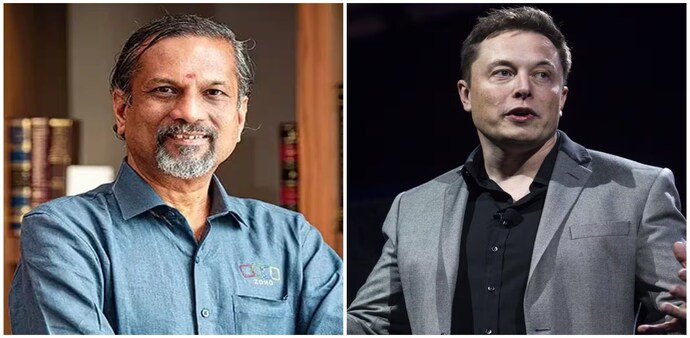
Weighing in on the growing debate over artificial intelligence and jobs, Sridhar Vembu has challenged Elon Musk’s suggestion of a “Universal High Income” as a response to AI-driven unemployment, calling the idea “dystopian” in its assumptions about the future of work.
In his post, Musk wrote, “Universal HIGH INCOME via checks issued by the Federal government is the best way to deal with unemployment caused by AI. AI/robotics will produce goods & services far in excess of the increase in the money supply, so there will not be inflation.”
Responding to this, Vembu argued that such a policy assumes a world where AI displaces nearly all paid human work, forcing governments to provide income so people can continue consuming goods produced by automated systems.
According to Vembu, Musk’s view rests on two key assumptions: first, that AI will trigger an extraordinary surge in goods and services with minimal human labour; and second, that this abundance would not lead to falling prices. He pushed back strongly on the latter, stating that prices would inevitably decline in a competitive market unless governments allow monopolies to keep them artificially high.
“Merely enforcing existing anti-monopoly laws would be sufficient for prices to drop,” Vembu noted, adding that even mechanisms like copyright — what he described as government-granted monopolies — could be reconsidered if needed.
Beyond economics, Vembu also offered a counterpoint to fears that AI could render human effort obsolete. He suggested that even in a highly automated world, meaningful human roles would remain — particularly in areas where emotional, cultural, and ethical engagement is essential.
He pointed to professions such as farming, teaching, nursing, and religious service as examples of work society may continue to value deeply, not just economically but socially. “We don’t care for robots to care for our babies or for the sick or be our priests,” he said, underscoring the enduring importance of human-centric roles.
Weighing in on the growing debate over artificial intelligence and jobs, Sridhar Vembu has challenged Elon Musk’s suggestion of a “Universal High Income” as a response to AI-driven unemployment, calling the idea “dystopian” in its assumptions about the future of work.
In his post, Musk wrote, “Universal HIGH INCOME via checks issued by the Federal government is the best way to deal with unemployment caused by AI. AI/robotics will produce goods & services far in excess of the increase in the money supply, so there will not be inflation.”
Responding to this, Vembu argued that such a policy assumes a world where AI displaces nearly all paid human work, forcing governments to provide income so people can continue consuming goods produced by automated systems.
According to Vembu, Musk’s view rests on two key assumptions: first, that AI will trigger an extraordinary surge in goods and services with minimal human labour; and second, that this abundance would not lead to falling prices. He pushed back strongly on the latter, stating that prices would inevitably decline in a competitive market unless governments allow monopolies to keep them artificially high.
“Merely enforcing existing anti-monopoly laws would be sufficient for prices to drop,” Vembu noted, adding that even mechanisms like copyright — what he described as government-granted monopolies — could be reconsidered if needed.
Beyond economics, Vembu also offered a counterpoint to fears that AI could render human effort obsolete. He suggested that even in a highly automated world, meaningful human roles would remain — particularly in areas where emotional, cultural, and ethical engagement is essential.
He pointed to professions such as farming, teaching, nursing, and religious service as examples of work society may continue to value deeply, not just economically but socially. “We don’t care for robots to care for our babies or for the sick or be our priests,” he said, underscoring the enduring importance of human-centric roles.